

 News
News  Coin Information
  About us
  Customer Service


 Add as a preferred source on Google
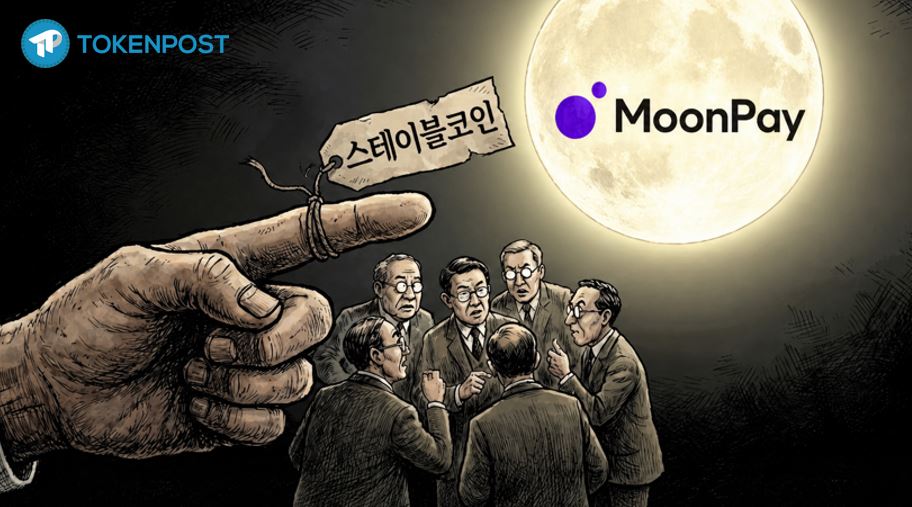
Two separate Korean won-linked stablecoin initiatives have launched outside Korea in the past six months—an outcome that underscores a growing contradiction: while Seoul debates who should be allowed to issue a won stablecoin, the won is being tokenized, traded, and even packaged into derivatives abroad.
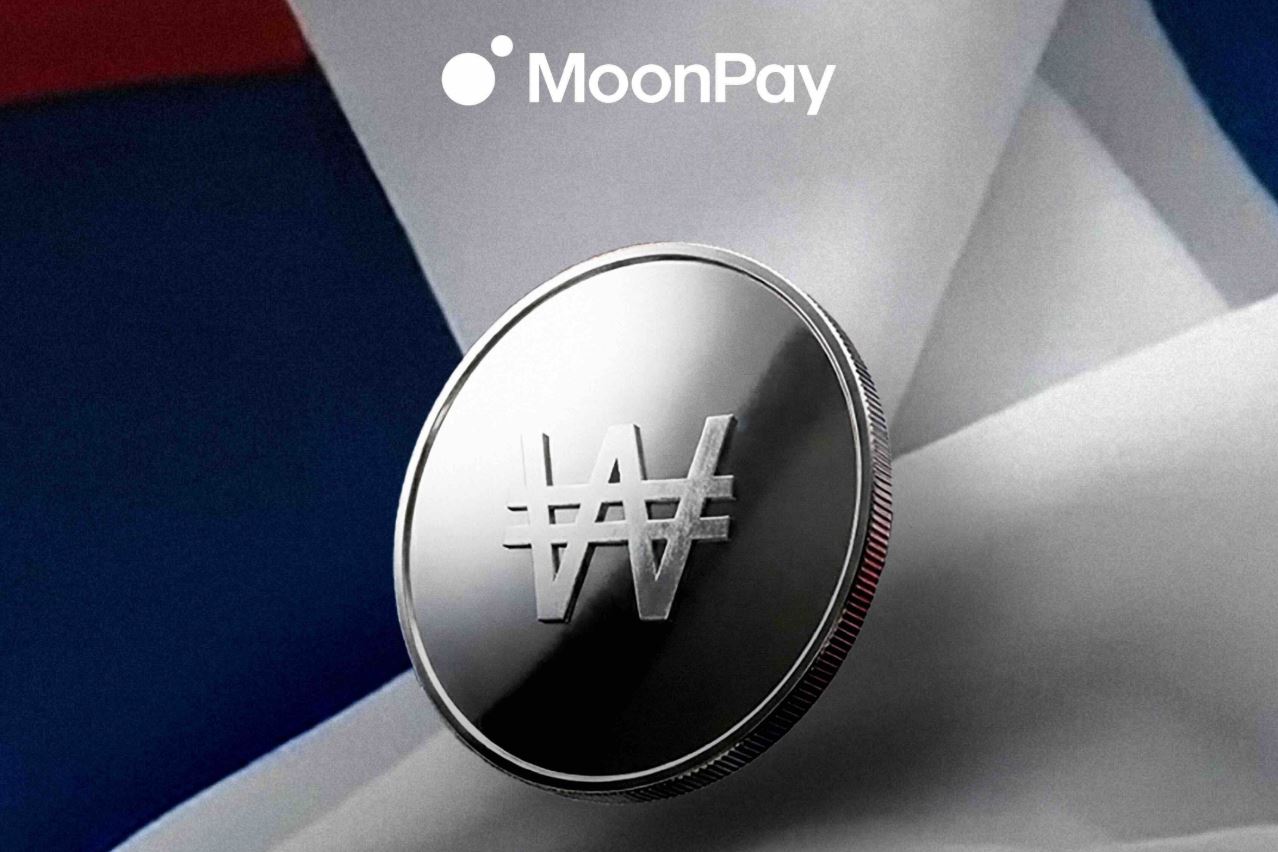
The most recent catalyst came on April 30 (UTC), when global crypto payments firm MoonPay announced a partnership with Woori Bank to build global distribution infrastructure for a won-denominated stablecoin. The announcement followed the offshore debut of KRWQ, a won-pegged stablecoin issued in October last year by blockchain firm IQ and stablecoin protocol Frax. Bloomberg highlighted the project after Wall Street-backed crypto exchange EDXM International pointed to KRWQ as the base layer for a planned won perpetual futures product.
That sequence—issuance first, institutional plumbing second, derivatives next—illustrates how quickly stablecoin markets can develop once an asset gains liquidity and credible rails. It also places Korea in an awkward position: despite being one of the world’s most active crypto markets, it still has no won stablecoin minted under a domestic regulatory framework.
At the center of Korea’s delay is a stalled legislative push. Won stablecoin legalization is expected to be addressed in the second phase of the country’s planned Digital Asset Basic Act. However, the bill has been stuck for more than a year amid disputes over the ‘issuer question’—specifically, what kind of entity should be permitted to issue a won stablecoin and under what ownership structure.
The Bank of Korea has argued that only a consortium with banks holding at least 51% of equity should be allowed to issue a won stablecoin, citing the need to protect monetary stability. The Financial Services Commission broadly agrees with tighter safeguards but has been cautious about hard-coding ownership ratios into law. Fintech and blockchain firms view a bank-majority rule as a de facto barrier to private-sector entry. Complicating matters further, positions among the Financial Services Commission, the Bank of Korea, the Ministry of Economy and Finance, and the National Assembly have not aligned.
Korean lawmakers had previously signaled that a bill could be introduced in 2025, but that timeline slipped. With local elections expected in June 2026, the legislative calendar is again uncertain—an opening that offshore markets have exploited.
Globally, stablecoin policy has moved in the opposite direction: toward implementation. The U.S. enacted the GENIUS Act in July last year, establishing a comprehensive federal framework for stablecoins. In the European Union, regulators operating under the MiCA regime have authorized multiple stablecoin issuers, many of them non-bank ‘electronic money institutions’ rather than traditional lenders. Japan and Singapore have also created pathways for domestic stablecoin issuance. Korea, by contrast, remains locked in a prolonged debate over ‘who issues,’ even as other jurisdictions focus on how issuance is supervised and integrated into financial infrastructure.
The offshore won stablecoin projects now serve as proof-of-concept for what Korea has not yet enabled at home. KRWQ is already live on Ethereum (ETH) and Coinbase’s Base network. Its operators publish a real-time dashboard showing a reported reserve ratio of 122.8%, and Shinhan Securities is involved as a custodian for Korea Treasury Bonds (KTB), according to the column. EDXM International, meanwhile, has positioned its won perpetual futures offering as cheaper than traditional non-deliverable forwards (NDF), claiming cost reductions of 50% to 75% compared with existing structures.
MoonPay’s approach highlights another dynamic: regulatory leverage. The company points to credentials that include EU MiCA authorization as well as New York crypto licensing and trust-related approvals, while forming a consortium involving Korea’s major commercial banks. The implication is clear—if domestic rules remain unresolved, offshore entities with established compliance footprints can still build ‘global distribution’ first and pull Korean bank participation into that orbit later.
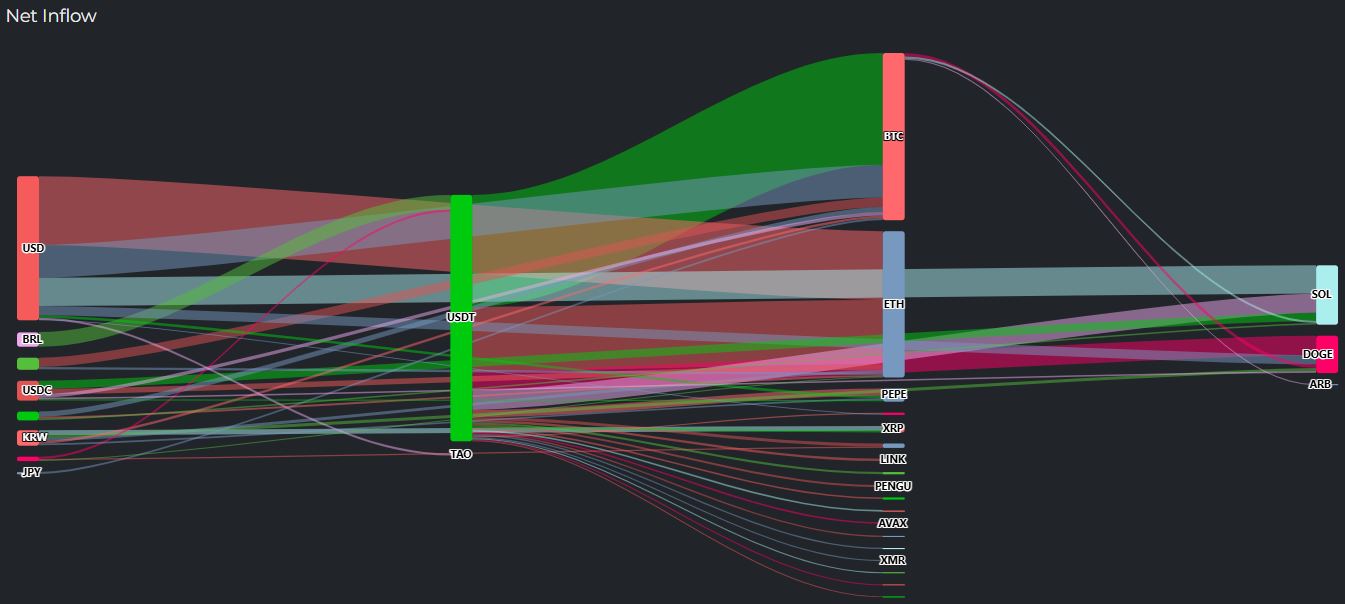
There is also a data and liquidity dimension that policymakers increasingly worry about. The longer Korea’s regulatory gap persists, the more trading activity, settlement patterns, and market data accumulate offshore. Chainalysis estimates that stablecoin transaction volume denominated in won reached roughly $64 billion over the 12 months through June 2025, with most activity taking place via U.S. dollar stablecoins rather than KRW-linked tokens.
That matters because stablecoins are not merely a new payments format; they can become the default settlement layer for crypto trading, on-chain lending, and cross-border transfers. If Korean users continue transacting primarily through dollar-pegged stablecoins, Korea risks seeing its digital finance activity consolidated on ‘dollar rails,’ with reduced visibility and weaker domestic influence over how the won is represented in tokenized markets.
Critics argue the policy debate has been too narrow. Tiger Research recently said Korea’s discussions have largely revolved around three themes—issuer eligibility, supervisory authority, and risk warnings—while neglecting operational questions about how a won stablecoin should function in practice, including reserve composition, redemption mechanics, and interoperability with local financial market plumbing.
Some experts are urging a shift from perfect design to controlled deployment. Hwang Seok-jin, a professor at Dongguk University, was cited as saying that Korea is at a stage where issuance must begin even if details—such as capital requirements and ownership structure—are later refined through implementing rules. Others warn of structural constraints: Kim Jong-seung, CEO of XCrypton, pointed to challenges around reserve assets, noting that if U.S.-style ‘reciprocity’ standards are applied, reserves could effectively require short-term government securities—yet Korea lacks a deep market for ultra-short maturities comparable to U.S. three-month Treasury bills.
These issues are not academic. Korea is moving toward more open FX infrastructure, including allowing 24-hour won trading this summer and discussing easing rules on offshore trading. As the foreign exchange market becomes more accessible, the ‘digital rails’ that carry won liquidity may be built—first and fastest—by offshore players. Once liquidity and usage data concentrate on those rails, reversing the first-mover advantage becomes difficult even if domestic rules arrive later.
Lawmakers have begun to float intermediate steps. Ahn Do-geol, a member of the Democratic Party’s Digital Asset task force, was cited as calling for a regulatory sandbox to partially pilot a won stablecoin within the first half of the year. The argument is that waiting for a fully formed framework could be riskier than launching a tightly controlled test, particularly when demand is already being met elsewhere.
The market signal from KRWQ and MoonPay is that won stablecoin demand exists today—and will be satisfied with or without Korea’s domestic issuance regime. The remaining question for policymakers is whether Korea wants that demand—and the associated liquidity, data, and market structure—to develop primarily under its own oversight or largely offshore.
🔎 Market Interpretation
- Offshore tokenization is outpacing domestic policy: Two KRW-linked stablecoin efforts launched outside Korea (e.g., KRWQ; MoonPay–Woori initiative), showing that market creation is happening abroad while Seoul debates legal permissions.
- Natural market progression is already forming: The pattern—stablecoin issuance → institutional distribution rails → derivatives—is emerging with KRWQ becoming a potential base asset for won perpetual futures, indicating rapid financialization once liquidity exists.
- Korea risks losing “KRW rails” to “USD rails”: With most KRW-denominated stablecoin activity still routed through USD stablecoins, Korea may see trading, settlement, and liquidity formation consolidate on dollar-based infrastructure, reducing won-centric influence.
- Regulatory arbitrage advantage: Offshore firms with recognized compliance status (MiCA authorization, New York licensing) can build global distribution first, then onboard Korean banks later—effectively pulling domestic participation into an external rule-set.
- Data sovereignty and market visibility concerns: As transaction volume and behavioral data accumulate offshore, domestic regulators face weaker visibility into flows, risk buildup, and systemic linkages tied to won activity.
💡 Strategic Points
- Resolve the “issuer question” via phased access: Instead of an all-or-nothing bank-majority requirement, consider tiered licensing (banks, e-money/fintech, and consortia) with differentiated limits, disclosure, and reserve standards.
- Prioritize operational rules, not only eligibility: Expand policy scope to cover reserve composition, redemption timelines, custody standards, audit/attestation frequency, and interoperability with domestic payment and securities infrastructure.
- Use a regulatory sandbox to prevent first-mover lock-in: A limited pilot (as proposed by lawmakers) can generate domestic liquidity, usage evidence, and supervisory playbooks before offshore rails become the default.
- Design reserves around local market constraints: If “reciprocity-style” rules imply ultra-short sovereign assets, Korea may need to develop or adapt short-maturity instruments/structures to avoid forcing reserves offshore or concentrating risk.
- Plan for derivatives spillover: If KRW stablecoins become collateral/base assets for perpetuals and other products, regulators should preemptively address market integrity, liquidation mechanics, and investor protection standards.
- Align agencies to reduce policy latency: Misalignment among the BOK, FSC, ministry, and National Assembly prolongs uncertainty; a joint taskforce with clear decision deadlines could prevent further offshore market capture.
- Integrate with upcoming FX liberalization: With 24-hour KRW trading and eased offshore trading under discussion, stablecoin policy should be synchronized to ensure the primary digital liquidity rails are supervised domestically.
📘 Glossary
- Stablecoin: A token designed to maintain a stable value, typically pegged to a fiat currency (e.g., KRW, USD) and backed by reserves and/or mechanisms to keep the peg.
- Won-denominated (KRW-pegged) stablecoin: A stablecoin targeting a 1:1 value relationship with the Korean won, enabling on-chain KRW settlement and trading.
- Issuer question: The policy dispute over which entities (banks, fintechs, consortia) may issue a KRW stablecoin and what ownership/control requirements apply.
- MiCA: The EU’s Markets in Crypto-Assets regulation, which creates licensing and compliance requirements for crypto asset service providers and certain stablecoin issuers.
- Electronic Money Institution (EMI): A non-bank entity (common in the EU) allowed to issue electronic money under regulatory safeguards; often referenced in stablecoin policy comparisons.
- Perpetual futures (perps): Derivatives with no expiry date that track an underlying reference price and rely on funding payments to keep prices aligned.
- Non-deliverable forward (NDF): A cash-settled FX derivative used when the underlying currency is not freely deliverable offshore; settled in a convertible currency (often USD).
- Reserve ratio: A measure of assets held to back stablecoins in circulation; above 100% implies over-collateralization (subject to asset quality and liquidity).
- Custodian: A regulated entity that holds assets (e.g., government bonds) on behalf of the issuer to safeguard reserves.
- Digital rails: The infrastructure and networks (blockchains, payment channels, exchange linkages) through which tokenized money moves and settles.
- Regulatory sandbox: A controlled environment allowing limited real-world testing of financial products under regulator oversight with defined constraints.









Comment 0