

 News
News  Coin Information
  About us
  Customer Service


 Add as a preferred source on Google
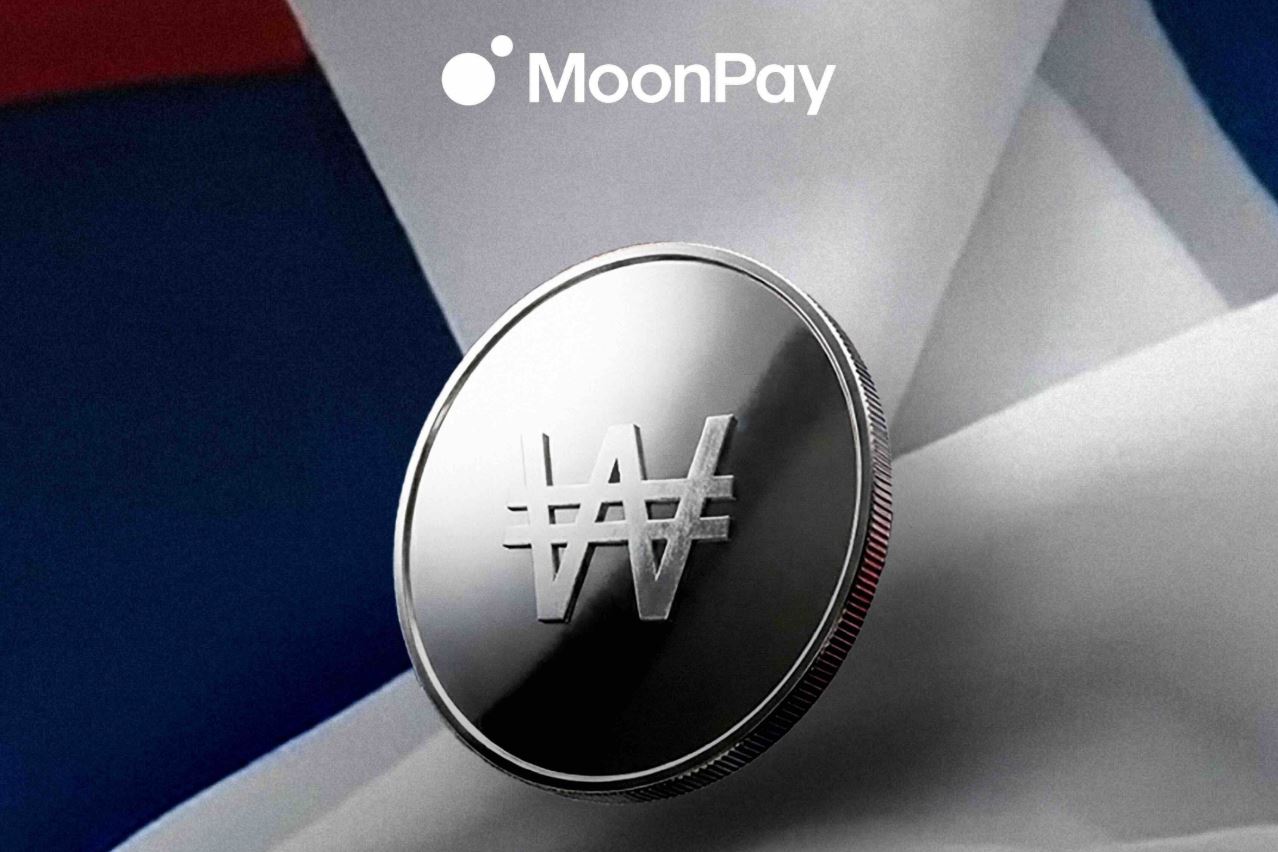
MoonPay’s South Korean unit has signed a partnership with Woori Bank to explore global distribution of a Korean won-denominated stablecoin, marking an early move by a major commercial bank into an emerging ‘KRW stablecoin’ push that could extend beyond domestic payments into cross-border settlement.
MoonPay Korea said the two parties signed a memorandum of understanding on Wednesday ET (April 29), positioning Woori Bank as the first banking partner in MoonPay’s planned ‘KRW stablecoin consortium.’ The agreement comes as policymakers and market participants in South Korea debate how won-backed digital currency issuance should be structured—particularly the role of banks—while global players accelerate experimentation with tokenized fiat rails.
Under the MOU, MoonPay and Woori will jointly assess use cases for a won-based stablecoin across a wide range of payment flows, including domestic retail payments, overseas remittances, merchant settlement, inter-institution transfers, and broader cross-border financial activity. The thrust is to connect regulated onshore issuance and banking-grade compliance with MoonPay’s existing global ‘payment and distribution’ infrastructure, which the company argues can help a won stablecoin travel beyond Korea-centric corridors.
“Stablecoins are becoming core infrastructure for digital finance, and Korea is one of the most advanced markets in the world,” MoonPay founder and CEO Ivan Soto-Wright said in a statement. For global payment firms, Korea is attractive not only for its high adoption of digital finance but also for its deep liquidity in KRW-linked markets and its large fintech-enabled consumer base.
MoonPay Korea also appointed company founding member Lee Boo-geon as Head of APAC, with Lee to be based in Seoul and tasked with coordinating engagement with Korean regulators, banks, and corporate partners. “Korea’s regulatory clarity, market scale, and technical capabilities form a strong foundation for stablecoin adoption,” Lee said, adding that MoonPay Korea aims to combine regulated KRW issuance with global distribution and settlement so that a Korean stablecoin can be “usable and interoperable” internationally rather than trusted only domestically.
MoonPay is pitching its regulatory footprint as a key differentiator in a sector increasingly shaped by licensing, consumer-protection standards, and reserve-management requirements. The company said it holds approvals and registrations including authorization under the EU’s Markets in Crypto-Assets regulation (MiCA), New York’s BitLicense, a New York Limited Purpose Trust Charter, and money transmitter licenses across the U.S., alongside registrations in jurisdictions such as the U.K., Australia, and Jersey. For banks weighing stablecoin participation, counterparties with established compliance frameworks are often seen as critical to managing operational and reputational risk.
The announcement also highlights a broader shift in market attention toward won tokenization. It follows the launch last October of KRWQ, described as the first offshore-issued KRW stablecoin, structured through the Cayman Islands and aimed primarily at institutional foreign-exchange activity—particularly moving the non-deliverable forward (NDF) market on-chain. KRWQ’s backers have pointed to the roughly $27 billion-per-day KRW NDF market, and the product has been paired with a KRWQ/USDC perpetual futures listing via Wall Street-backed exchange EDXM International.
MoonPay Korea’s initiative, by contrast, is framed as ‘onshore’ and ‘payments-led,’ built around partnerships with South Korean commercial banks rather than an offshore issuance model. The envisioned structure centers on regulated financial institutions participating in issuance, with MoonPay providing international distribution and settlement connectivity—a design that could appeal to merchants and remittance providers seeking predictable redemption and compliance standards.
While the two projects pursue different end markets—institutional FX versus bank-linked payment rails—the convergence is notable: global interest in a KRW stablecoin ecosystem appears to be accelerating even as South Korea’s domestic legislative process for its broader digital asset framework remains contested, particularly around who should be permitted to issue won-linked tokens. Market participants say the direction of travel is clear: won tokenization is moving from concept to implementation, and the competitive advantage may ultimately come down to regulatory alignment, distribution reach, and real-world utility.












Comment 0