

 News
News  Coin Information
  About us
  Customer Service


 Add as a preferred source on Google

Ripple’s XRP is drawing fresh market attention as investors weigh two potential catalysts: growing expectations for U.S. crypto legislation and Ripple’s push to harden the security of the XRP Ledger (XRPL) using AI-driven testing. While XRP has largely moved sideways around the mid-$1.30 range, the narrative around regulatory clarity and institutional readiness is beginning to overshadow short-term price action.
As of Saturday, March 28, 2026 UTC, XRP traded near $1.35, up about 1% over the past 24 hours. On a weekly basis, however, it remained lower after retreating from roughly $1.44, reflecting a broader risk-off tone in digital assets. Market commentators attributed the pullback less to XRP-specific factors and more to macro headwinds such as ETF outflows across major crypto products and ongoing geopolitical uncertainty.
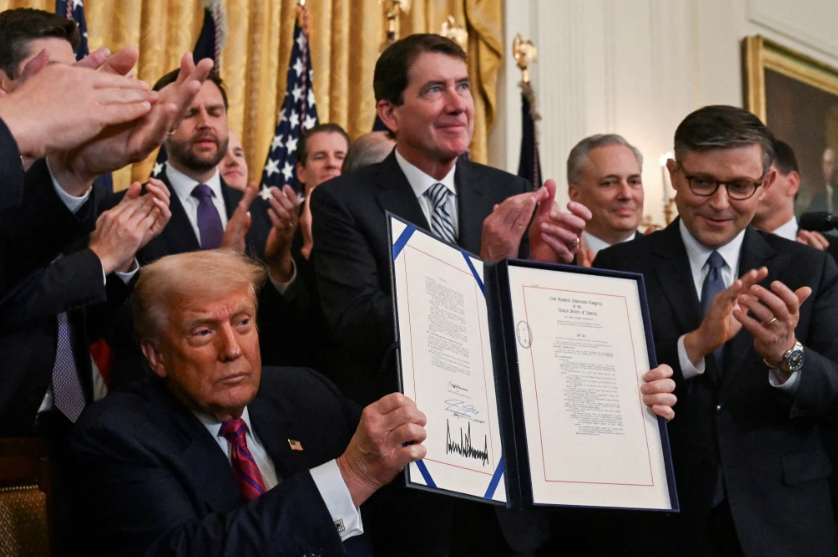
The immediate focus is on the fate of the proposed ‘CLARITY Act,’ which market participants see as a potential turning point for how major tokens are classified and supervised in the U.S. According to reports circulating in the crypto press, CFTC Chair Rostin Behnam and Ripple executives have suggested the bill is approaching its final stage. Traders are increasingly positioning around the idea that passage—possibly by late May—could open the door to deeper ‘institutional demand,’ including clearer pathways for banks to use XRP-related infrastructure and for issuers to launch new regulated products tied to the asset.
The stakes are high because the alternative scenario is simpler: if legislative progress stalls, XRP would likely remain more tightly correlated with the broader crypto market’s swings, limiting the ability of idiosyncratic adoption narratives to drive sustained re-pricing. In that context, even minor signals from Washington can become a dominant driver of sentiment, particularly for tokens whose institutional pitch hinges on compliance and integration with existing financial rails.
On-chain indicators have been interpreted as broadly constructive. Analysts tracking exchange balances have pointed to declining XRP holdings on centralized venues alongside increased accumulation by large holders—often viewed as a sign that market participants are building positions ahead of a possible regulatory catalyst. While such metrics can shift quickly, the combination of reduced sell-side liquidity and whale accumulation tends to be read as supportive for near-term price stability.
Ripple is also attempting to strengthen XRPL’s case as ‘institution-grade’ infrastructure. The company said it has overhauled security processes using AI-based red-team testing, identifying more than 10 vulnerabilities that were not detected through prior methods. A forthcoming update is expected to focus narrowly on bug fixes, an approach typically favored by enterprises that prioritize reliability and auditability over feature releases.
The push comes as Ripple and its partners highlight the network’s operational history. XRPL has processed more than 3 billion transactions across over 100 million ledgers, according to figures cited in recent coverage. Ripple CEO Brad Garlinghouse has repeatedly argued that XRP’s low fees and fast settlement are well-suited for modernizing payments—particularly cross-border flows where legacy systems remain costly and slow.
Adoption narratives continue to evolve. Recent reports have referenced real-world initiatives such as recording Dubai land registry activity on XRPL and ongoing collaboration involving Guggenheim, framing these as proof points that blockchain-based settlement is moving from experimentation toward production use. Garlinghouse has also characterized stablecoins as a “ChatGPT moment” for cross-border payments—an analogy intended to capture the speed at which a practical application can mainstream a technology once usability and distribution align.
Institutional positioning is also being closely watched. Multiple outlets have circulated claims that Goldman Sachs ($GS) holds approximately $152 million in XRP ETF exposure, and that the Monetary Authority of Singapore’s (MAS) BLOOM pilot is set to run for the third time within a month. While market participants generally treat such datapoints cautiously without corroborating disclosures, the broader trend is clear: investors are scanning for signs that regulated financial institutions are becoming more comfortable engaging with XRP-linked instruments and settlement pilots.
Garlinghouse has publicly suggested that 2026 could be a record year for Ripple, citing a mix of potential M&A activity and improving regulatory conditions as key tailwinds. The company’s core pitch remains that it can function as a bridge between ‘TradFi’ and ‘DeFi’ in a way that is resilient to day-to-day crypto volatility—an argument that resonates most when compliance uncertainty is reduced.
Not all commentary has been restrained. Some analysts have floated highly speculative targets—one claim suggested XRP could exceed $1,000 by the end of 2026 based on dark-pool activity and supply dynamics. Such projections remain unverified and far outside conventional valuation frameworks, prompting market observers to warn that they should not be treated as anything more than conjecture.
In the near term, the market appears less focused on incremental price moves and more on whether regulatory uncertainty will finally clear. If U.S. legislation advances and Ripple’s security hardening convinces risk committees, XRP could benefit from a renewed emphasis on ‘utility’ and regulated adoption. If not, XRP may continue to trade as a high-liquidity proxy for broader crypto sentiment—rising and falling largely with the market tide.
🔎 Market Interpretation
- XRP is trading mostly sideways near $1.35, with near-term price action taking a back seat to two narratives: (1) possible U.S. regulatory clarity via the proposed “CLARITY Act,” and (2) Ripple’s efforts to make XRPL more institution-ready through AI-driven security testing.
- The recent pullback from ~$1.44 is framed as macro/market-wide (ETF outflows, geopolitical uncertainty) rather than XRP-specific weakness, implying XRP remains sensitive to broad risk sentiment until a token-specific catalyst lands.
- The market is increasingly “event-driven”: passage progress on U.S. legislation could re-rate XRP on compliance/utility expectations; stalling could keep XRP tightly correlated to overall crypto beta.
- On-chain signals cited (declining exchange balances + whale accumulation) are interpreted as supportive for near-term stability, suggesting reduced sell-side liquidity—though these indicators can reverse quickly.
- Institutional interest is discussed via unverified/uncorroborated reports (e.g., ETF exposure claims, MAS pilot timing). The takeaway is not the exact numbers, but the direction: investors are watching for regulated finance participation and settlement pilots as validation.
💡 Strategic Points
- Primary catalyst to monitor: U.S. “CLARITY Act” timeline and credible legislative milestones (committee movement, floor scheduling, finalized language). Market expectations cluster around a potential late-May window; any delays could quickly dampen narrative momentum.
- Secondary catalyst: Ripple’s “institution-grade” positioning of XRPL via AI-based red-team testing and a bug-fix–focused update. For enterprises, security posture and auditability can matter more than new features.
- Base-case trading implication: absent regulatory progress, XRP likely behaves as a liquid proxy for broad crypto risk-on/risk-off flows; with progress, idiosyncratic adoption and compliance narratives may drive relative outperformance.
- Risk management note: treat extreme price targets (e.g., “$1,000 by end of 2026”) as conjecture rather than forecast—especially when justified by opaque signals like “dark-pool activity” without verifiable data.
- Validation checklist for “institutional demand” claims:
1) Confirmed disclosures from regulated entities (filings, audited statements)
2) Clearly defined product structures (ETF/ETP prospectus language, custody details)
3) Evidence of production usage (transaction volumes tied to named programs)
4) Compliance pathways (licensing, supervisory guidance, classification outcomes)
📘 Glossary
- XRP: The native token associated with the XRP Ledger, often discussed as a liquidity/settlement asset.
- XRPL (XRP Ledger): The blockchain network that processes transactions and maintains ledgers; positioned for payments and settlement.
- CLARITY Act: Proposed U.S. crypto legislation referenced as potentially clarifying how major tokens are classified and supervised.
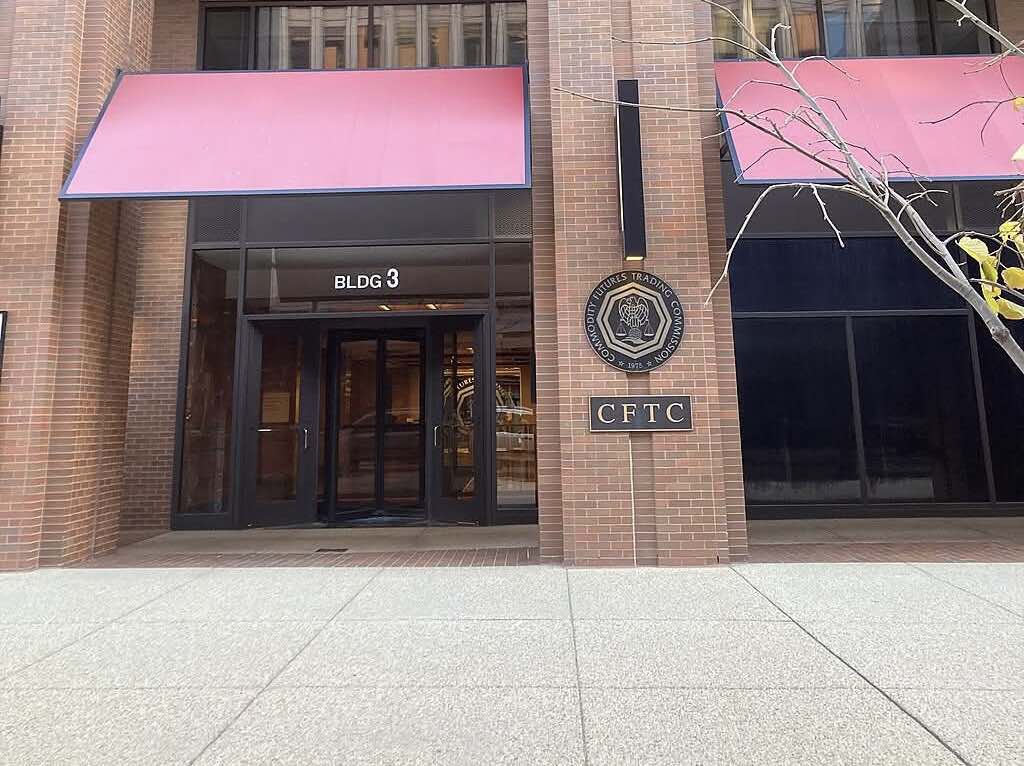
- CFTC: U.S. Commodity Futures Trading Commission; cited via its chair in relation to the bill’s perceived progress.
- Risk-off: Market environment where investors reduce exposure to higher-risk assets (often pressuring crypto prices).
- Exchange balances: Amount of a token held on centralized exchanges; declines are often interpreted as reduced near-term selling supply.
- Whale accumulation: Large-holder net buying/holding behavior; sometimes viewed as positioning ahead of catalysts.
- Red-team testing: Adversarial security testing that simulates attacks to discover vulnerabilities.
- Institutional-grade: Informal term implying reliability, security controls, and auditability suitable for regulated organizations.
- TradFi / DeFi: Traditional finance vs. decentralized finance; Ripple frames XRP as a bridge between the two.
- Stablecoins: Tokens typically pegged to fiat currencies; described here as accelerating mainstream utility in cross-border payments.
- ETF outflows: Net withdrawals from exchange-traded products; cited as a macro headwind impacting broader crypto sentiment.
















Comment 0