

 News
News  Coin Information
  About us
  Customer Service


 Add as a preferred source on Google

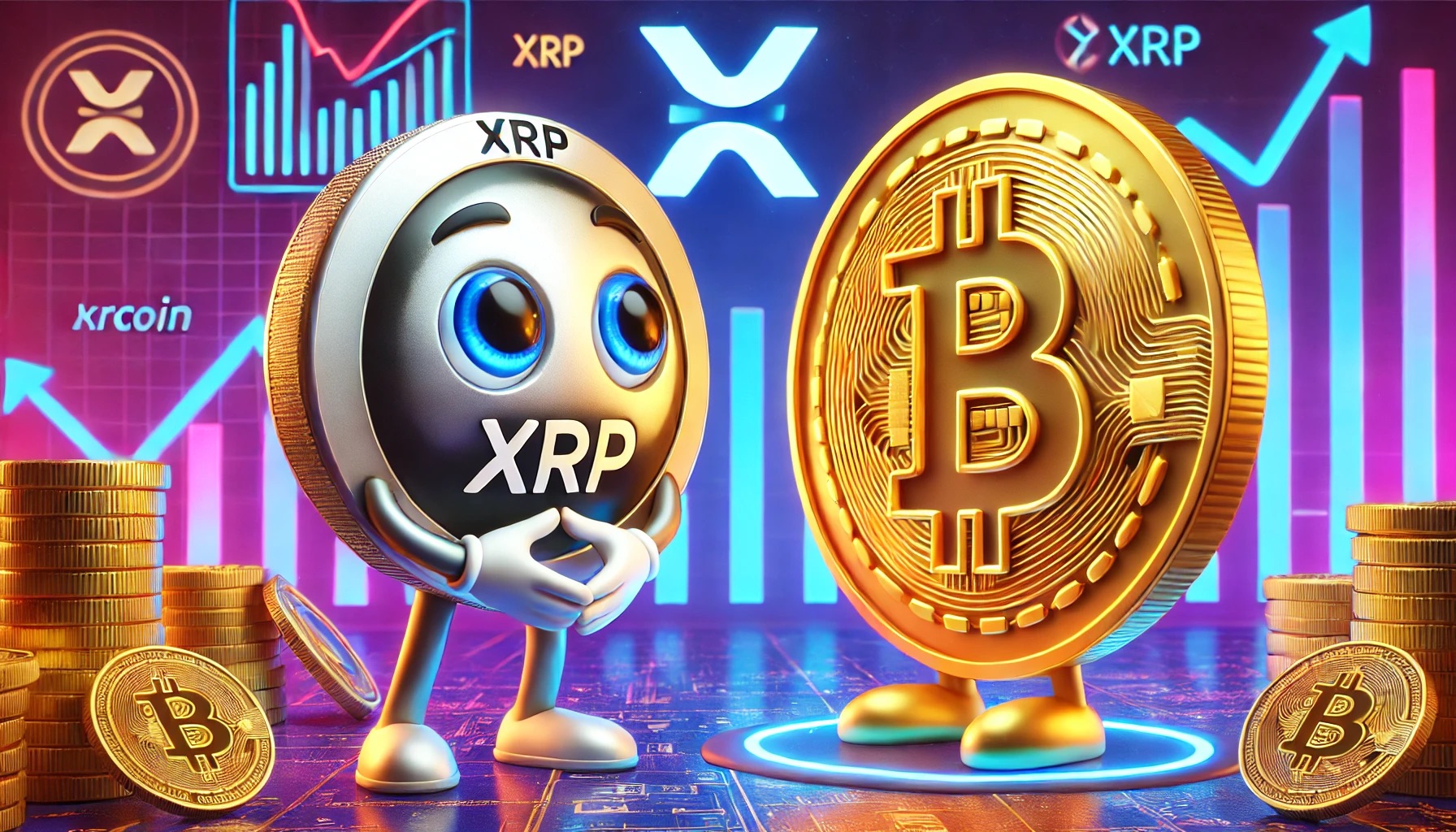
XRP (XRP) has reclaimed the $1.11 level after a sharp post-announcement dip, with traders increasingly treating the $1.00 mark as a decisive line between consolidation and renewed downside. The rebound is drawing attention because market watchers say XRP has shown stronger recovery momentum than Ethereum (ETH) over the same period, even as broader crypto risk sentiment remains sensitive to macro signals.
As of Friday ET, XRP was trading around $1.11, up roughly 1.37% over the past 24 hours, according to the figures cited in the Korean report. The token had briefly slid 13% to 15% following the launch of OpenUSD (OpenUSD), a newly announced stablecoin linked to the XRP ecosystem, before buyers stepped in around $1.00 and pushed prices back above that psychological threshold.
Several analysts described XRP’s bounce from its recent lows as notably resilient compared with ETH. One market commentator quoted in the report said XRP is “holding up much better than Ethereum,” pointing to the speed of the recovery and the persistence of spot demand near $1.00. In the last rebound leg, XRP has risen about 10% from the local low, reinforcing the view that dip-buying interest remains concentrated at round-number support.
Another narrative supporting bullish positioning is XRP’s drawdown profile versus Bitcoin (BTC). XRP is down about 72% from its cycle high—roughly in line with BTC’s peak-to-trough decline—an observation some traders interpret as an argument for relative undervaluation when compared with other large-cap altcoins that have suffered deeper retracements. While drawdown comparisons do not determine fair value, they often shape sentiment in the late-stage consolidation phases of a cycle, when investors hunt for assets perceived to be “lagging” on recovery.
The biggest ecosystem catalyst highlighted in the report is the OpenUSD stablecoin launch. An analyst cited described OpenUSD as a new stablecoin designed for global fund movement, claiming support from about 100 companies and emphasizing that Ripple and the XRP Ledger are expected to play central roles. The report characterizes OpenUSD as an enterprise-oriented stablecoin aimed at cross-border B2B settlement, with the XRP Ledger positioned as infrastructure for settlement and interoperability.
Still, the price action immediately after the OpenUSD news underscores how quickly crypto markets can reprice expectations. XRP’s abrupt selloff around the announcement suggests traders initially treated the development as a “sell-the-news” event or reacted to uncertainty around implementation details. The subsequent defense of $1.00 is therefore being framed as a test of market conviction: analysts quoted in the report argued that whether XRP can hold that level will be a key variable determining the next directional move.
Macro and regulatory factors remain in the background. The report points to potential shifts in Federal Reserve policy as a medium-term driver for crypto liquidity conditions, while noting that Russia is pursuing comprehensive digital asset legislation targeting implementation on Sept. 1, 2026. Such regulatory developments can influence long-term adoption demand—particularly for networks tied to payments and settlement—by shaping how institutions assess legal risk and operational pathways.
On the fundamentals side, the report estimates XRP’s circulating and total supply metrics at roughly 99.99 billion tokens total, with a fully diluted valuation (FDV) of about $110.77 billion at current prices. Market participants are now watching for clearer technical and legal disclosures about how OpenUSD integrates with the XRP Ledger, since those details could affect on-chain transaction activity, liquidity conditions, and the durability of XRP’s recovery above $1.00.
🔎 Market Interpretation
{
"price_action_snapshot": [
{
"key_level": "$1.11",
"status": "Reclaimed after a sharp post-announcement dip; trading ~1.37% higher over 24h."
},
{
"support_focus": "$1.00",
"status": "Acting as a psychological pivot where buyers stepped in after a 13%–15% drop; viewed as the line between consolidation and renewed downside."
}
],
"relative_strength_read": [
{
"comparison": "XRP vs ETH",
"interpretation": "Observers cite faster rebound and steadier spot demand for XRP, suggesting stronger recovery momentum than Ethereum over the same window."
},
{
"comparison": "XRP vs BTC drawdown",
"interpretation": "XRP’s ~72% drawdown from cycle high is described as broadly in line with Bitcoin’s, fueling a ‘relative undervaluation/laggard catch-up’ narrative among some traders."
}
],
"market_psychology": [
{
"theme": "Sell-the-news risk",
"detail": "The immediate selloff following the OpenUSD announcement implies initial skepticism or uncertainty about rollout details; the rebound shifts attention to whether conviction holds above $1.00."
},
{
"near_term_trigger": "Hold vs lose $1.00",
"detail": "Analysts frame $1.00 defense as a key variable for the next directional move."
}
]
}
💡 Strategic Points
{
"levels_to_watch": [
{
"level": "$1.00",
"why_it_matters": "Primary demand zone and sentiment divider; loss of this level may invite renewed downside pressure and shift the narrative back to weakness."
},
{
"level": "$1.11",
"why_it_matters": "Current reclaimed area; maintaining it supports the ‘recovery resilience’ thesis and may attract momentum-based participation."
}
],
"trade_and_risk_considerations": [
{
"positioning_note": "Treat OpenUSD as both catalyst and uncertainty",
"detail": "Upside case strengthens if integration details (settlement flow, liquidity design, interoperability) confirm tangible on-chain activity; downside risk persists if details disappoint or adoption lags."
},
{
"relative-rotation_angle": "XRP strength vs ETH",
"detail": "If XRP continues outperforming ETH during risk-sensitive periods, short-term rotation flows could support XRP—especially while $1.00 remains defended."
},
{
"macro_overlay": "Fed liquidity sensitivity",
"detail": "Potential shifts in Federal Reserve policy are flagged as a medium-term driver; tighter liquidity can cap rallies, while easing expectations can amplify rebounds."
},
{
"regulatory_timeline": "Russia digital asset legislation (target: Sept. 1, 2026)",
"detail": "Long-horizon regulatory clarity can influence institutional adoption for payment/settlement networks, but timing suggests it is a background factor rather than an immediate price driver."
}
],
"fundamentals_watchlist": [
{
"metric": "Supply / FDV context",
"detail": "Total supply cited near ~99.99B XRP; FDV estimated around ~$110.77B at current prices—useful for benchmarking valuation expectations as narratives evolve."
},
{
"data_to_monitor_next": [
"OpenUSD technical/legal disclosures (how it integrates with XRP Ledger)",
"On-chain transaction activity changes after OpenUSD rollout",
"Liquidity/market depth around $1.00 and reaction to macro headlines"
]
}
]
}
📘 Glossary
{
"terms": [
{
"term": "Psychological support (e.g., $1.00)",
"definition": "A round-number price area where traders cluster buy orders and sentiment often shifts; breaks can accelerate moves due to stop orders and narrative changes."
},
{
"term": "Sell-the-news",
"definition": "A market pattern where price drops after a widely anticipated announcement as traders take profits or reassess expectations once uncertainty becomes concrete."
},
{
"term": "Drawdown",
"definition": "The percentage decline from a peak (cycle high) to a subsequent low; used to compare how severely assets retrace during downturns."
},
{
"term": "Relative strength (XRP vs ETH/BTC)",
"definition": "A comparative measure of performance; if one asset falls less or rebounds faster than another, it is said to show relative strength."
},
{
"term": "Stablecoin",
"definition": "A crypto asset designed to maintain a stable value (often pegged to fiat), commonly used for payments, trading liquidity, and settlement."
},
{
"term": "XRP Ledger (XRPL)",
"definition": "The blockchain network associated with XRP, positioned here as settlement and interoperability infrastructure for enterprise and cross-border transactions."
},
{
"term": "B2B settlement",
"definition": "Business-to-business transfer and reconciliation of funds, often emphasizing speed, cost efficiency, and compliance."
},
{
"term": "Fully Diluted Valuation (FDV)",
"definition": "Market cap assuming the maximum token supply is in circulation; calculated as price × total supply, used to gauge ‘fully priced’ valuation."
}
]
}





















Comment 0