
 Add as a preferred source on Google
Crypto Liquidations Hit $420 Million as Volatility Wipes Out Leveraged Longs
Roughly $420 million in crypto positions were liquidated in 24 hours, with CoinGlass data showing leveraged longs led losses amid heightened market volatility.



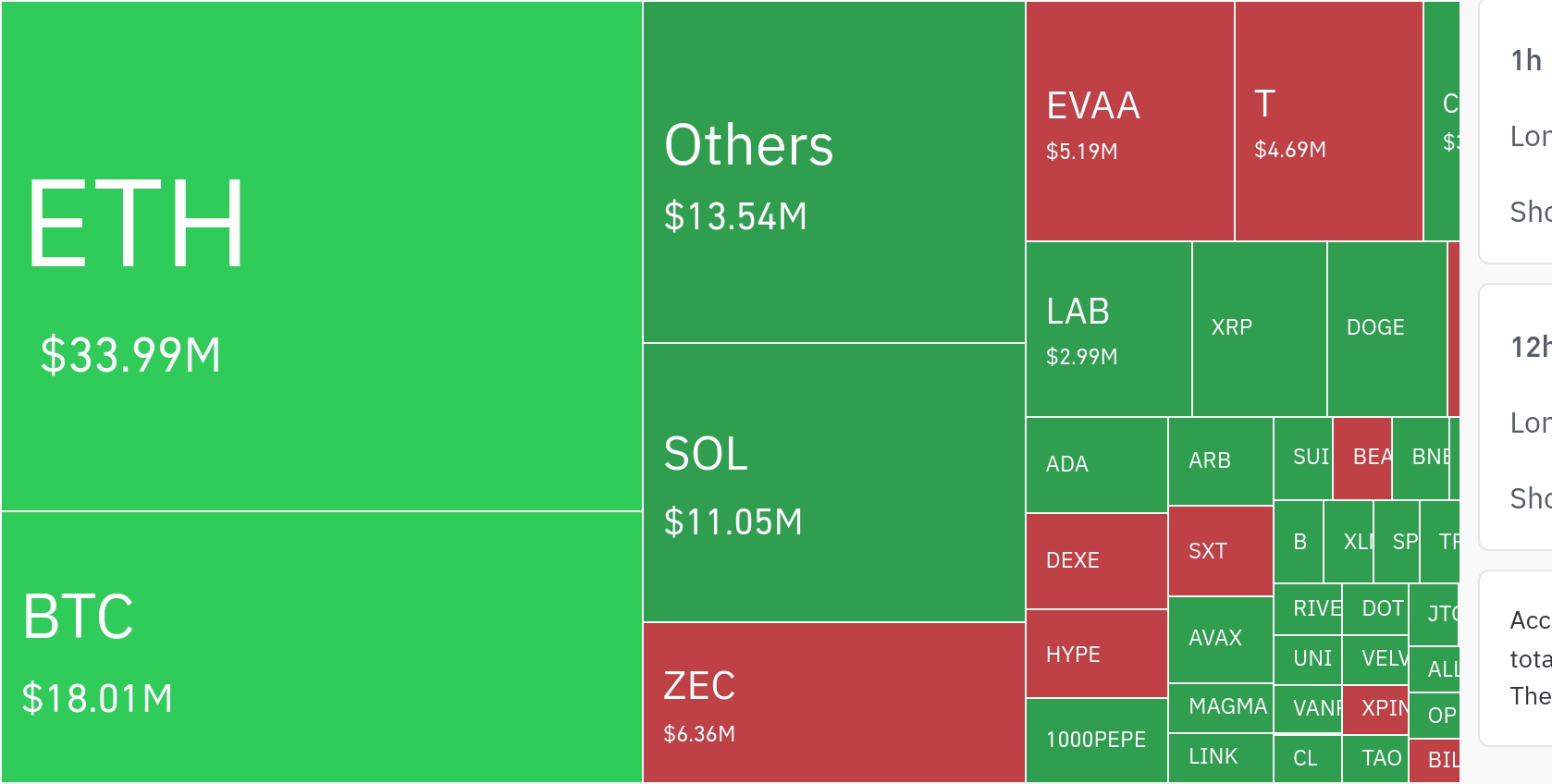
Roughly $420 million in leveraged crypto positions were liquidated over the past 24 hours, underscoring another spike in volatility that continues to flush out crowded trades across major exchanges.
Data aggregated by CoinGlass showed long liquidations dominating the move: about $284.38 million, or 67.7% of the total, came from bullish bets. Short liquidations accounted for roughly $135.40 million, or 32.3%, suggesting the sharpest price action initially moved against overexposed longs.
In the most recent four-hour window, Binance led exchange-level liquidations with about $4.0 million—roughly 54.53% of the tracked total. Notably, shorts made up the majority on Binance during that period, totaling around $2.52 million (62.12%), pointing to abrupt intraday reversals that caught downside positioning off guard. Bybit ranked second with approximately $915,020 (12.3%) in liquidations, with long liquidations slightly higher at about $459,590 (50.23%). OKX posted roughly $628,140 (8.45%), where shorts represented about 67.41% of liquidations. Hyperliquid stood out for an especially high short-liquidation share of about 74.02%, highlighting how quickly leveraged positioning has been whipsawed as liquidity conditions shift.
By asset, Ethereum (ETH) saw the largest wipeout, with about $33.99 million in ETH-linked positions liquidated over 24 hours. Bitcoin (BTC) followed at roughly $18.01 million. Solana (SOL) recorded around $11.05 million, while other notable liquidations appeared in Zcash (ZEC) at about $6.36 million and EVAA at roughly $5.19 million.
Price pressure also extended to higher-beta corners of the market. Political-themed tokens referenced in the data—such as TRUMP and MAGA—fell about 6.82% and 5.14%, respectively, while REKT dropped around 8.79% alongside liquidations, reflecting how themed and smaller-cap assets can amplify moves when leverage is involved.
In crypto derivatives, a 'liquidation' occurs when an exchange forcibly closes a trader’s leveraged position after margin requirements are no longer met. Large liquidation bursts often function as a mechanical accelerant: once stop-outs begin, forced market orders can deepen moves and trigger additional liquidations, especially in thinner order books.
The latest figures suggest risk was concentrated in Ethereum-linked leverage and that intraday direction changes are increasingly punishing both sides of the trade. While the liquidation cycle can reduce near-term 'leveraged overcrowding,' it also signals elevated uncertainty—particularly in altcoins and narrative-driven tokens, where price swings have recently outpaced Bitcoin’s.