

 News
News  Coin Information
  About us
  Customer Service


 Add as a preferred source on Google

XRP is trading in a narrow band as market participants weigh a mix of weakening spot activity and a looming U.S. regulatory catalyst that could reshape how major tokens are classified. The next clear directional move may hinge less on charts and more on Washington.
According to CoinMarketCap data, XRP was priced at $1.1148 as of July 11 at 9:00 p.m. UTC, up 1.07% over the previous 24 hours but down 4.03% across the past seven days—an uneasy blend of short-term resilience and medium-term consolidation pressure. XRP’s market capitalization stood at roughly $69.6 billion, giving it about a 3.15% share of the total crypto market.
One datapoint stood out: trading activity cooled sharply. XRP’s 24-hour volume was about $587 million, down 46.8% from the prior day, a sign that near-term speculative interest has thinned even as price holds above the $1.10 area. Fully diluted valuation (FDV) was estimated near $111.4 billion, with around 62.47 billion XRP circulating out of a maximum supply of 100 billion.
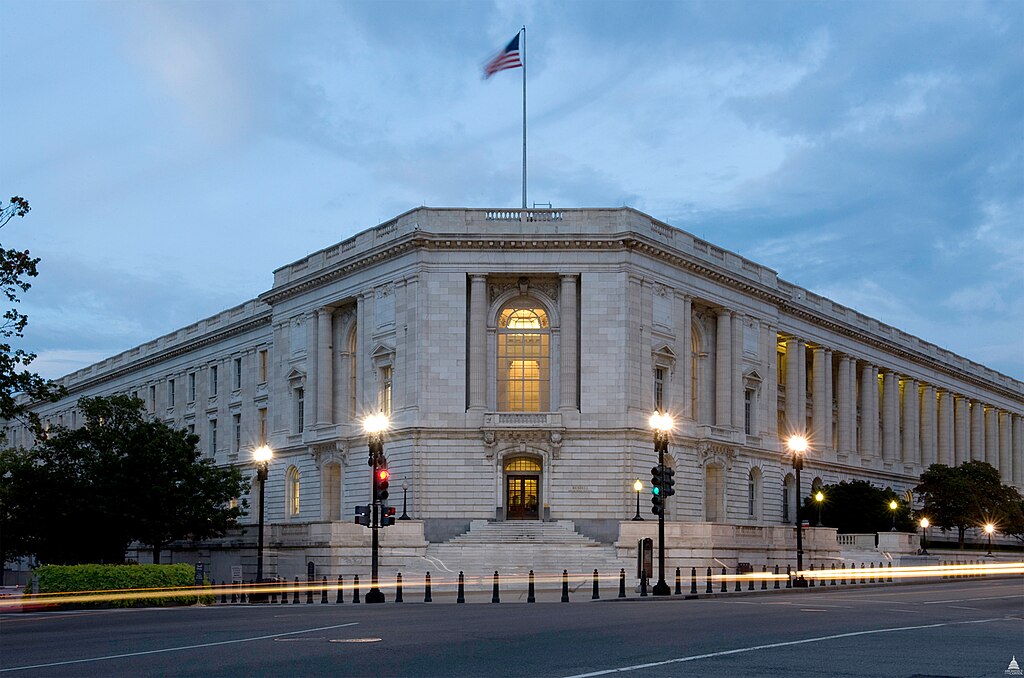
The most consequential near-term variable is a U.S. congressional hearing scheduled for July 17, where lawmakers are expected to debate the proposed 'CLARITY Act'—legislation aimed at defining legal standards for classifying digital assets. Industry observers say a framework that treats tokens like XRP as a 'commodity' or a payment-oriented asset, rather than a security, would likely be interpreted as a constructive signal for Ripple’s ecosystem and for broader 'institutional demand'.
Still, the market is operating on expectations rather than outcomes. The direction and pace of any legislative progress remain uncertain, and traders are likely to reserve judgment until the hearing produces concrete guidance—or signals whether the bill can gain traction. Until then, XRP’s price reaction may remain muted, with volatility concentrated around headline risk.
Beyond the hearing, investors are tracking shifts in traditional financial infrastructure that could accelerate crypto’s integration into regulated markets. Circle ($CRCL), a major stablecoin issuer, has recently moved toward operating as a bank following regulatory approvals, a development widely seen as bringing USDC deeper into the mainstream financial system. Analysts argue that regulatory normalization in stablecoins often spills over into adjacent areas, particularly payment networks and settlement-focused crypto assets.
Separate market commentary has also pointed to potential timelines and procedural milestones at DTCC, the U.S. post-trade giant that processes the bulk of securities clearing and settlement. Some analysts believe that any expansion of DTCC’s rails to accommodate crypto-linked instruments could benefit payment-centric networks over time. However, there has been no confirmed announcement that XRP or the XRP Ledger is being directly integrated into DTCC systems, and the narrative remains largely interpretive at this stage.
Internationally, speculation has circulated that the International Monetary Fund (IMF) has referenced the XRP Ledger (XRPL) in discussions related to cross-border payments infrastructure. XRPL has long promoted fast settlement and low fees, and any perceived validation from multilateral institutions tends to amplify attention around its role in global remittances and enterprise payments. That said, market chatter around institutional mentions can easily outpace formal documentation, and the significance of any reference depends on the context in which it was made.
Macro policy currents are also adding texture to the XRP debate. Efforts to formalize stablecoin oversight through initiatives such as the 'GENIUS Act', along with the rise of private payment platforms like X Money and Open USD, underscore how quickly digital payments are converging with regulated finance. In that environment, networks designed for settlement and cross-border transfers are likely to remain in focus—even if near-term price action is driven more by regulatory headlines than adoption metrics.
From a broader performance lens, XRP remains in a corrective phase. Over the last 30 days the token is down 1.80%, while 60-day performance shows a deeper decline of 22.60%. The 90-day return sits at -16.67%, reflecting a meaningful pullback from the year’s earlier highs. Traders are watching whether XRP can sustain support near $1.10, with July 17 emerging as a potential inflection point for sentiment.
For now, XRP coverage remains more concentrated in crypto-native media than in mainstream financial outlets, which have devoted more attention to equity-market developments and stablecoin regulation—particularly Circle’s evolving role within the U.S. financial system. That imbalance in narrative flow can leave XRP traders reliant on specialized sources, making careful scrutiny of sourcing and confirmation especially important as regulatory uncertainty continues to drive the story.
🔎 Market Interpretation
- Range-bound pricing, fading participation: XRP held above ~$1.10 with a modest 24H gain, but the sharp drop in 24H volume signals reduced speculative engagement and a “wait-and-see” posture.
- Regulation > technicals near-term: The next decisive move is framed as more dependent on U.S. policy signals than chart patterns, with volatility likely clustered around headlines.
- Key catalyst risk window: The July 17 congressional hearing on the proposed CLARITY Act is positioned as the biggest near-term driver, as it may influence whether assets like XRP are treated more like commodities/payment assets versus securities.
- Mixed performance backdrop: Short-term resilience contrasts with broader corrective pressure (weak 60–90 day returns), keeping sentiment fragile and highly reactive to regulatory developments.
- Adjacent narratives amplifying attention: Stablecoin normalization (e.g., Circle moving toward bank-like status) and infrastructure speculation (DTCC/IMF references) provide context, but the article stresses that some claims remain unconfirmed or interpretive.
💡 Strategic Points
- Watch July 17 outcomes, not just the event: Traders may price in expectations beforehand, but sustainable direction likely requires concrete guidance (classification language, timelines, political traction).
- Monitor liquidity signals: The steep volume decline alongside stable price can precede either a volatility squeeze breakout or continued drift; track whether volume returns during news cycles.
- Support and sentiment check: ~$1.10 is framed as an important reference area; holding it may keep consolidation intact, while a break could deepen the corrective phase.
- Differentiate confirmed developments vs. narrative: Circle’s regulatory progress is cited as tangible, whereas DTCC/XRPL integration and IMF references are presented as speculative—requiring verification before drawing strong conclusions.
- Spillover thesis to payments: If stablecoin policy clarity advances (e.g., GENIUS Act), markets may extend attention to settlement-focused networks; however, timing and direct beneficiaries remain uncertain.
- Headline-risk positioning: Expect potentially muted price action between updates, with abrupt moves possible on legislative wording, committee signals, or credible confirmations regarding institutional infrastructure links.
📘 Glossary
- Spot activity: Trading in the immediate (non-derivatives) market; weakening spot volume can reflect reduced real-time demand.
- Market capitalization: Token price × circulating supply; used as a rough measure of network value.
- 24-hour trading volume: Total value traded over the last day; often used as a liquidity and interest gauge.
- FDV (Fully Diluted Valuation): Token price × maximum supply; a theoretical valuation if all tokens were in circulation.
- Circulating supply vs. maximum supply: Amount currently available to trade versus the total that could ever exist.
- CLARITY Act: Proposed U.S. legislation intended to define standards for classifying digital assets (e.g., commodity vs. security treatment).
- Commodity vs. security (classification): Regulatory categories that influence oversight, compliance requirements, and perceived institutional suitability.
- Institutional demand: Participation by regulated entities (funds, banks, payment firms) often sensitive to legal clarity and infrastructure support.
- Stablecoin: Crypto asset designed to track a fiat currency value (e.g., USD); regulatory acceptance can affect broader crypto market structure.
- DTCC: U.S. post-trade clearing and settlement infrastructure provider; expansion toward crypto-linked rails is speculative in the article.
- XRPL (XRP Ledger): The blockchain network associated with XRP, marketed for fast, low-cost settlement.
- Headline risk: Price volatility driven by news events rather than fundamentals or technical patterns.




















Comment 0