

 News
News  Coin Information
  About us
  Customer Service



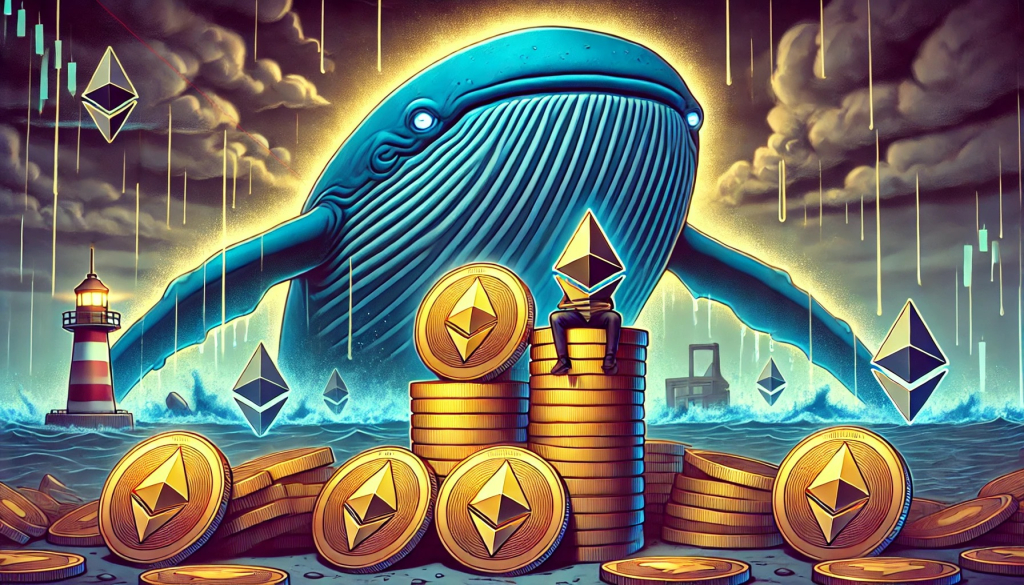
Stagnant crypto prices are increasingly being explained by a deeper structural shift rather than short-term sentiment. Market observers note that long-time “OG” crypto whales are gradually exiting large positions in bitcoin and ether, contributing to suppressed price action across digital assets. One key driver behind this behavior is rising concern over future quantum computing threats, which could eventually undermine existing cryptographic security models. As a result, early holders who accumulated assets at much lower valuations are choosing to reduce exposure while liquidity is still favorable.
At the same time, speculative capital has aggressively rotated out of cryptocurrencies and into commodities. Silver, in particular, has seen an explosion in volatility, with price swings rivaling those typically associated with memecoins. This unusual behavior highlights how risk-on traders are seeking alternative assets while crypto markets undergo a leverage reset. Historical market cycles suggest that deleveraging periods often take three to four months to fully resolve, and this current cycle, which began in October, may still be working through excess speculation.
Despite near-term price stagnation, long-term innovation within the Ethereum ecosystem continues to accelerate. Artificial intelligence and task-specific agents are increasingly viewed as the next major evolution for blockchain utility. Ethereum is positioning itself as the foundation of a fully autonomous machine economy, where AI-driven agents can execute financial decisions independently. The emergence of the ERC-8004 protocol is a major step in this direction, enabling trustless agentic activity such as automated wallet rebalancing, staking, and yield optimization without human intervention.
The Ethereum Foundation has reinforced this vision by formalizing a dedicated team focused on quantum-resistant infrastructure, aiming to future-proof the network against emerging computational threats. In parallel, crypto wallets are evolving into “digital twins” capable of managing risk tolerance, yield strategies, and asset allocation autonomously.
Institutional adoption is also advancing. SharpLink recently deployed $170 million of treasury assets into a restaking strategy using ConsenSys, Linea, EtherFi, and EigenLayer. By securing these DeFi investments through Anchorage, a qualified custodian, SharpLink has pioneered a new model for public companies seeking productive Ethereum yield. This shift underscores how, even amid market stagnation, the foundations for the next crypto growth cycle are being built.
















Comment 0