

 News
News  Coin Information
  About us
  Customer Service



Bitcoin (BTC) is facing a renewed debate over potential chain splits in 2026, as developers advance competing proposals that could culminate in either a hard fork or an unexpected network divergence during a soft-fork activation window. The discussion matters not only for technical governance, but also for market structure—any split that produces two viable networks can ripple through liquidity, exchange operations, and custody practices.
According to Bitcoin.com News, developer Paul Storc is pushing a hard fork initiative branded ‘eCash,’ targeting activation around block height 964,000—roughly around Aug. 21, 2026 UTC, depending on block times. Separately, a proposed soft fork known as BIP-110 is said to carry a risk of an unintended chain split during its August signaling period, highlighting the operational complexity that can surface even in upgrades designed to preserve backward compatibility.
If Bitcoin were to split into two chains, existing unspent transaction outputs (UTXOs) would typically be duplicated at the fork point, meaning holders could, in principle, end up with 1:1 balances across both ledgers. In practice, however, whether a “fork coin” becomes meaningfully usable depends on several factors: whether the new chain implements ‘replay protection’ (to prevent transactions on one chain from being mirrored on the other), whether it can attract sufficient ‘hashrate’ to stabilize mining difficulty and block production, and whether exchanges and users generate sustained demand and liquidity.
Custody structure would also shape who benefits from any potential fork. Users holding assets in self-custody wallets—where they control the private keys—would generally be able to sign transactions on both chains after the split. By contrast, coins held on centralized exchanges are subject to each platform’s policy because the exchange controls the keys. Historically, exchange support has varied widely during contentious forks, affecting everything from token distribution schedules to deposit/withdrawal timing and market price discovery.
In the U.S., regulatory developments remain another major market variable. Odaily cited betting market Kalshi as indicating the odds have risen to 50% that a ‘crypto clarity’ bill could be enacted before Congress breaks for its August recess. Journalist Pete Rizzo wrote on X that lawmakers want to “finish this” to secure certainty around consumer protections, suggesting negotiations are moving into a late-stage phase. The proposed framework is broadly viewed as an attempt to clarify supervisory jurisdiction and consumer protection standards—two of the most persistent friction points for U.S. digital asset markets.
Meanwhile, exchange flows are signaling pockets of user anxiety. Wu Blockchain, citing DefiLlama data, reported that Gate saw net outflows of about $207 million over the past seven days following a user theft incident, ranking second among centralized exchanges by net outflow during that stretch. Over the same period, Binance recorded roughly $308 million in net inflows, taking the top spot for net inflow.
Wu Blockchain also noted that Binance and Bybit have experienced notable outflows over the past month, attributing part of the pressure to the European Union’s delisting policies—an example of how regional compliance requirements can influence venue selection and cross-border liquidity patterns.
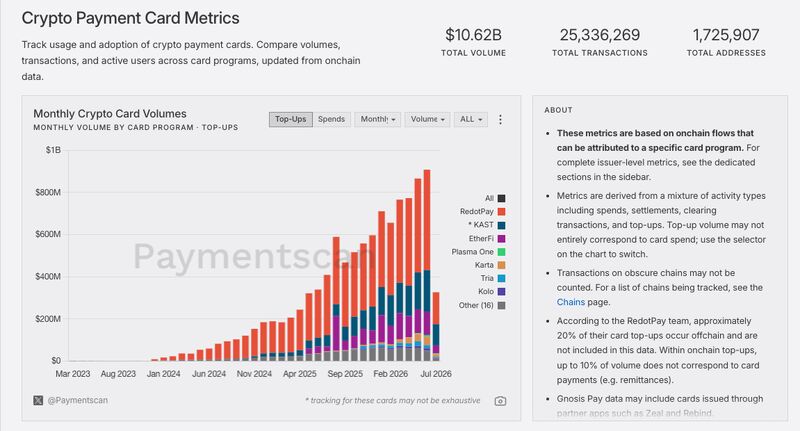
Outside trading, Bitcoin’s role in payments continues to attract attention. U.S. fast-food chain Steak ’n Shake said it reduced credit card processing costs by accepting Bitcoin payments, according to comments shared by Rizzo. The company added that savings from BTC payments were reinvested to improve the health profile of its ingredients, framing the initiative as both an operational and brand decision. While crypto payments remain a niche in most consumer categories, the disclosure adds to the growing set of real-world case studies focused on ‘payment rails’ rather than price speculation.
On the market analysis front, Bitcoin Magazine cited Fidelity’s “Bitcoin support/resistance” dataset on Friday ET, describing BTC as being in an ‘accumulation’ phase and gradually approaching a long-term ‘power-law support’ zone. Such long-horizon models are often watched by macro-oriented investors as a way to contextualize price relative to structural trendlines, though they do not predict short-term volatility.
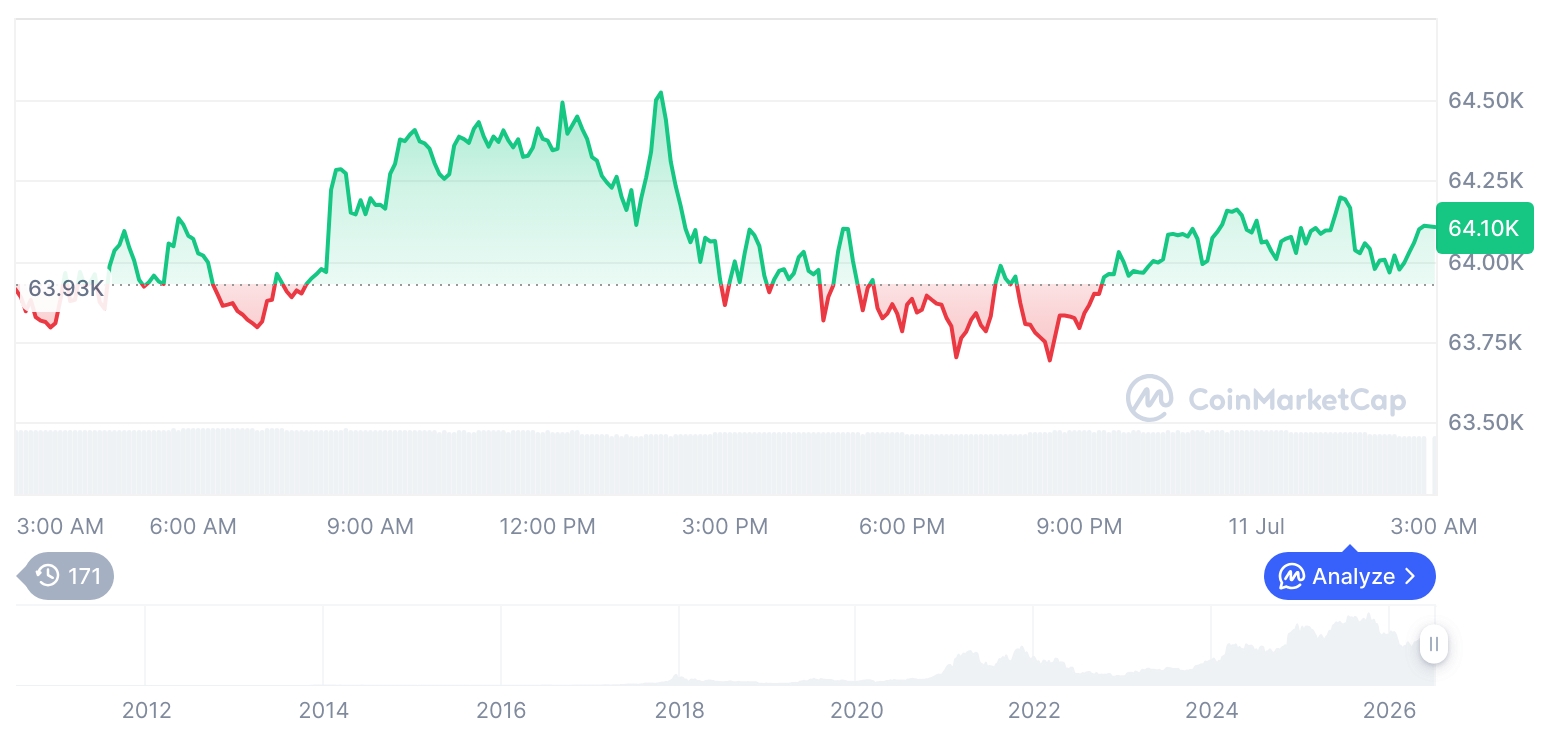
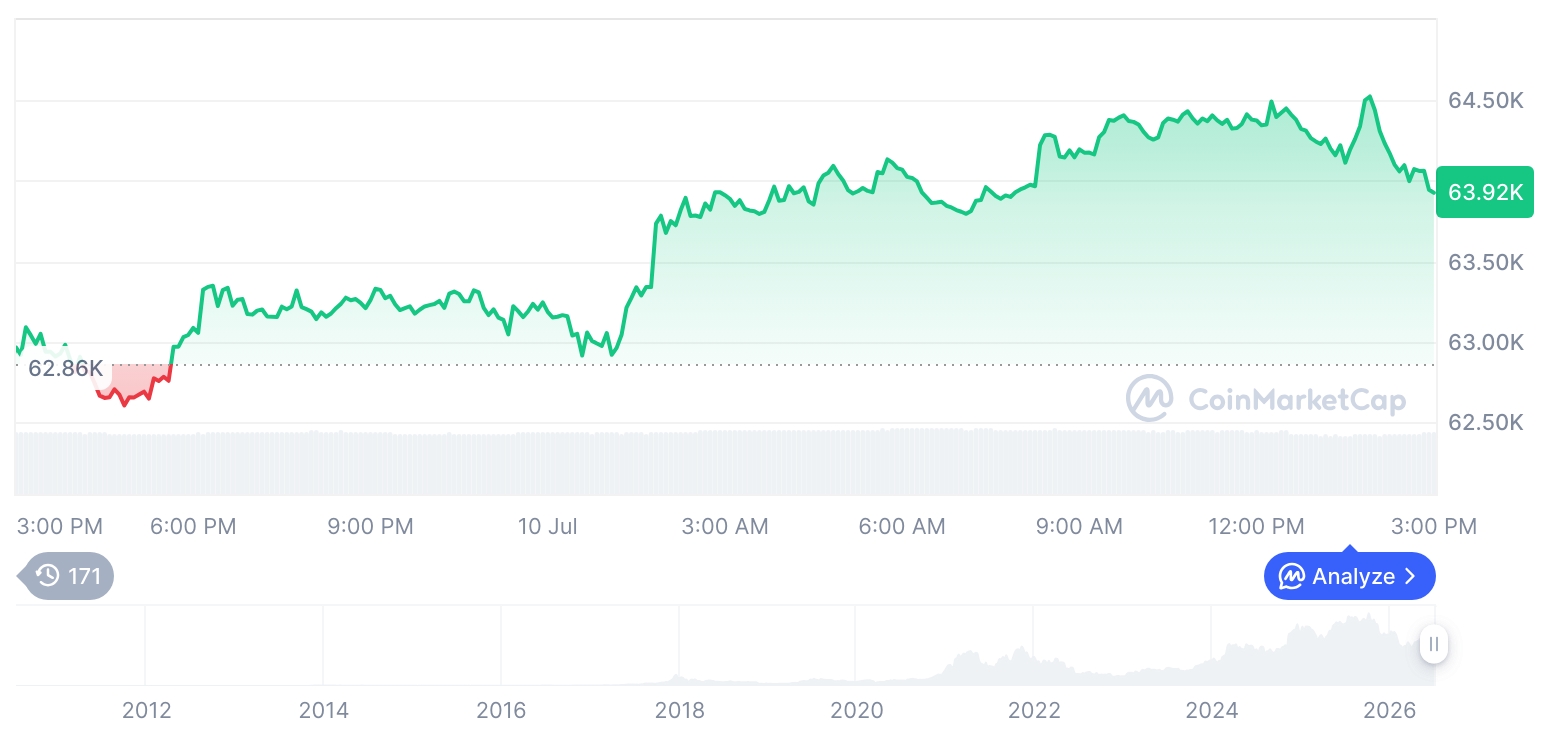
As of the latest OKX data referenced in the briefing, Bitcoin was trading around $63,970, down about 0.11% on the day, hovering below the $64,000 level. With fork chatter, regulatory timelines, and exchange flows all in motion, traders and long-term holders alike are watching whether these narratives translate into sustained shifts in liquidity and risk sentiment.
🔎 Market Interpretation
- 2026 split risk becomes a tradable narrative: Competing upgrade paths (Storc’s proposed hard fork “eCash” vs. soft-fork BIP-110) reintroduce chain-split tail risk, which can affect liquidity planning, derivatives pricing, and exchange risk controls ahead of August 2026.
- Soft forks can still create operational split scenarios: Even an upgrade designed for backward compatibility (BIP-110) can produce an unintended divergence during its signaling/activation window—raising the importance of node readiness, miner coordination, and exchange deposit/withdrawal policies.
- Fork value is not automatic despite 1:1 UTXO duplication: While balances may be duplicated at the fork point, the economic viability of a “fork coin” depends on replay protection, sustained hashrate, and whether exchanges list and make markets.
- Custody determines who captures fork optionality: Self-custody holders typically retain the ability to transact on both chains, while exchange users depend on platform decisions for distribution, ticker assignment, and access timing.
- Regulatory clock adds another volatility catalyst: A reported 50% odds estimate for a U.S. “crypto clarity” bill before the August recess suggests a near-term policy inflection that could reshape market structure expectations (jurisdiction, consumer protection standards).
- Exchange flows show risk reallocation, not one-way exits: Gate’s ~$207M net outflows after a theft incident contrast with Binance’s ~$308M net inflows over the week, while broader monthly outflows at major venues highlight sensitivity to incidents and compliance-driven delistings (EU impact).
- Payments narrative offers fundamentals beyond price: Steak ’n Shake’s claimed reduction in card processing costs via BTC payments adds a real-economy “payment rails” data point, though adoption remains niche.
- Price context remains cautious/neutral: BTC near ~$63,970 and slightly down on the day, with commentary pointing to “accumulation” and proximity to long-term power-law support—useful for macro framing, not short-term prediction.
💡 Strategic Points
- Fork-prep playbook for holders: Prior to any contentious upgrade window, move assets to self-custody if you want direct control of potential fork outcomes; confirm wallet support, and avoid transacting during peak uncertainty to reduce replay/operational risk.
- Replay protection is a key due-diligence item: If a split occurs, wait for clear tooling and exchange guidance; without replay protection, a transaction on one chain can unintentionally be valid on the other.
- For exchanges/custodians: Plan early for chain monitoring, node policy (which chain is “BTC”), deposit/withdrawal pauses, and communication templates; define criteria for listing or crediting a fork asset (security, hashrate, community support).
- Watch hashrate distribution and difficulty stability: A minority chain with weak hashrate can face slow blocks, reorg risk, and thin markets—factors that can quickly erode any fork coin’s usability and valuation.
- Regulatory timing as a positioning input: A potential U.S. clarity bill before August recess can shift sentiment for U.S.-linked venues and products; monitor legislative milestones as catalysts alongside technical upgrade dates.
- Use flow data as a venue-risk indicator: Large net outflows after incidents can signal user confidence shocks; pair flow monitoring with proof-of-reserves, disclosure quality, and regional compliance constraints (e.g., EU delisting dynamics).
- Payments adoption lens: Merchant adoption stories may influence long-term narratives; track whether savings claims translate into repeatable models (customer uptake, volatility management, settlement workflows).
- Risk management around key dates: If August 2026 becomes a focal window (activation height ~964,000; BIP signaling), anticipate widened spreads, higher funding/IV, and stricter margining—especially around ambiguous chain outcomes.
📘 Glossary
- Hard fork: A protocol change that is not backward compatible; nodes that don’t upgrade can end up on a different chain.
- Soft fork: A backward-compatible upgrade where old nodes still accept new blocks, though activation can still create edge-case split risk if coordination fails.
- Chain split: A divergence into two ledgers sharing history up to a point, then producing different valid blocks/transactions afterward.
- UTXO (Unspent Transaction Output): The “coin chunks” Bitcoin tracks; at a fork, UTXOs are typically duplicated so balances appear on both chains at the split moment.
- Replay protection: Mechanisms that prevent a transaction on one chain from being valid on the other after a split.
- Hashrate: The total mining computational power securing a PoW chain; higher hashrate generally improves security and block stability.
- Signaling period: The window in which miners/validators indicate support for an upgrade (often via version bits), used to trigger activation conditions.
- Self-custody: Holding crypto where the user controls private keys, enabling independent access to assets across potential forked chains.
- Centralized exchange (CEX): A custodial trading platform; users rely on its policies for fork handling, credits, and withdrawals.
- Liquidity: The ability to trade with low slippage; chain splits and exchange policy uncertainty can fragment liquidity.
- Net inflows/outflows: On-chain value moving into/out of exchanges; often interpreted as shifts in trading intent or custody risk appetite.
- Power-law support: A long-horizon model that fits price to an assumed power-law trendline; used for macro context rather than short-term forecasting.















Comment 0