

 News
News  Coin Information
  About us
  Customer Service



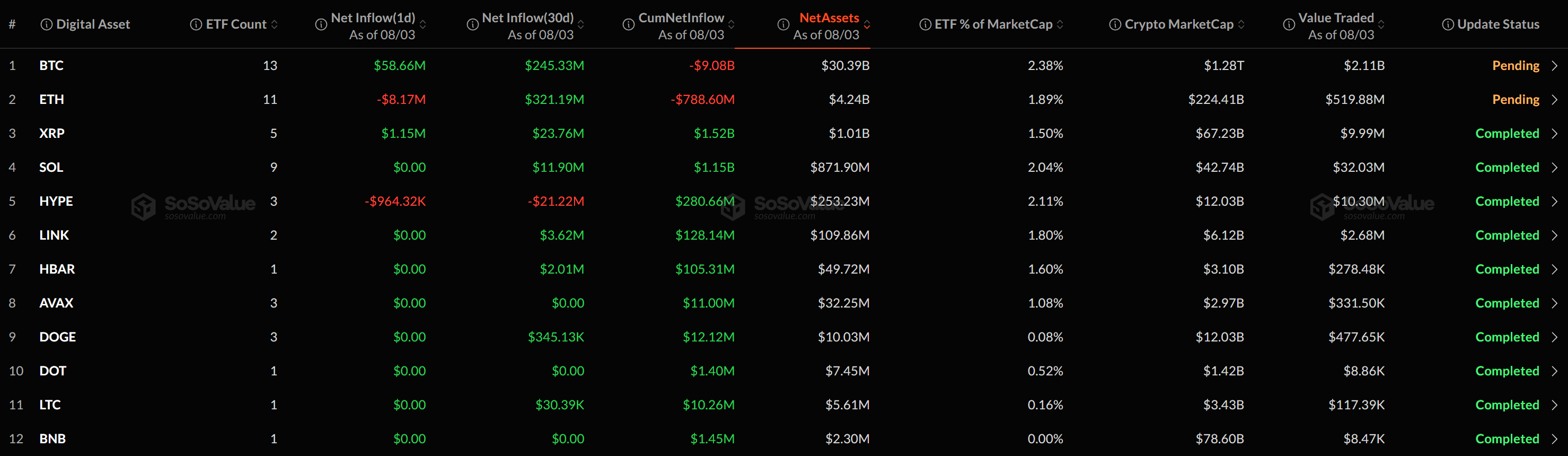
XRP (XRP) edged higher on Thursday, but the bigger story for traders is happening off the price chart: the amount of XRP held on centralized exchanges has fallen to its lowest level in seven years, a shift that often points to easing near-term 'sell pressure'—even as broader performance remains weak.
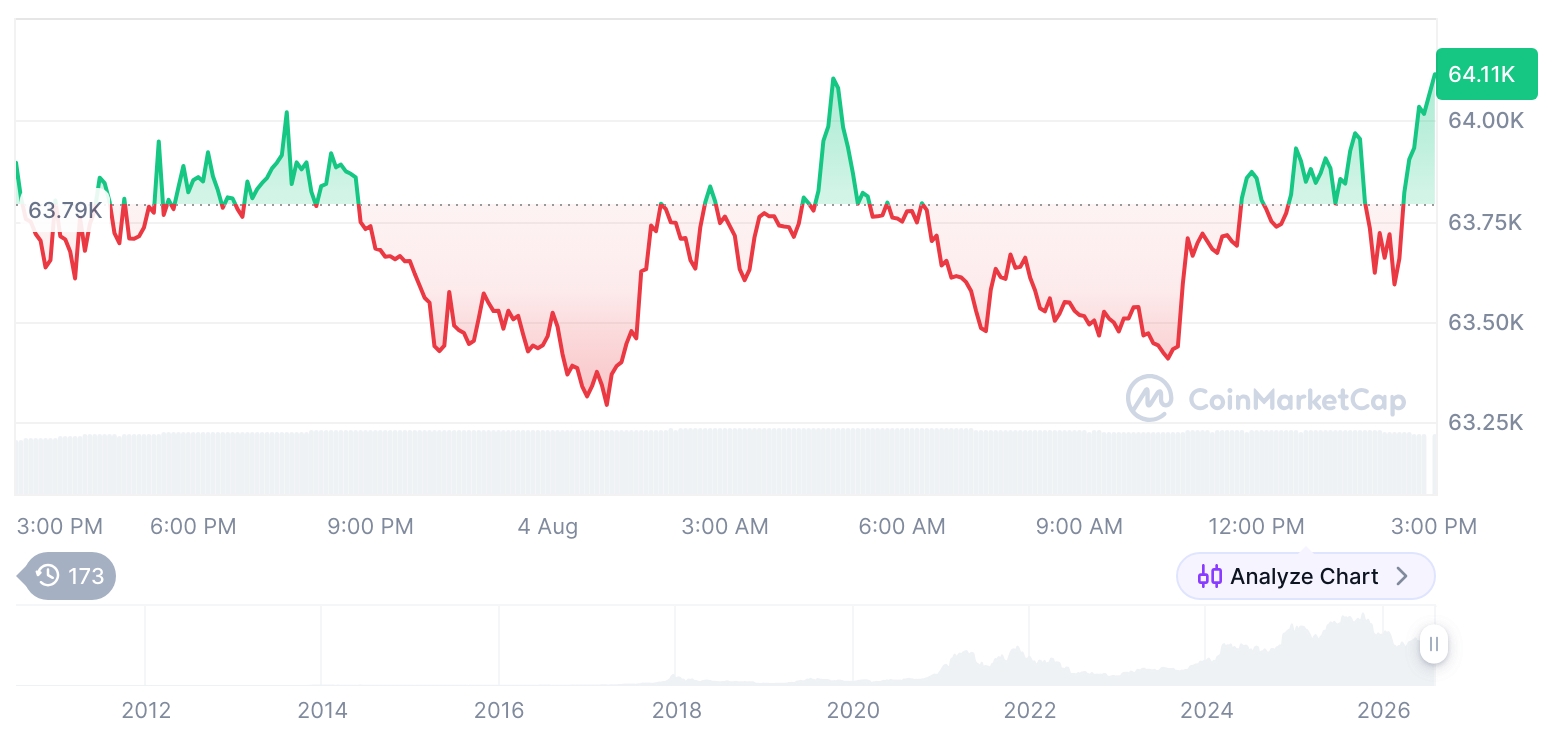
According to CoinMarketCap data, XRP was trading at $1.1032 as of 9:05 p.m. UTC on July 10, up 0.59% over the past 24 hours. Daily trading volume totaled roughly $1.15 billion, while Google Finance showed a similar print near $1.1004, confirming a modest rebound.
Zooming out, however, XRP’s recent trend still reflects a heavier drawdown. The token is down 3.04% over the last seven days, with 60-day and 90-day returns at -25.13% and -18.98%, respectively. The 30-day return sits barely positive at +0.59%, underscoring a market that has struggled to reclaim sustained momentum. XRP’s market capitalization stood near $68.9 billion, representing about 3.15% of the total crypto market.
The most notable on-chain development is the steep decline in exchange-held balances. A report cited by AOL Markets said XRP supply on exchanges has dropped to a seven-year low—typically a sign that holders are moving tokens from trading venues into self-custody wallets. In market terms, that migration is often associated with reduced immediate distribution risk and a tilt toward longer holding periods.
Still, the supply-side signal has yet to translate into a decisive price recovery. XRP remains roughly 50% below its year-to-date high, highlighting a disconnect between improving distribution dynamics and demand conditions. The gap suggests that a clearer pickup in 'spot demand'—or a stronger risk-on turn across digital assets—may be needed before the market treats lower exchange balances as a catalyst rather than a backdrop.
Derivatives and prediction markets are also pointing to consolidation rather than breakout expectations. Barchart data show active quoting in XRP futures for the July 2026 contract, indicating sustained interest from both institutional participants and speculative traders. On Polymarket’s market for XRP’s July 11 price, expectations clustered tightly around the current range: the $1.00–$1.10 band was assigned a 48% probability, narrowly ahead of the $1.10–$1.20 band at 47%, implying a market leaning toward near-term sideways action.
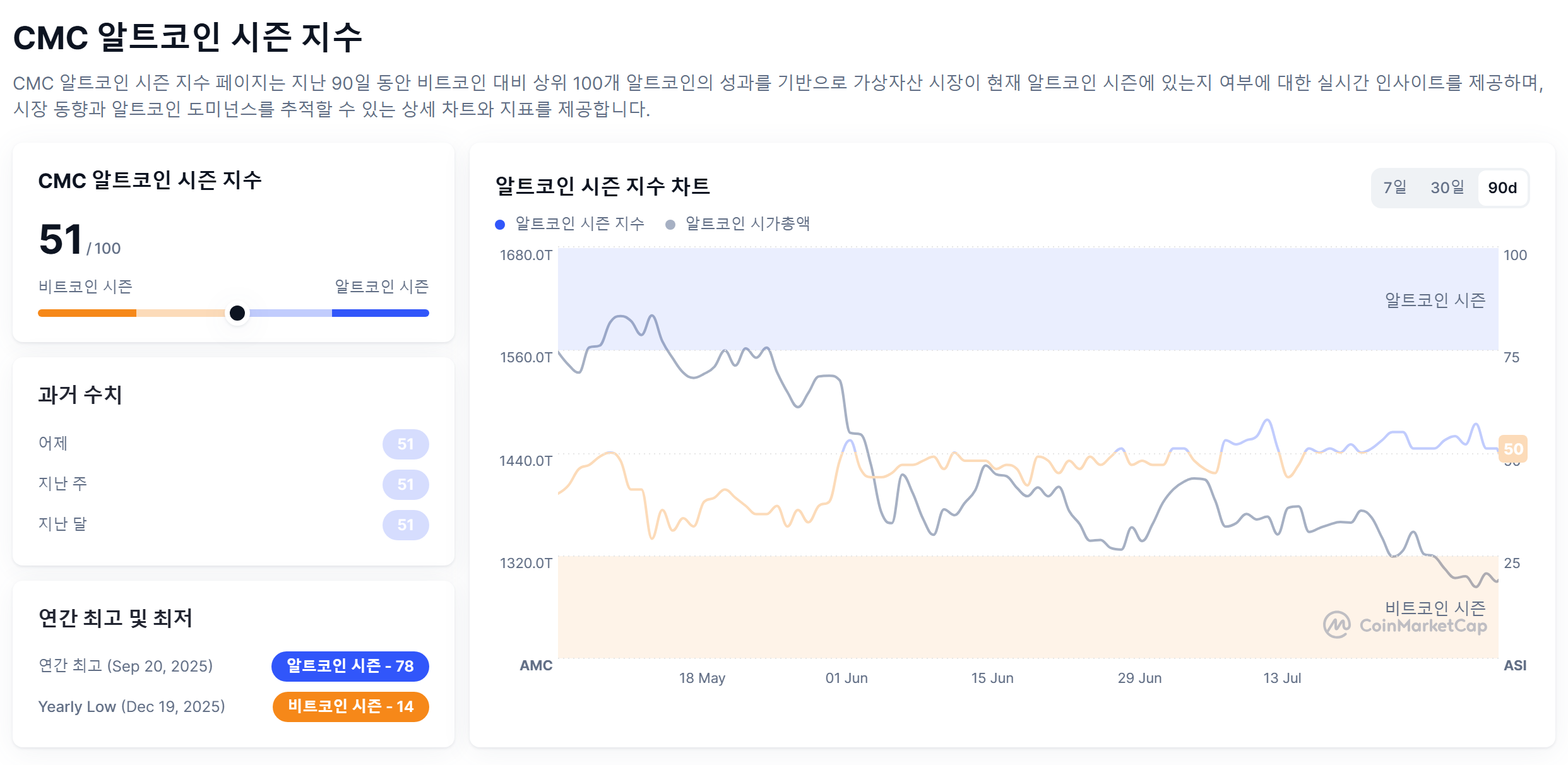
Risk sentiment across crypto improved only marginally. BitPinas reported that the Crypto Fear & Greed Index rose from 54 to 56, a small move toward 'neutral-to-greed' territory that can support large-cap altcoins at the margins. Even so, the limited uptick falls short of signaling a broad risk-on wave. XRP’s circulating supply is about 62.47 billion tokens, with a maximum supply of 100 billion; fully diluted valuation was estimated around $110.3 billion.
Notably absent from Thursday’s news flow were fresh fundamental catalysts from the Ripple and XRPL ecosystem. Market watchers did not see confirmed announcements around major protocol launches, DeFi expansion, new institutional cross-border payment corridors, central bank digital currency partnerships, or tokenization initiatives. For now, coverage remains concentrated on market behavior—price action, exchange supply trends, and derivatives positioning—leaving XRP’s next decisive move likely dependent on whether improving on-chain signals can be matched by a revival in demand and broader market confidence.
🔎 Market Interpretation
- Price action (near-term): XRP rose modestly to about $1.10 (+0.59% 24h) on roughly $1.15B daily volume, signaling a small rebound but not a trend reversal.
- Trend context (multi-week): Despite the uptick, XRP remains weak on higher timeframes: -3.04% (7D), -25.13% (60D), -18.98% (90D). The 30D return is only +0.59%, consistent with choppy consolidation.
- Key on-chain signal: XRP held on centralized exchanges fell to a 7-year low, typically interpreted as reduced immediate sell availability (tokens moving to self-custody).
- Signal vs. outcome: The decline in exchange balances has not yet translated into a decisive recovery; XRP is still about 50% below its year-to-date high, implying demand is not strong enough to capitalize on improved supply dynamics.
- Positioning/expectations: Derivatives and prediction market data point to range-bound expectations rather than a breakout. Polymarket probabilities cluster around $1.00–$1.20 for July 11, with the market split nearly evenly between $1.00–$1.10 (48%) and $1.10–$1.20 (47%).
- Macro/risk tone: Crypto sentiment improved slightly (Fear & Greed 54 → 56), supportive at the margin but not a clear risk-on surge.
- Fundamentals headline gap: No new confirmed Ripple/XRPL catalysts (major launches, DeFi expansion, institutional corridors, CBDC/tokenization partnerships) were highlighted, keeping focus on market structure rather than ecosystem-driven demand.
💡 Strategic Points
- Watch the supply-demand “handshake”: Lower exchange balances can tighten tradable supply, but a sustained move likely needs spot demand pickup (net inflows to XRP buying) or broader market risk-on strength.
- Near-term base case = consolidation: With prediction markets tightly centered near spot and sentiment only slightly improved, traders may treat $1.00–$1.20 as the primary short-term decision zone until new catalysts emerge.
- Interpret exchange outflows carefully: A 7-year low exchange balance can mean reduced sell pressure, but it can also reduce liquidity on venues—potentially increasing volatility if demand returns suddenly.
- Derivatives activity as a temperature check: Continued interest in longer-dated futures (e.g., July 2026) suggests engagement from hedgers/speculators; monitor funding/open interest changes for signs of shifting conviction.
- Levels to contextualize performance: XRP’s difficulty reclaiming momentum while still far below YTD highs implies rallies may face overhead supply from prior buyers unless demand strengthens materially.
- Token metrics framing: With circulating supply at ~62.47B (max 100B) and FDV around $110.3B, valuation discussions may hinge on whether activity growth can justify higher fully diluted expectations.
📘 Glossary
- Centralized exchanges (CEXs): Trading platforms where users custody assets with the exchange (e.g., Binance, Coinbase).
- Exchange-held balance: The amount of a token held in known exchange wallets; declines often indicate withdrawals to private wallets.
- Sell pressure: The market’s immediate propensity to sell; higher exchange balances can increase near-term sell availability.
- Self-custody: Holding crypto in a wallet controlled by the user (private keys), rather than on an exchange.
- Spot demand: Direct buying/selling in the underlying asset (XRP) as opposed to derivatives-based exposure.
- Derivatives (futures): Contracts tied to an asset’s price used for leverage, speculation, or hedging.
- Prediction markets (Polymarket): Markets where participants trade probabilities of future outcomes (e.g., a price closing in a given range).
- Market capitalization: Price × circulating supply; used to compare token sizes (XRP cited near $68.9B).
- Fully Diluted Valuation (FDV): Price × maximum supply; a valuation measure assuming all tokens exist in circulation.
- Crypto Fear & Greed Index: A sentiment indicator; higher values generally imply greater risk appetite.

















Comment 0