

 News
News  Coin Information
  About us
  Customer Service


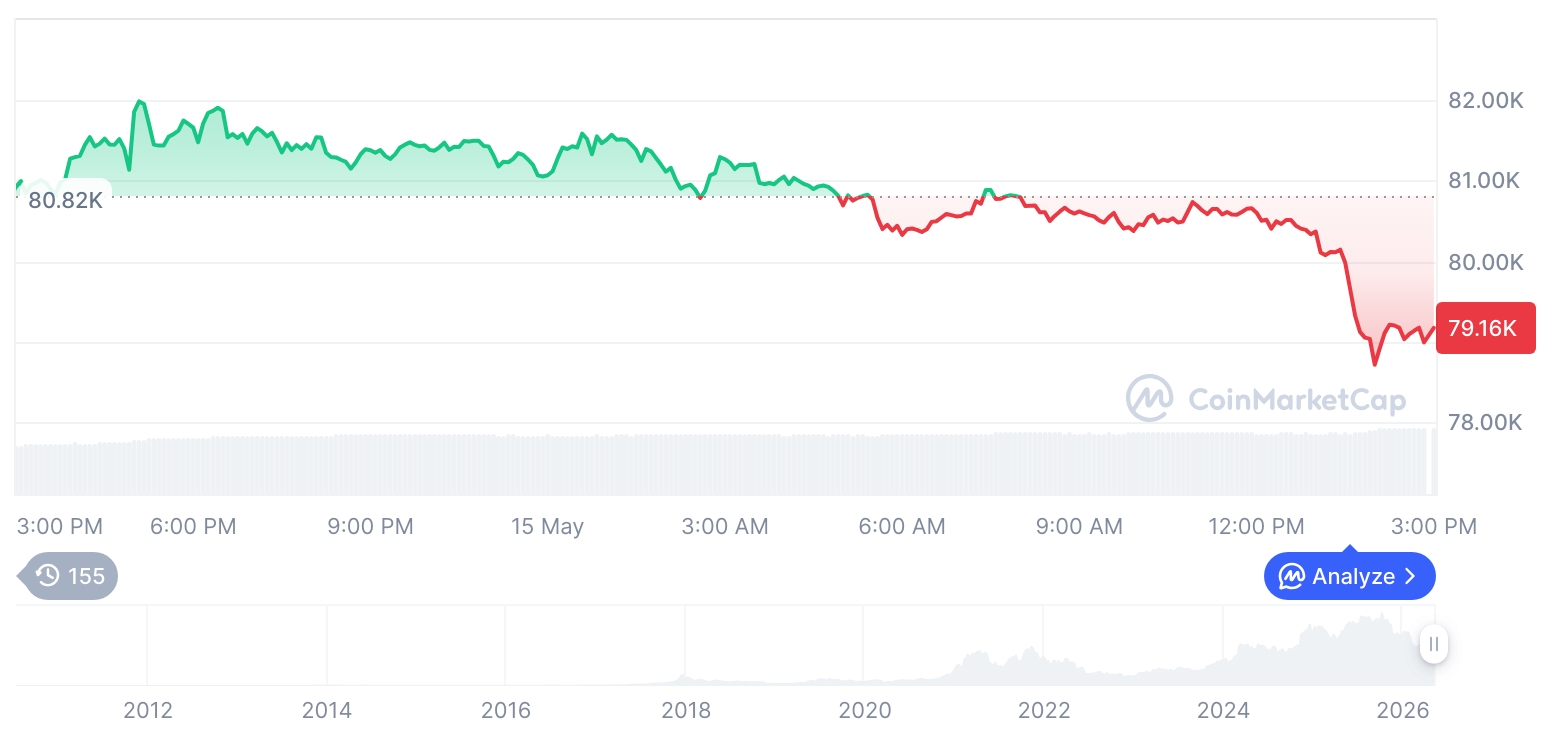
Cryptocurrency prices drifted lower in the early hours of Friday UTC, with Bitcoin (BTC) and Ethereum (ETH) both sliding as broader risk appetite softened. The pullback came even as trading activity surged in stablecoins, DeFi tokens and crypto derivatives—signals that investors may be rotating into ‘sideline liquidity’ while also positioning for higher near-term volatility.
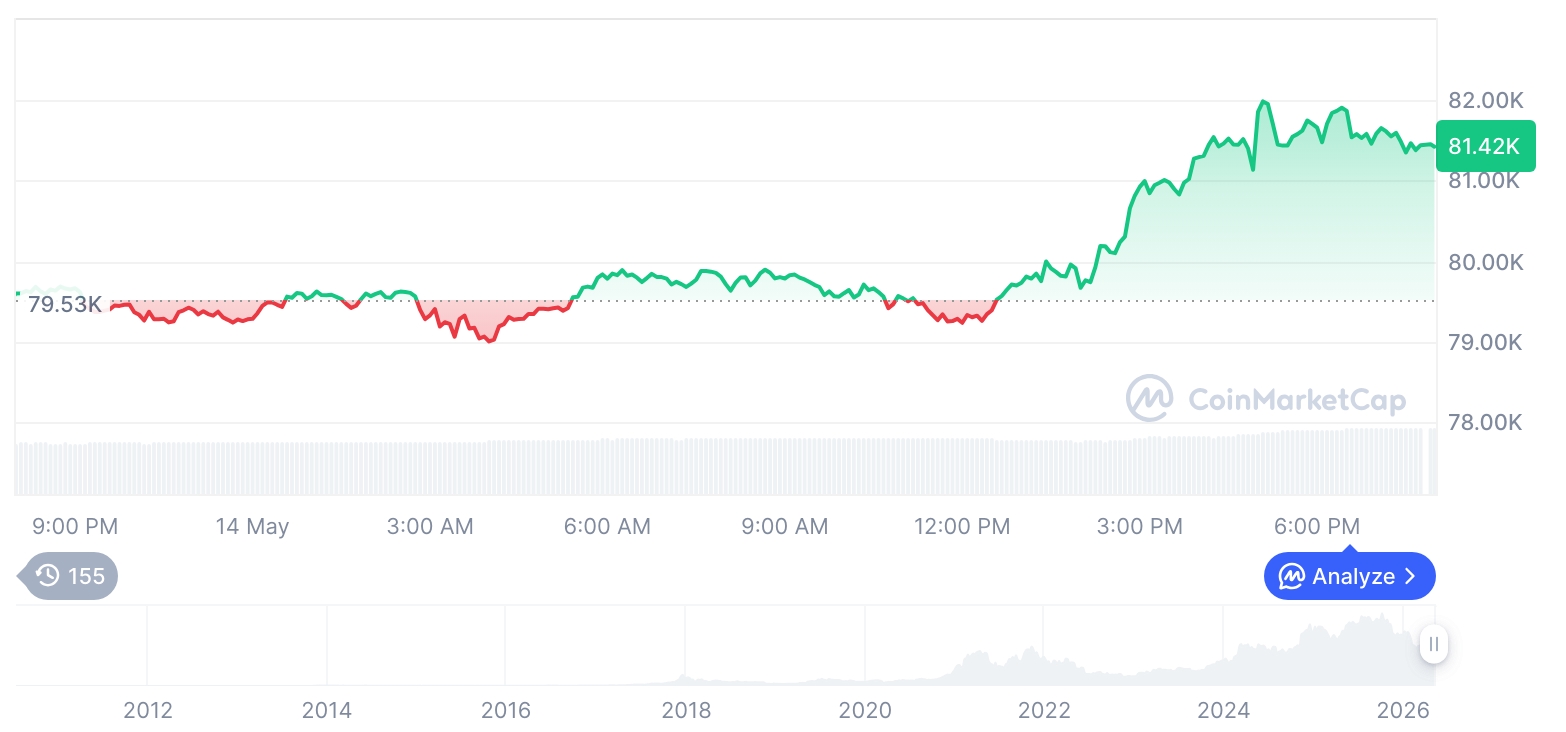
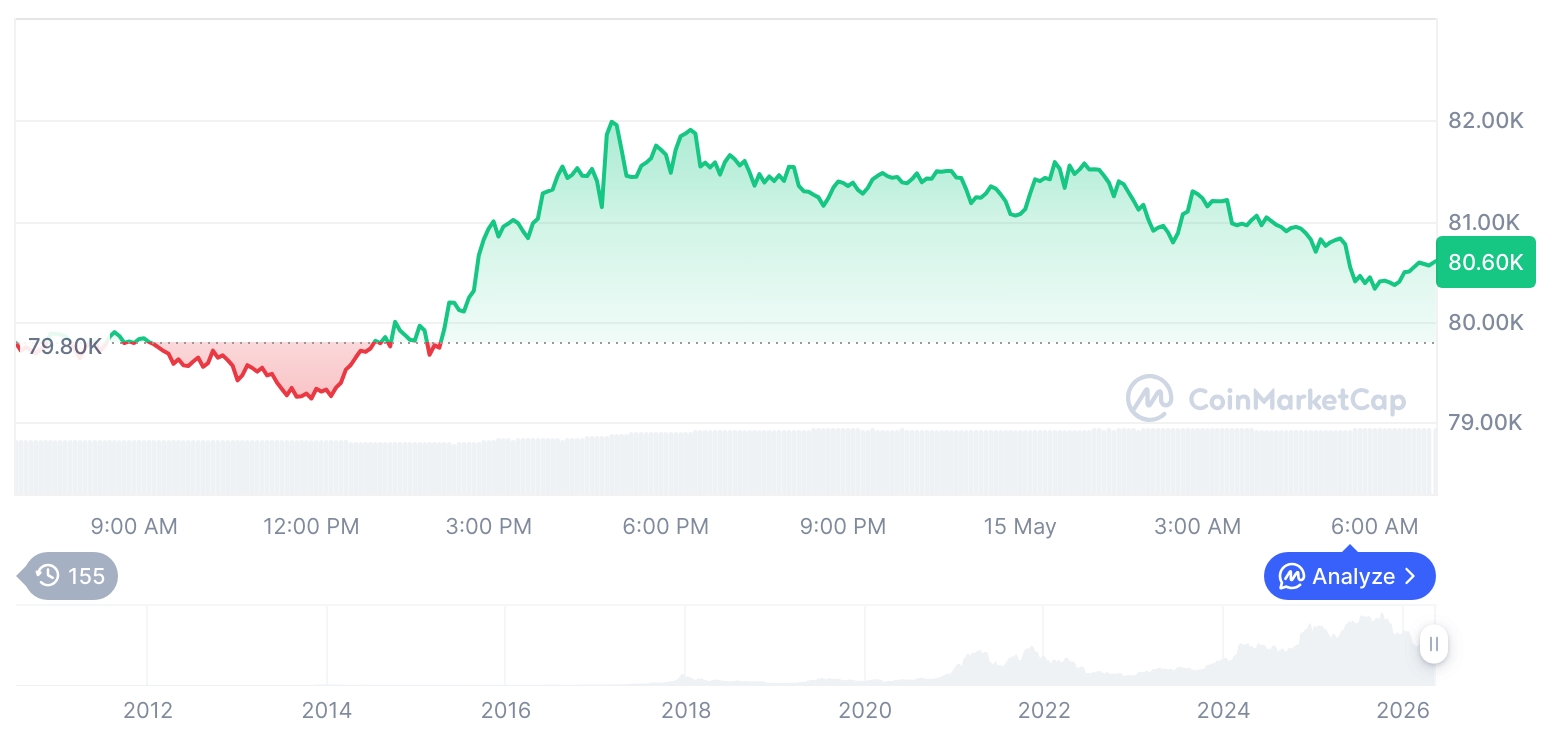
According to TokenPostMarket data timestamped at 12:05 a.m. Saturday in Korea, Bitcoin was trading at $79,135.88, down 2.21% over 24 hours. Ethereum fell 3.18% to $2,213.12 over the same period. The decline extended across most large-cap altcoins, indicating a broad-based cooling rather than an isolated move in a single sector.
Among major tokens, XRP (XRP) dropped 2.27%, BNB (BNB) slipped 0.46%, Solana (SOL) fell 3.40%, TRON (TRX) declined 1.07%, and Dogecoin (DOGE) lost 2.70%. Hyperliquid (HYPE) stood out as an exception, rising 4.19%.
Altcoins collectively were valued at roughly $1.05 trillion in market capitalization, with 24-hour altcoin trading volume near $69.63 billion. The total cryptocurrency market capitalization stood at about $2.63 trillion, while aggregate 24-hour spot trading volume across the market was approximately $117.67 billion.
Market structure metrics showed slight slippage in the two largest networks’ share of total value. Bitcoin’s ‘dominance’—its portion of total crypto market capitalization—edged down to 60.22%, off 0.01 percentage points from the prior day. Ethereum’s dominance fell more noticeably to 10.15%, down 0.09 percentage points. Even modest reductions in dominance can reflect a marginal shift in positioning across the broader token landscape, though the overall price action suggested that selling pressure remained widespread rather than concentrated in majors alone.
While spot prices weakened, activity in several key subsectors moved in the opposite direction. The DeFi market posted a market capitalization of about $63.46 billion, with 24-hour volume at around $11.10 billion—up 15.01% day over day. Stablecoins also saw a sharp pickup in turnover: the stablecoin market capitalization was roughly $292.69 billion, while 24-hour stablecoin volume climbed to about $120.29 billion, up 33.37%.
Rising stablecoin volumes during a down tape are often interpreted as a sign of traders consolidating into dollar-pegged assets while waiting for clearer direction. At the same time, the jump can also reflect elevated arbitrage, hedging, and rapid rotation between venues as volatility increases.
The most striking surge came from derivatives. Crypto futures and options recorded 24-hour trading volume of roughly $1.11 trillion, up 34.79% from the previous day. An expansion in derivatives activity alongside falling spot prices frequently points to an intensifying battle over short-term direction, with leverage being used either to hedge downside exposure or to speculate on rebounds.
With Bitcoin and Ethereum both declining and most major altcoins under pressure, the near-term market narrative appears anchored in caution. However, the simultaneous rise in stablecoin and derivatives turnover suggests that capital has not exited the ecosystem outright—rather, it may be repositioning for ‘higher volatility’ and faster tactical trading as the market searches for its next catalyst.
🔎 Market Interpretation
- Risk-off drift in majors: BTC ($79,135.88, -2.21%) and ETH ($2,213.12, -3.18%) slid alongside most large-cap altcoins, signaling a broad market cooldown rather than a single-token event.
- Rotation, not capitulation: Despite weaker spot prices, stablecoin, DeFi, and derivatives activity increased—suggesting capital is staying in crypto but shifting toward liquid positioning and hedging.
- Dominance edges lower: BTC dominance dipped to 60.22% (down 0.01pp) and ETH dominance to 10.15% (down 0.09pp), implying marginal redistribution across the market even as selling remained widespread.
- Selective strength: Hyperliquid (HYPE) rose +4.19% while most majors fell (e.g., SOL -3.40%, DOGE -2.70%), highlighting pockets of relative demand amid overall weakness.
- Heightened volatility regime: Derivatives volume surged to $1.11T (+34.79%), consistent with increased hedging/speculation as traders anticipate bigger near-term moves.
💡 Strategic Points
- Watch stablecoin turnover as a “ready cash” signal: Stablecoin volume rose to $120.29B (+33.37%). If spot continues to fall while stablecoin volume stays elevated, it often indicates traders are waiting to redeploy rather than exiting the market.
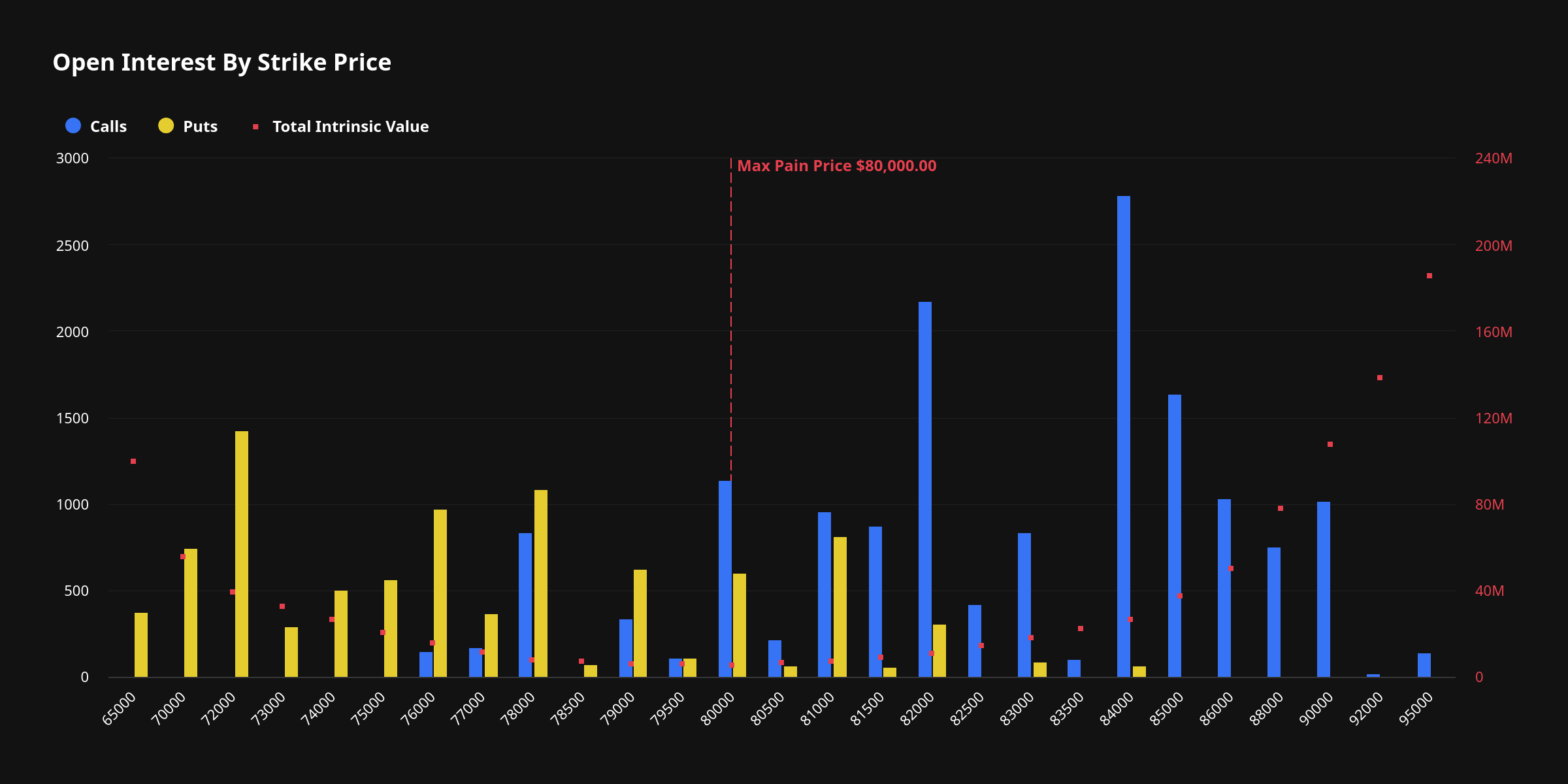
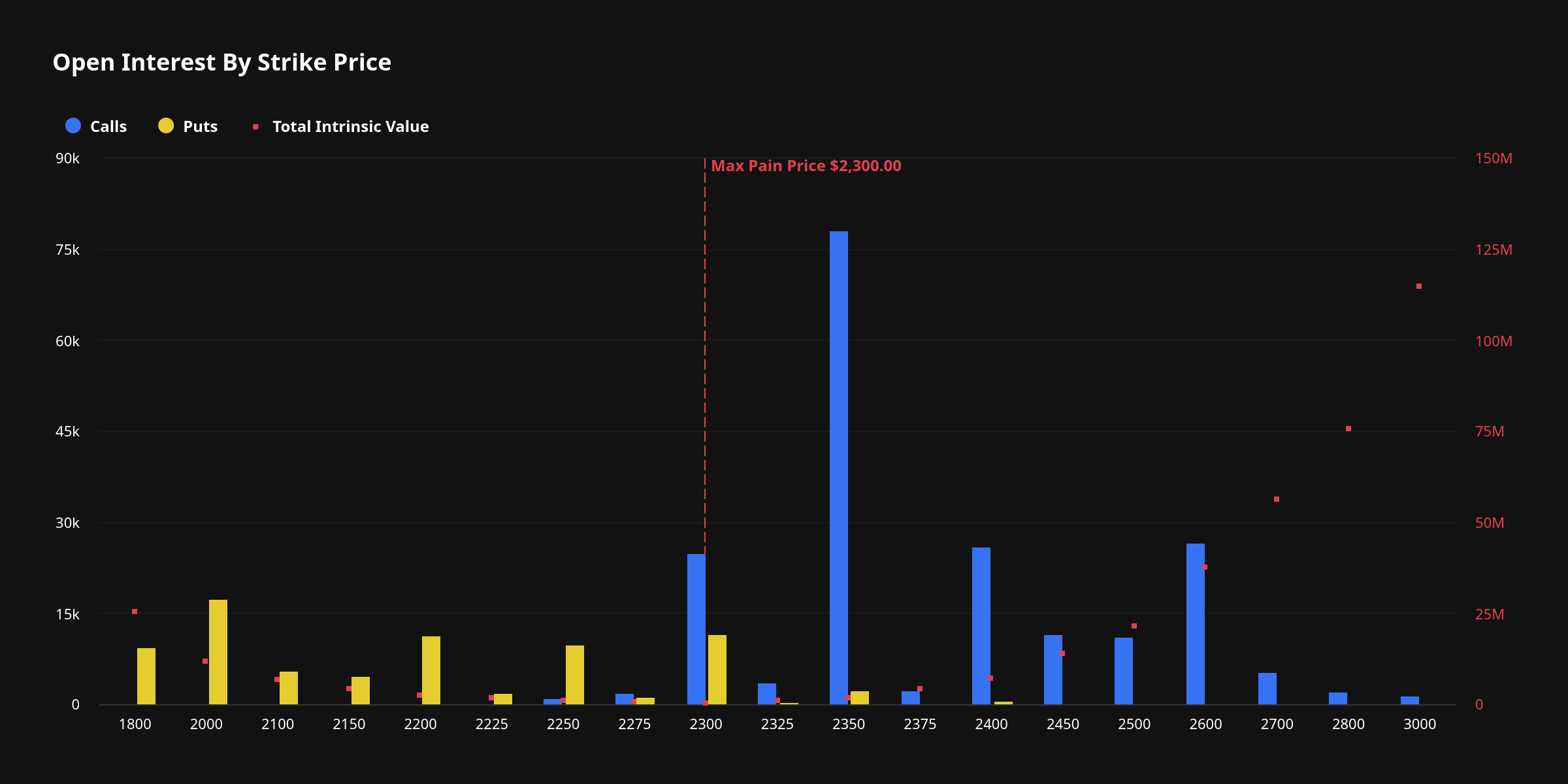
- Use derivatives expansion as a timing cue: Spiking futures/options volume during spot weakness can precede either a short-covering bounce or continuation selloff. Confirm direction with open interest, funding rates, and liquidation prints (not provided in article).
- Broader-market risk management: With declines across BTC/ETH and large caps, diversification may not reduce drawdowns in the short term; sizing and hedges tend to matter more than token selection.
- DeFi activity uptick may be positioning: DeFi market volume increased +15.01% to about $11.10B. If this persists while spot stabilizes, it can indicate risk appetite returning via on-chain venues.
- Key levels are psychological as well as technical: BTC near the $80K area can act as a sentiment pivot. Reclaims with fading stablecoin “parking” and cooling derivatives heat would be more supportive than a bounce on rising leverage.
- Monitor market structure: Total crypto market cap ~$2.63T and spot volume ~$117.67B. A rebound accompanied by rising spot (not just derivatives) is typically healthier than leverage-led moves.
📘 Glossary
- Dominance: The share of total crypto market capitalization held by a specific asset (e.g., BTC dominance = BTC market cap ÷ total market cap).
- Stablecoins: Tokens designed to track a stable value (often USD). High volume can indicate “cash-like” positioning, hedging, or rapid trading between venues.
- DeFi (Decentralized Finance): On-chain financial services such as decentralized exchanges, lending, and derivatives without traditional intermediaries.
- Derivatives (Futures/Options): Contracts whose value is derived from an underlying asset (e.g., BTC). Often used for leverage, hedging, and short-term speculation.
- Spot trading: Buying/selling the underlying asset for immediate settlement, as opposed to trading derivative contracts.
- Risk appetite (Risk-on/Risk-off): Market willingness to hold higher-volatility assets. Softening risk appetite typically pressures crypto and other risk assets.
- Sideline liquidity: Capital temporarily moved into liquid, low-volatility instruments (often stablecoins) while waiting for clearer market direction.
- Volatility: The magnitude and speed of price movements. Rising derivatives activity often coincides with expectations of larger swings.


















Comment 0