

 News
News  Coin Information
  About us
  Customer Service


 Add as a preferred source on Google

T. Rowe Price’s newly approved ‘actively managed’ multi-asset crypto ETF is emerging as one of the most consequential U.S. regulatory green lights in months, even as separate developments—from a suspected North Korea-style token exploit to intensified tax enforcement in India—underscore the market’s uneven path toward mainstream adoption.
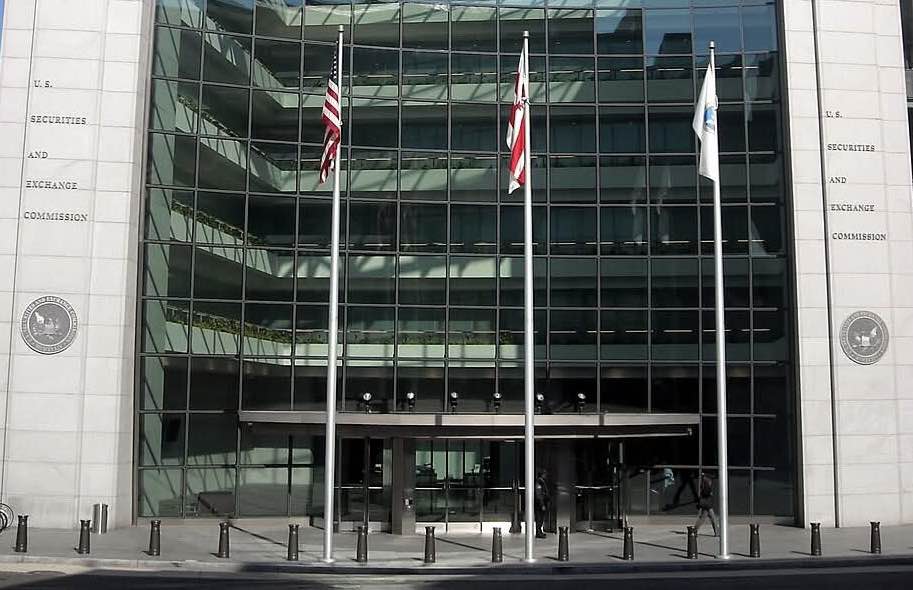
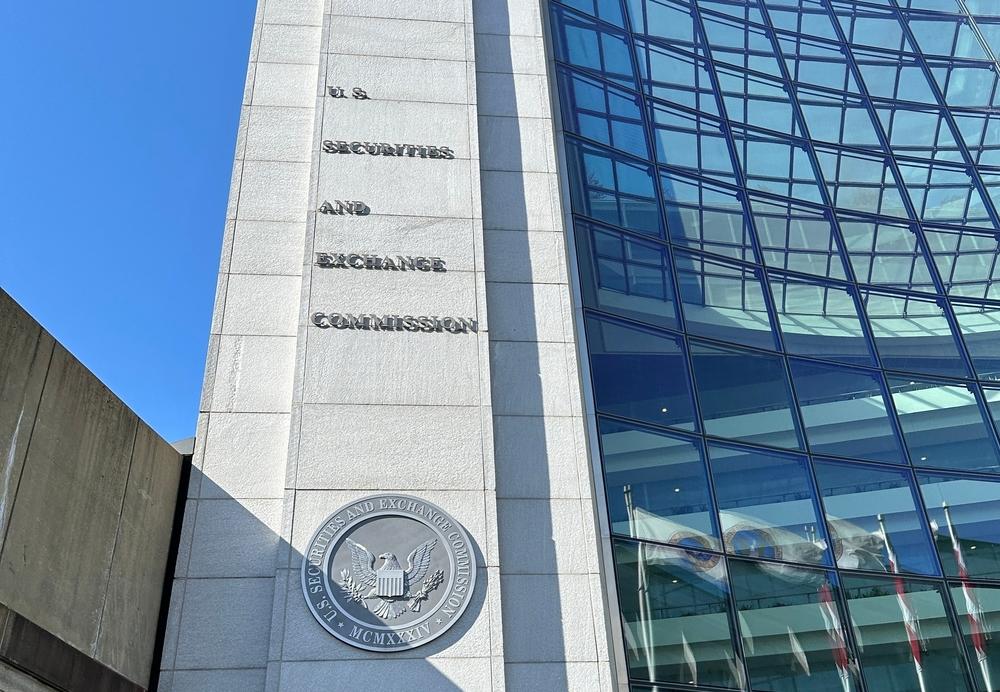
According to local reports, the U.S. Securities and Exchange Commission (SEC) approved T. Rowe Price’s actively managed cryptocurrency ETF on June 12, 2026. The approval clears a key procedural hurdle for listing on NYSE Arca, though the fund has not yet begun trading.
The proposed product is designed to hold between five and 15 cryptocurrencies. A draft portfolio list includes Bitcoin (BTC), Ethereum (ETH), Solana (SOL), and XRP (XRP), alongside more volatile assets such as Dogecoin (DOGE) and Shiba Inu (SHIB). Market participants view the inclusion of high-beta tokens as a notable signal that issuers are testing the SEC’s evolving tolerance for diversified, discretionary crypto exposure rather than single-asset structures.
T. Rowe Price has submitted multiple amendments since April, reflecting the iterative negotiation that has become typical for crypto-linked products seeking U.S. approval. Analysts say the decision could become a reference point for other managers pursuing ‘multi-asset’ vehicles, particularly those that blend large-cap crypto with meme-linked assets that have historically raised suitability and market-manipulation concerns.
In a separate security incident, Humanity disclosed findings from an independent investigation by Quantstamp into the H token breach, stating that the attacker used tools and tactics resembling those attributed to North Korean hacking groups. The report said the exploit began with a phishing email impersonating South Korean exchange Bithumb, prompting a project director to open a malicious attachment. The attacker allegedly deployed remote-access malware to steal device data and wallet private keys.
With the compromised keys, the attacker reportedly upgraded a contract on Ethereum to transfer roughly 141.18 million H tokens, and then seized control of a proxy-admin contract on BNB Chain to mint additional tokens. The stolen assets were sold over roughly eight hours via Uniswap and PancakeSwap, pressuring liquidity and creating acute price dislocations—an increasingly familiar pattern in token exploits where rapid on-chain liquidation amplifies volatility.
Humanity said the H token contract on Ethereum has been frozen and that the mainnet bridge was not affected. However, the BNB Chain deployment contract remains under the attacker’s control, with minting authority still active. The team said it is coordinating recovery and mitigation steps with exchanges and security firms, while warning users to avoid fraudulent compensation or claim links circulating in the aftermath.
Regulatory scrutiny also intensified in India, where tax authorities have reportedly expanded enforcement around crypto-related filings. Citing local media, industry sources said officials sent more than 44,000 notices and identified approximately $104 million in unreported income tied to virtual digital assets. India continues to apply a 30% tax rate on crypto profits, while certain transfers remain subject to a 1% tax deducted at source, requiring investors to separately report trades, swaps, and disposals.
The compliance net is widening through data reporting obligations: exchanges, custodians, and wallet providers must submit user-level transaction data to India’s income tax department, which is then automatically cross-checked against taxpayer filings. For global platforms, the move highlights rising operational demands in high-growth markets where disclosure standards are tightening.
In Washington, the outlook for the crypto market-structure bill known as the CLARITY Act also dimmed. Crypto journalist Eleanor Terrett said it is “virtually impossible” for the legislation to be finalized into law before July 4, citing multiple unresolved hurdles: ethical rulemaking that both parties can accept, revisions to agriculture-related provisions, consolidation of overlapping legislative text, securing a 60-vote threshold in the Senate, and completing bicameral procedures. The comments suggest that even with improving political momentum around digital-asset rules, the legislative calendar remains a binding constraint.
Stablecoin flows offered another data point on shifting liquidity. PANews, citing official disclosures, reported that Circle’s USD Coin (USDC) supply fell by roughly 700 million over the seven days ending June 11. During the period, Circle issued about 8.5 billion USDC and redeemed approximately 8.2 billion, leaving total circulation at about 74.8 billion tokens with roughly $75.0 billion in reserves.
The reserve mix was reported to include about $44.7 billion in overnight repurchase agreements, roughly $18.6 billion in U.S. Treasuries maturing in under three months, around $11.0 billion in deposits at major financial institutions, and approximately $0.7 billion in other bank deposits. Traders often monitor these weekly shifts as a proxy for ‘liquidity inflow’ or risk-off positioning, particularly when stablecoin issuance and redemption diverge across exchanges and regions.
Kraken also secured a major branding win, being named the official cryptocurrency exchange of the 2026 FIFA World Cup. FIFA said it is prioritizing innovation as it upgrades fan experiences, while Kraken framed the partnership as an opportunity to showcase a mobile-accessible, open financial system to a global audience—a sign of how crypto firms are leaning on mainstream sponsorships to rebuild trust and broaden distribution.
Elsewhere, MetaMask said a network outage affecting connections across multiple chains has been resolved, with the platform fully restored. While the incident appeared to be temporary, recurring connectivity disruptions at widely used wallets can have outsized effects during volatile periods, when users rely on uninterrupted access to manage on-chain positions.
On-chain activity also drew attention after Whale Alert flagged an anonymous transfer of roughly 135.14 million USDC—about $135.12 million—to Aave, a leading DeFi protocol for lending and borrowing. Large stablecoin deposits into money-market protocols are routinely watched for signals of imminent leverage changes, yield positioning, or liquidity provisioning—though such movements can reflect a range of strategies.
Coinbase ($COIN) outlined a separate push to expand USDC utility for autonomous software. The company’s developer platform said that since launching “Coinbase for Agents,” it has enabled AI agents to create independent accounts and automate trading and asset management. In the coming weeks, Coinbase plans to support direct payments from an agent’s USDC balance via the ‘x402’ protocol, allowing agents to execute not only account operations but also real-world stablecoin payments. The company also highlighted a new Coinbase CLI, simplified logins based on MCP standards, a Claude integration demo, and a Swift SDK-based developer wallet for iOS, with an additional systems update slated for June 16 to enhance payments and agent functionality.
Finally, Strategy addressed questions around a small Bitcoin sale that stood out against its long-running accumulation narrative. Citing an interview aired June 11, reports said Strategy CEO Phong Le told CNBC the company sold 32 BTC primarily to reduce potential market impact and to test internal sale mechanics. He added that the transaction generated a tax loss that could be used for offsets, and emphasized the sale was not intended to fund dividends, which could be financed through other means.
Le also left the door open to future disposals under specific conditions, saying the company could choose to sell Bitcoin if it determined doing so would benefit common shareholders. Taken together, the developments show a market where institutional-style products are gaining regulatory ground, while operational risks—security compromises, tax enforcement, and infrastructure outages—continue to shape how quickly crypto can mature into a fully normalized financial layer.
🔎 Market Interpretation
- SEC approval signals broader ETF tolerance: T. Rowe Price’s actively managed, multi-asset crypto ETF approval (pending NYSE Arca listing/trading) suggests regulators may be increasingly comfortable with discretionary, diversified crypto exposure—not just single-asset spot products.
- Risk is becoming more “institutional,” not disappearing: Alongside ETF progress, the market is reminded that security exploits, wallet outages, and rapid on-chain liquidations remain systemic volatility catalysts.
- Compliance pressure is a major adoption gate: India’s expanded enforcement (notices and income identification tied to virtual digital assets) highlights that mainstreaming crypto increasingly depends on tax reporting infrastructure and cross-checking, not only regulation of exchanges.
- Legislative timelines remain a constraint: The CLARITY Act’s apparent inability to pass before July 4 reinforces that even positive political momentum can be throttled by process (Senate thresholds, reconciliations, and ethics/committee hurdles).
- Stablecoin flows point to liquidity churn, not a one-way inflow: USDC supply contraction despite large gross issuance/redemption suggests active balance-sheet rotation and risk positioning rather than straightforward demand growth.
- Branding and distribution are re-accelerating: Kraken’s FIFA World Cup partnership shows major crypto firms are leaning on mainstream sponsorships to regain trust and expand user acquisition globally.
- Agentic finance is moving from concept to plumbing: Coinbase’s USDC payment rail for AI agents implies the next demand wave may come from software-to-software value transfer, not only human trading.
💡 Strategic Points
- ETF watchers: Monitor whether the ETF’s final holdings include meme/high-beta assets (e.g., DOGE, SHIB). Inclusion would be a meaningful precedent for future multi-asset filings and may broaden “acceptable” baskets for discretionary managers.
- Liquidity management: Track weekly stablecoin supply changes and where redemptions concentrate (exchanges vs. OTC vs. on-chain). A falling net supply can coincide with de-risking even if trading volumes stay elevated.
- Exploit playbook risk: The H token incident underscores that phishing + key theft + contract upgrade/mint + fast DEX liquidation remains a common sequence. Projects and investors should prioritize key management, role-based access controls, and incident-response readiness.
- Bridge and multi-chain exposure: Even when a bridge is “not affected,” attackers retaining control over a deployment/upgrade key on another chain (BNB Chain in this case) can keep tail risk alive via ongoing mint authority.
- Tax posture for global users/platforms: India’s user-level transaction reporting and automated cross-checking increases audit probability. Investors should assume swaps, disposals, and transfers create reportable events; platforms should prepare for higher data, KYC, and reconciliation requirements.
- DeFi flow signals are ambiguous: Large USDC deposits to Aave can indicate leverage build-up, yield positioning, or liquidity provisioning; confirm directionality via borrow activity, rate changes, and collateral composition rather than headline transfer size alone.
- Operational resilience matters during volatility: MetaMask-style outages can become forced “liquidity events” when users can’t rebalance, adding hidden fragility to otherwise liquid markets.
- Treasury strategy optics: Strategy’s small BTC sale framed as mechanics testing and tax-loss harvesting suggests corporates may increasingly treat BTC holdings with more active treasury tools—even while remaining long-term bullish.
- Regulatory calendar risk: If CLARITY delays persist, expect near-term reliance on enforcement, guidance, and incremental approvals (like ETFs) rather than comprehensive statutory clarity—important for product roadmaps.
- AI-agent payments: Coinbase’s planned USDC “x402” payments could expand stablecoin utility beyond trading into automated commerce; watch for adoption signals such as merchant/protocol integrations and volume attributable to agent transactions.
📘 Glossary
- Actively Managed ETF: An exchange-traded fund where a manager discretionarily selects and rebalances holdings, rather than tracking a fixed index.
- Multi-Asset Crypto ETF: An ETF holding multiple cryptocurrencies, potentially spanning large-cap tokens and higher-volatility assets.
- High-Beta Token: An asset that tends to move more sharply than the broader market; often higher volatility and risk.
- Contract Upgrade (Upgradeable Contract): A smart-contract design that allows logic changes via an admin key; useful for maintenance but increases key-compromise risk.
- Proxy-Admin Contract: A privileged contract/account that controls upgrades to proxy-based smart contracts; compromise can enable malicious upgrades or minting.
- Minting Authority: Permission to create new tokens; if stolen, it can inflate supply and crash price.
- DEX (Decentralized Exchange): On-chain venue (e.g., Uniswap, PancakeSwap) where trades occur via smart contracts and liquidity pools.
- Price Dislocation: A rapid, abnormal price move often driven by forced selling, thin liquidity, or exploit-related dumping.
- TDS (Tax Deducted at Source): A withholding tax mechanism (India applies 1% on certain crypto transfers) that is reported and later reconciled in filings.
- Market-Structure Bill (CLARITY Act): Proposed U.S. legislation aimed at defining regulatory responsibilities and rules for digital-asset markets.
- Stablecoin Supply (Net Issuance): Circulating amount after accounting for new issuance minus redemptions; often used as a liquidity proxy.
- Overnight Repo (Repurchase Agreement): Short-term collateralized lending instrument often used for cash management; part of some stablecoin reserve compositions.
- Aave: A DeFi lending/borrowing protocol where users deposit assets to earn yield and borrow against collateral.
- Tax-Loss Harvesting: Selling an asset at a loss to offset taxable gains elsewhere, subject to local tax rules.
- Agentic Finance / AI Agents: Software agents that can hold accounts, execute trades, and make payments autonomously under programmed rules.
















Comment 0