

 News
News  Coin Information
  About us
  Customer Service


 Add as a preferred source on Google

Several policy and compliance developments across the U.S., Europe, and Russia are reshaping near-term crypto market narratives—from the timing of a key Senate market structure vote to renewed scrutiny of exchange controls and the growing conversation around long-term ‘quantum’ risk for Bitcoin (BTC).
U.S. Senate ‘Clarity’ vote may slip as legislative calendar tightens
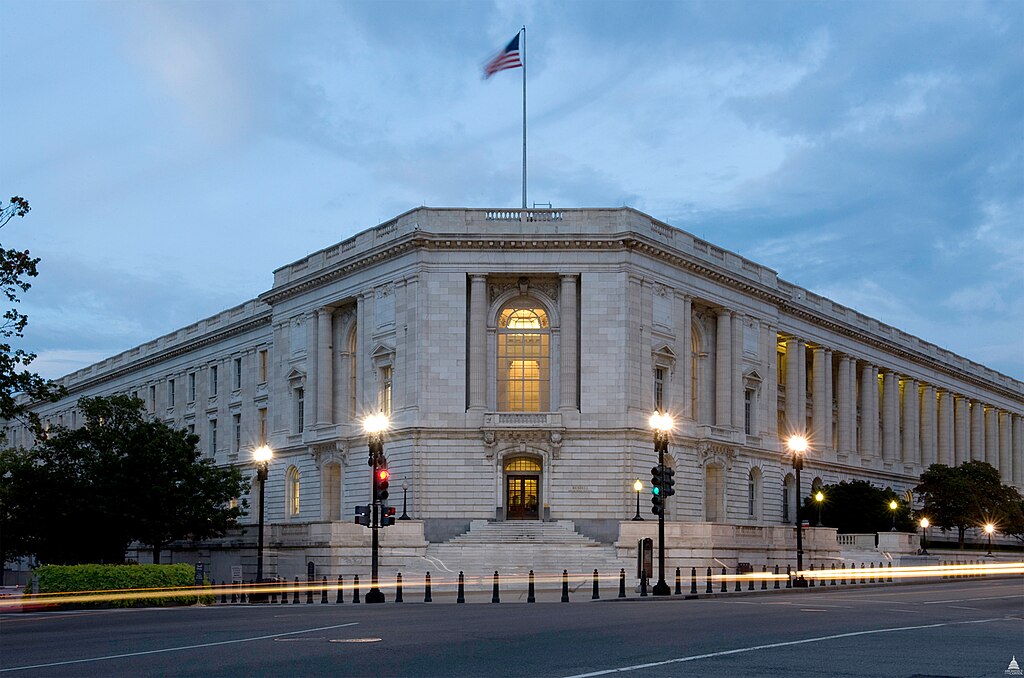
A vote in the U.S. Senate on the so-called ‘Clarity’ crypto market structure bill could be delayed amid a crowded legislative agenda, according to reporting by PANews citing crypto journalist Eleanor Terrett. Terrett said the bill’s timeline is colliding with other priorities, including June budget reconciliation legislation, a Foreign Intelligence Surveillance Act-related package, and a housing bill already passed by the House.
The scheduling conflict has fueled uncertainty over whether the Senate can move multiple major items in parallel, with some observers suggesting at least one could be pushed into July. For crypto markets, the prospect of delay matters because market structure legislation is widely viewed as a prerequisite for clearer rules around oversight, intermediaries, and the boundary between securities and commodities regulation—issues that continue to influence ‘institutional demand’ and product approvals.
WSJ: Iran-linked network moved over $850 million via Binance
The Wall Street Journal reported that a financial network tied to the Iranian government moved more than $850 million through Binance over the past two years. The report said the network was operated by Iranian businessman Babak Zanjani and allegedly built a covert payment system designed to evade U.S. sanctions and supply funding to military organizations.
According to the Journal, a Binance internal compliance report stated that, as of December last year, roughly $850 million in transactions linked to the network had been processed on the platform over a two-year period, with most flows concentrated in a single account. The allegations land as major exchanges face sustained pressure to demonstrate tighter transaction monitoring, especially around sanctions compliance and cross-border flows.
Trump Media deposits 2,650 BTC to Crypto.com, on-chain data shows
Trump Media reportedly deposited 2,650 Bitcoin (BTC) to Crypto.com, according to Odaily citing Onchain Lens. The transfer was valued at roughly $249.3 million at the time of reporting. The company is estimated to hold 6,889 BTC—about $532.8 million—based on the same on-chain tracking.
Large exchange deposits are often interpreted by traders as potential ‘sell-side liquidity’ signals, though transfers can also reflect custody rebalancing, collateral management, or operational needs. Still, the movement is likely to be closely watched given heightened sensitivity to corporate treasury flows and their short-term impact on spot liquidity.
Glassnode flags 6.04 million BTC with public keys exposed on-chain
On-chain analytics firm Glassnode said roughly 6.04 million BTC—about 30.2% of total issued supply—has public keys exposed on-chain, creating a theoretical future vulnerability to quantum computing attacks. The firm’s estimates, cited by Wu Blockchain, place the exposure at approximately $469 billion in value at current prices.
Glassnode split the total into 1.92 million BTC of ‘structural’ exposure and 4.12 million BTC of ‘operational’ exposure, with the latter largely attributed to address reuse. The firm also estimated exchanges hold around 1.66 million BTC, or 8.3% of total supply—roughly 40% of BTC classified as operationally unsafe under this framework.
While practical quantum threats are not considered imminent by most cryptographers, the report underscores how legacy wallet practices can amplify long-tail risk. The discussion also highlights the importance of wallet hygiene—particularly avoiding address reuse—as the ecosystem debates future-proofing methods such as potential signature scheme upgrades.
Germany rejects proposal to tighten crypto capital gains rules
Germany’s Bundestag finance committee rejected a cryptocurrency tax reform proposal put forward by the Green Party, according to Odaily. The proposal sought to remove the current exemption that allows individuals to sell crypto tax-free after holding for more than one year.
The Greens argued crypto should be taxed in line with other investment assets, estimating the change could raise roughly €11.4 billion annually in additional revenue. Opponents countered that removing the exemption could leave crypto investors facing a heavier burden than equity investors in some cases, potentially weakening Germany’s competitiveness for digital-asset activity.
Verus–Ethereum bridge attacker returns 75% of stolen funds
An attacker involved in the Verus–Ethereum (ETH) cross-chain bridge exploit has returned 4,052.4 ETH—about $8.5 million—representing 75% of the stolen amount, according to PANews monitoring. Roughly 1,350 ETH remains in the attacker’s wallet, described as a ‘bounty’ or retained portion.
The bridge was attacked on May 18, resulting in losses estimated at about $11.58 million. Partial fund returns after exploits have become more common in DeFi incidents, often reflecting negotiations, white-hat claims, or attempts to reduce legal exposure, though outcomes remain case-specific.
Russia keeps ban on transfers from custodial wallets to foreign self-custody
Russia’s draft crypto market regulation will retain a provision banning transfers from Russian custodial wallets to overseas non-custodial wallets, Deputy Finance Minister Ivan Chebeskov said, according to PANews. He added that eased conditions would apply only to foreign trade participants, such as importers.
Chebeskov said authorities would assess the new framework after it takes effect and could later experiment with allowing non-custodial wallet usage. A final draft is expected next week, and the Finance Ministry hopes the bill will pass before the end of the State Duma’s spring session.
The bill passed its first reading on April 21 and would require Russians and companies to buy digital assets only through authorized intermediaries starting July 1. The State Duma’s financial markets committee has previously pushed back against the central bank’s stance favoring a broad ban on transfers to non-custodial wallets, arguing for judicial protections for all crypto holders—signaling that internal policy debate remains active even as restrictions tighten.
Unverified claim suggests SpaceX holds more BTC than previously disclosed
An account known as “Bitcoin Historian” claimed on X that SpaceX holds roughly $775 million more in Bitcoin than previously disclosed. The post alleged the Elon Musk-led aerospace company has been steadily accumulating BTC.
The claim is not based on an official filing and has not been independently verified. Market participants typically treat such reports cautiously unless corroborated by audited statements, regulatory disclosures, or verifiable on-chain evidence.
U.S. HYPE spot ETFs log $16.15 million in daily inflows
U.S.-listed HYPE spot exchange-traded funds recorded net inflows of $16.155 million on May 21 ET, according to Sosovalue. Bitwise’s Hyperliquid ETF led with $8.446 million in net inflows, bringing its cumulative total to $25.003 million. The 21Shares Hyperliquid ETF drew $7.71 million, lifting cumulative inflows to $42.599 million.
Total net assets across HYPE spot ETFs stood at about $81.133 million, with cumulative net inflows of roughly $63.955 million at the time of reporting. While still small relative to Bitcoin and Ethereum ETF complexes, consistent inflows are being watched as a gauge of whether newer, more niche crypto exposures can sustain ‘liquidity inflow’ beyond early launch demand.
Web3 fintech startup Jia raises $3 million seed round
Web3 financial technology startup Jia raised $3 million in seed funding, with participation from Coinbase Ventures, the Stellar Development Foundation, A100x Ventures, TCG, and Hashed Emergent, according to Odaily. The round brings Jia’s total funding to $7.3 million.
The company said it provides liquidity and operates decentralized lending pools and stablecoin-based cross-border payment services across Base, Stellar, Arbitrum, and Polygon. The new capital will be used to expand features including corporate bank accounts and cash-flow management—tools aimed at bridging crypto rails with day-to-day treasury operations as stablecoin settlement becomes more embedded in global payments experiments.
Collectively, the day’s updates underline how crypto’s near-term direction is being shaped as much by legislative bandwidth and compliance enforcement as by product flows—while longer-term debates, from bridge security to quantum resilience, continue to influence infrastructure priorities.
🔎 Market Interpretation
- U.S. policy timing risk: A potential delay of the Senate ‘Clarity’ market-structure bill injects near-term uncertainty into U.S. regulatory direction, which can slow institutional positioning and dampen expectations for faster product/approval pathways.
- Compliance headline pressure: WSJ allegations of Iran-linked flows via Binance reinforce the market’s recurring “regulatory enforcement overhang,” likely supporting a risk-premium on major exchanges and tokens most exposed to centralized on/off-ramps.
- Corporate treasury flows as liquidity signals: Trump Media’s reported 2,650 BTC deposit to Crypto.com may be read as a short-term sell-side liquidity risk, even though exchange transfers can also be neutral (custody, collateral, ops).
- Long-tail tech risk re-enters the narrative: Glassnode’s estimate of 6.04M BTC with exposed public keys revives discussion of “quantum resilience,” elevating the perceived importance of wallet hygiene and future protocol upgrade paths.
- Regionally divergent regulation/tax tone: Germany maintaining the 1-year tax-free holding exemption is mildly supportive for local participation, while Russia’s draft restrictions on transfers to foreign self-custody signal tighter capital control and reduced user autonomy.
- DeFi security normalization: The Verus–ETH bridge attacker returning ~75% of funds reflects a pattern of partial restitution/negotiation post-exploit, but does not remove the sector’s structural bridge-risk discount.
- Niche ETF flows as sentiment probes: Continued inflows into U.S. HYPE spot ETFs—though small—are being monitored as a test of whether non-BTC/ETH exposures can retain sustained demand.
- Information quality matters: The unverified SpaceX BTC accumulation claim highlights ongoing rumor-driven volatility risk when narratives are not backed by filings or verifiable on-chain evidence.
💡 Strategic Points
- Monitor legislative catalysts: Track Senate scheduling around budget reconciliation and other priority bills; a July pushout increases “policy theta decay” where markets wait longer for clarity.
- Separate signal from noise in exchange deposits: Treat large BTC deposits as a watch item, but confirm with follow-on behavior (order-book changes, withdrawals, cold-wallet movements) before assuming imminent selling.
- Tighten sanctions/compliance assumptions: Counterparty risk assessment should weigh exchange transaction monitoring, jurisdictional exposure, and historical enforcement actions—especially for entities interacting with sanctioned regions.
- Improve wallet hygiene to reduce future cryptographic risk:
- Avoid address reuse where possible.
- Prefer modern address types and good UTXO practices.
- Where operationally feasible, migrate funds from legacy/reused addresses to reduce “public key exposure” footprint.
- Re-price bridge exposure continuously: For cross-chain strategies, cap bridge risk via smaller tranche sizing, diversified routes, alerting on anomalous contract activity, and a predefined incident response plan.
- Account for jurisdictional fragmentation:
- Germany’s decision supports longer-horizon holding strategies domestically.
- Russia’s constraint on custodial-to-foreign self-custody flows suggests liquidity/channel risk for Russia-linked users and businesses, potentially increasing reliance on authorized intermediaries.
- Use niche ETF flows as secondary indicators: Treat HYPE ETF inflows as a sentiment/participation gauge rather than a primary market driver given the still-limited AUM.
- Demand verification for corporate BTC claims: Require audited statements, regulatory disclosures, or strong on-chain attribution before incorporating treasury rumors into positioning.
📘 Glossary
- Market structure bill (“Clarity”): Proposed U.S. legislation aimed at defining regulatory boundaries and oversight roles for crypto markets (e.g., commodity vs. security treatment, intermediary obligations).
- Budget reconciliation: A U.S. legislative process that can fast-track certain fiscal measures; it often consumes significant congressional calendar capacity.
- Sanctions evasion: Attempts to bypass restrictions on financial activity imposed by governments; in crypto this often involves layered transactions, intermediaries, or obfuscation.
- Custodial vs. self-custody wallets:
- Custodial: A third party (exchange/broker) controls private keys.
- Self-custody (non-custodial): The user controls private keys directly.
- Sell-side liquidity signal: Market interpretation that assets moved to an exchange may be prepared for sale, increasing near-term supply.
- Public key exposure (Bitcoin): When a public key becomes visible on-chain (often after spending from an address); some argue this could be a future vulnerability if quantum computing breaks current cryptography.
- Quantum risk (theoretical): The possibility that sufficiently powerful quantum computers could compromise current signature schemes; widely viewed as non-imminent, but relevant to long-term planning.
- Address reuse: Reusing the same crypto address multiple times; generally discouraged for privacy and, under some frameworks, for reducing potential cryptographic exposure.
- Cross-chain bridge: Infrastructure that transfers assets/data between blockchains; historically a major target for exploits.
- Spot ETF inflows: Net new money entering an exchange-traded fund that holds the underlying asset (or close proxy), often tracked as a demand indicator.
- AUM (assets under management): The total value of assets held by a fund or product.






















Comment 0