

 News
News  Coin Information
  About us
  Customer Service


 Add as a preferred source on Google

U.S. crypto markets are digesting two competing signals from Washington: the Securities and Exchange Commission appears to be pivoting away from its long-criticized approach of 'regulation by enforcement', while geopolitical headlines tied to President Trump’s Iran policy and fresh on-chain security developments are keeping risk appetite on edge.
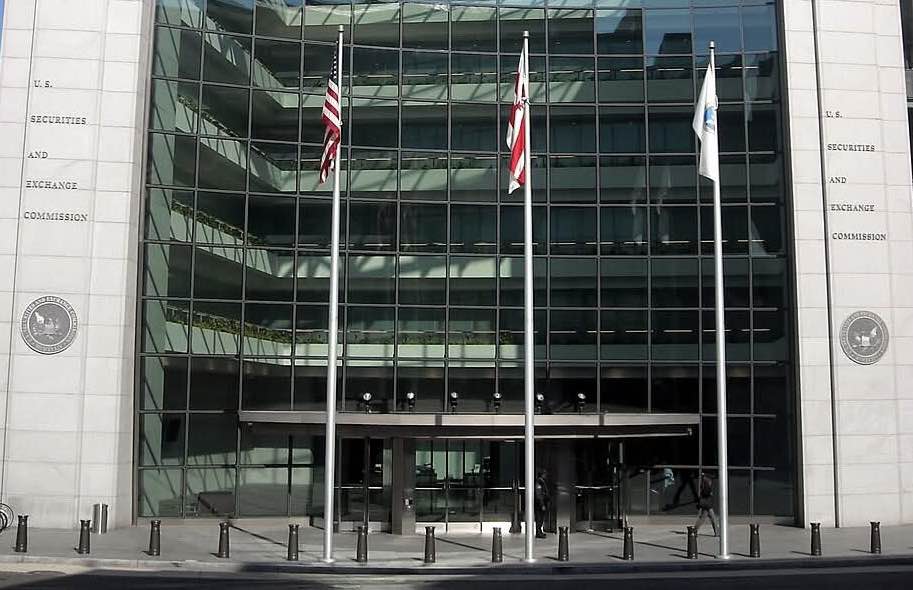
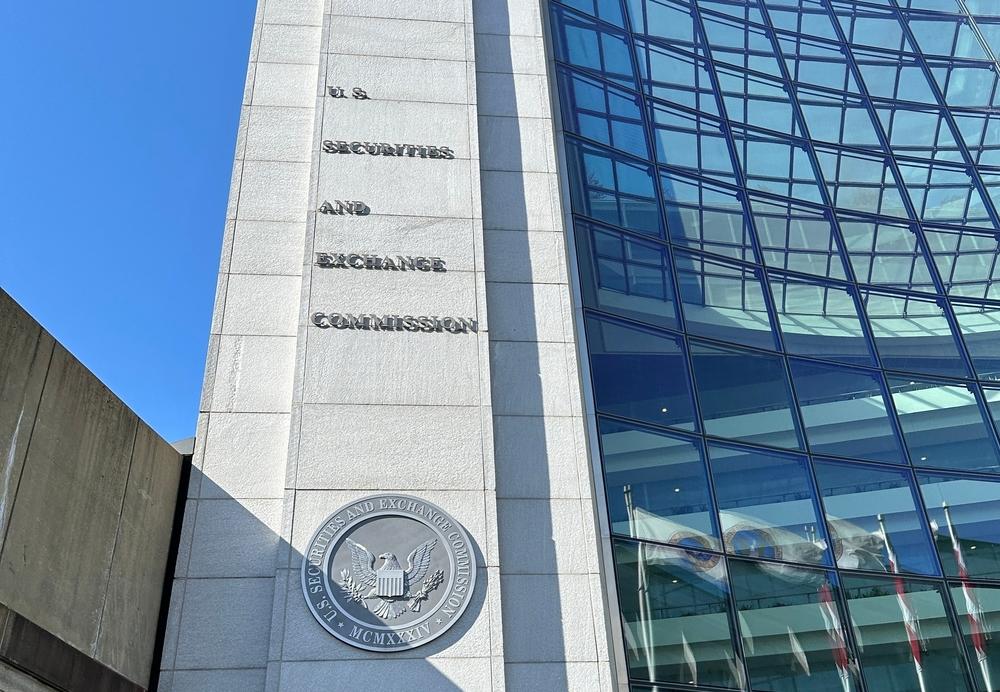
Watcher.Guru reported on Sunday that SEC Chair Paul Atkins said the agency has ended 'regulation by enforcement' for the digital asset industry. The remark is being read by market participants as an early sign that the SEC could lean more heavily on rulemaking and clearer standards, rather than relying on lawsuits and penalties as its primary tool for shaping crypto market behavior.
For years, U.S. crypto businesses have argued that enforcement-first oversight created regulatory uncertainty—particularly around what constitutes a security, how exchanges and brokers should register, and what disclosures are required for token issuers. While Atkins did not outline a specific roadmap, the statement alone was enough to bolster expectations that the SEC may seek more predictable frameworks, a shift that could influence sentiment across major cryptoassets and U.S.-linked venues.
Macro risk, however, remains in the foreground. According to Odaily, President Trump said the likelihood of extending the ceasefire with Iran is very low and that the Strait of Hormuz would not be reopened until an agreement is signed. The Strait of Hormuz is a critical artery for global oil shipments; traders typically view threats to flows through the channel as inflationary and destabilizing, with knock-on effects for equities and crypto alike through broader 'risk-on/risk-off' positioning.
In a separate development, the White House struck a more optimistic tone. Xinhua and PANews cited White House press secretary Janet Leavitt as saying in a Fox News interview Sunday evening that the U.S. and Iran are “very close” to reaching a deal, though she did not provide operational details. Leavitt added that President Trump retains multiple options if negotiations fail—language that underscores how quickly the outlook can shift and why volatility-sensitive assets may remain reactive to headlines.
Security concerns also resurfaced as the KelpDAO exploit continued to unfold across chains. Arbitrum said on X that it executed an emergency freeze involving roughly 30,766 ETH tied to the incident, after its Security Council acted on attacker identification information provided by law enforcement. The funds were moved to an intermediary freeze wallet in a way that, according to the statement, avoids impacting other on-chain states or ordinary users. Odaily reported that the transfer to the controlled address occurred at 11:26 p.m. ET on April 20, and that the original address is no longer accessible. Any future disposition of the frozen assets will be determined through Arbitrum governance processes and discussions among relevant parties.
At the same time, Whale Alert reported that the Kelp DAO exploiter transferred 50,700 ETH—worth about $117.72 million—to a newly created, unidentified wallet. Large movements from exploit-linked addresses are often interpreted as preparatory steps for fragmentation or laundering, even when funds do not immediately hit centralized exchanges.
On-chain investigator ZachXBT said the laundering and cross-chain movement has begun in earnest. According to Odaily, about $1.5 million was bridged from Ethereum mainnet to the Bitcoin network via THORChain, while an additional roughly $78,000 was routed through Umbra, a privacy-focused tool. ZachXBT added that the attacker’s initial funding source appears to be Tornado Cash, and warned that laundering activity remains ongoing.
Meanwhile, several whale-sized Bitcoin (BTC) and Ethereum (ETH) transfers added to the market’s watchlist. Whale Alert flagged a transfer of 2,123 BTC—about $160.19 million—from an unknown wallet to a Coinbase institutional account, a flow pattern often watched as a potential precursor to selling, though it can also reflect internal treasury movements. Separately, another 1,999 BTC—approximately $151.2 million—moved from Coinbase to an unknown wallet, a direction typically associated with custody rather than immediate liquidation. In ETH, Odaily cited Onchain Lens as identifying a wallet created roughly four weeks ago withdrawing 80,000 ETH—around $184.67 million—from Binance, a type of outflow that can signal longer-term holding behavior, though attribution remains unclear.
In U.S. legislative developments, a Senate Banking Committee review of a stablecoin bill could slip from its previously expected April 27 timing into May, according to PANews citing Crypto in America. The report said bank lobbying is influencing both scheduling and substantive revisions, with groups such as the North Carolina Bankers Association urging Sen. Thom Tillis to revisit provisions limiting stablecoin yields. A compromise draft crafted by Tillis and Sen. Angela Alsobrooks has reportedly circulated among select stakeholders but has not been publicly released.
Patrick Witt, executive director of the White House Crypto Council, criticized continued banking-industry lobbying on X, describing it as difficult to explain except by “profit-seeking or ignorance,” according to the report. Beyond yield restrictions, ethics rules and DeFi-related oversight remain sticking points, leaving the timeline uncertain as negotiations continue.
Together, the developments sketch a market wrestling with the prospect of clearer U.S. regulatory posture—if the SEC follows through on Atkins’ signaling—while remaining highly sensitive to geopolitical risk and persistent security threats. In the near term, traders are likely to monitor whether policy rhetoric turns into actionable guidance, whether exploit-related funds reach exchanges, and whether Washington can sustain legislative momentum on stablecoins amid competing industry pressures.
🔎 Market Interpretation
- Regulatory tone shift supports sentiment: SEC Chair Paul Atkins’ claim that the agency has ended “regulation by enforcement” is being interpreted as a potential pivot toward clearer rulemaking—reducing uncertainty around securities classification, registration requirements, and issuer disclosures.
- Risk appetite capped by geopolitics: Conflicting White House signals on Iran (low odds of ceasefire extension vs. “very close” to a deal) keep markets headline-sensitive. Any disruption risk to the Strait of Hormuz is viewed as inflationary and broadly risk-negative for equities and crypto.
- Security overhang remains material: The KelpDAO exploit is actively evolving (freezes, wallet migrations, laundering). Even with partial containment, continued cross-chain movement raises residual risk and can pressure market confidence.
- Large transfers add short-term uncertainty: Whale movements involving BTC/ETH (unknown wallets ↔ exchanges; large ETH outflow from Binance) can be read as possible sell pressure or custody repositioning, keeping traders alert for follow-through flows.
- Stablecoin legislation timeline slipping: Senate Banking Committee review may push into May amid bank lobbying and unresolved issues (yields, ethics, DeFi oversight), delaying regulatory clarity for dollar-pegged tokens and related platforms.
💡 Strategic Points
- Watch for “signal-to-policy” confirmation: Markets may demand concrete SEC actions—draft rules, no-action guidance, or clearer registration pathways—before repricing U.S. regulatory risk meaningfully.
- Geopolitical hedging matters: Iran/Hormuz headlines can rapidly flip risk-on/risk-off conditions. Consider scenario planning around oil spikes, CPI expectations, and correlated drawdowns in high-beta crypto assets.
- Track exploit-fund destinations, not just freezes: Key near-term catalyst is whether attacker-linked ETH reaches centralized exchanges or major liquidity venues, versus continued fragmentation via bridges and privacy tools.
- Assess governance and counterparty implications: Arbitrum’s emergency freeze and future governance-led disposition may set precedent for chain-level incident response, influencing how users price censorship-resistance vs. safety.
- Interpret whale flows with context: Unknown→Coinbase Institutional transfers can precede selling but may reflect custody/internal movements; Coinbase→unknown and Binance ETH outflows often align with longer-term custody but remain attribution-uncertain.
- Stablecoin bill risk-reward: Delays and yield restrictions could reshape competitive dynamics between banks, fintechs, and crypto issuers; monitor draft changes and lobbying outcomes for impacts on DeFi yield products and on/off-ramps.
📘 Glossary
- Regulation by enforcement: A supervisory approach where agencies shape industry behavior primarily through lawsuits, penalties, and settlements rather than explicit rules.
- Rulemaking: Formal process of creating regulations that define obligations and compliance standards, typically offering clearer guidance than enforcement actions.
- Risk-on / Risk-off: Market regimes where investors seek higher-return assets (risk-on) or shift to safer assets (risk-off), often influenced by macro and geopolitical events.
- Strait of Hormuz: Strategic maritime chokepoint for global oil shipments; threats can raise energy prices and increase global market volatility.
- Exploit / exploiter: A security breach where an attacker drains or manipulates protocol funds using vulnerabilities or compromised keys.
- Emergency freeze (on-chain): A coordinated action (often via security council/multisig) to restrict movement of specific assets or addresses to limit damage after an incident.
- Intermediary freeze wallet: A controlled address used to hold frozen funds to prevent further movement while minimizing effects on other network activity.
- Bridge / bridging: Moving assets across blockchains (e.g., Ethereum to Bitcoin) via protocols that lock/mint or swap representations across networks.
- THORChain: A cross-chain liquidity protocol enabling swaps/bridging between native assets across multiple chains.
- Umbra: A privacy tool enabling stealth payments on Ethereum by obscuring the link between sender and recipient.
- Tornado Cash: A crypto mixer designed to enhance transaction privacy; frequently cited in laundering narratives and subject to regulatory scrutiny.
- Stablecoin bill: Proposed U.S. legislation defining issuance, reserves, oversight, and consumer protections for fiat-pegged digital tokens.
- Stablecoin yield restriction: Provisions that may limit interest-like returns paid to stablecoin holders, often contested by banks and crypto firms.
- DeFi (Decentralized Finance): Financial services (trading, lending, yields) executed via smart contracts without traditional intermediaries.
















Comment 0