

 News
News  Coin Information
  About us
  Customer Service


 Add as a preferred source on Google
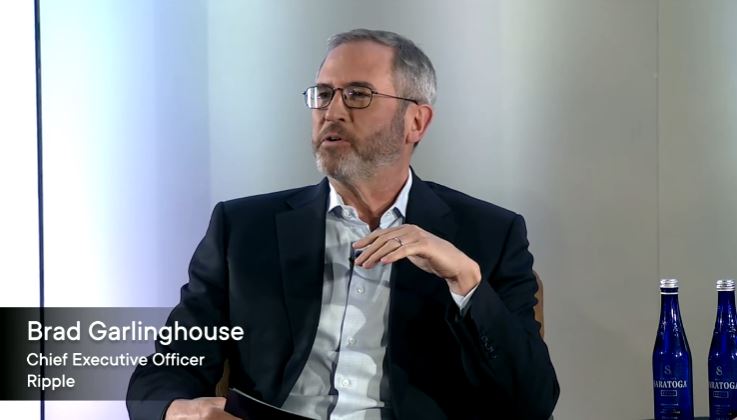
Ripple CEO Brad Garlinghouse says the company is heading for its strongest quarter on record, arguing that the U.S. is finally moving toward clearer crypto rules—but warning that without legislation, the market could be dragged back into years of uncertainty by another aggressive regulator.
Speaking on Fox Business’ Mornings with Maria on Sunday U.S. Eastern Time, Garlinghouse said Ripple expects “the best first quarter in our history,” pointing to momentum following a wave of large-scale investments and acquisitions made over the past year. The comments land as lawmakers and regulators in Washington debate how to formalize oversight of digital assets, a fight with direct implications for banks and institutional capital that have largely waited on the sidelines.
Garlinghouse highlighted Ripple’s dealmaking as a key driver of its recent growth. Over 2025, Ripple deployed roughly $4 billion into the crypto ecosystem through investment and M&A, including the $1.25 billion acquisition of prime brokerage firm Hidden Road and the $1 billion purchase of corporate treasury management platform GTreasury. The Hidden Road deal, he said, gives Ripple deeper footing in ‘prime brokerage’ and clearing infrastructure—plumbing that is critical for institutional trading. With GTreasury, Ripple gained access to more than 1,000 corporate customers and connectivity to an estimated $12.5 trillion in payments volume, offering a pipeline to enterprise adoption beyond native crypto firms.
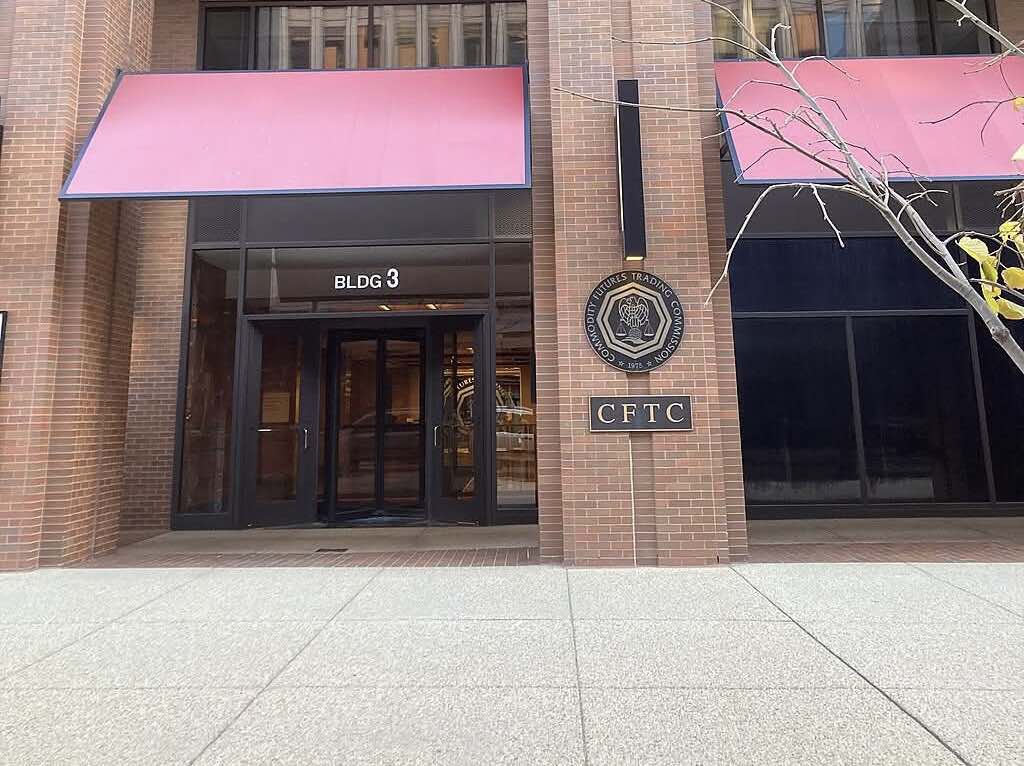
The interview also focused on a recent joint interpretation released by the Securities and Exchange Commission and the Commodity Futures Trading Commission, which classified 16 digital assets—including XRP (XRP), Ethereum (ETH), and Solana (SOL)—as ‘digital commodities.’ Garlinghouse called the move a “massive step forward,” but stressed it remains vulnerable unless Congress gives it the force of law.
“If we don’t codify this, it can be reversed,” Garlinghouse argued, warning that the industry must prevent “another Gary Gensler situation,” referring to the former SEC chair whose regulatory posture defined much of the sector’s recent legal and compliance battles. Ripple spent roughly four years fighting the SEC over whether XRP should be treated as a security, a case widely viewed as emblematic of the broader ‘regulatory overhang’ that chilled U.S. market participation.
Garlinghouse said the latest SEC–CFTC guidance may not immediately change Ripple’s day-to-day operations, but he expects it to influence banking behavior. In his view, clearer classification could act as a catalyst for U.S. banks that have hesitated to expand crypto activity due to legal and supervisory risk, potentially unlocking new ‘liquidity inflow’ and partnerships across payments and custody.
On Capitol Hill, Garlinghouse signaled renewed caution on timing for the CLARITY Act, a sweeping digital asset market structure bill designed to define oversight boundaries between the SEC and CFTC. After previously suggesting a late-April signing window, he now expects the timeline to slip toward late May, citing what he described as an unappealing legislative process even if the bill ultimately advances.
Industry lobbying is also complicating the path forward. Market observers have pointed to high-stakes disagreements—such as Coinbase ($COIN) pushing back on aspects of the latest CLARITY Act draft tied to stablecoin interest payments—alongside competing priorities from traditional finance groups. The CLARITY Act passed the House in July 2025, but still faces deliberations in the Senate Banking Committee and a full Senate vote.
If enacted, the bill would give legal weight to a clearer regulatory framework and could reduce the long-running turf fight between the SEC and CFTC—an outcome many in the market view as essential for scaling institutional crypto products in the U.S. Garlinghouse’s remarks suggest Ripple is positioning to accelerate its ‘institutional expansion’ strategy as Washington’s tone becomes more constructive, while remaining wary of policy being turned into a political weapon that could destabilize the sector again.
🔎 Market Interpretation
- Ripple signals peak operating momentum: CEO Brad Garlinghouse says Ripple is on track for its strongest quarter ever, helped by a heavy investment and acquisition cycle that expands institutional-facing infrastructure.
- Regulatory tone shift is supportive—but fragile: The SEC–CFTC joint interpretation labeling 16 assets (including XRP, ETH, SOL) as “digital commodities” is framed as a major sentiment boost, yet still reversible without congressional codification.
- Institutional adoption hinges on legal durability: The article suggests banks and large institutions may re-engage if classification clarity reduces compliance risk, potentially driving liquidity inflows and new custody/payments partnerships.
- Legislative uncertainty remains the key overhang: The CLARITY Act timeline may slip (late May vs. late April), and lobbying disputes (e.g., stablecoin interest language) could delay or reshape final rules, keeping markets sensitive to Washington headlines.
- “Regulator whiplash” is the central risk case: Garlinghouse warns that absent law, a future aggressive regulator could unwind current guidance, returning the market to a multi-year enforcement-led environment similar to the Gensler era.
💡 Strategic Points
- Scale institutional plumbing, not just tokens: Ripple’s purchases (Hidden Road for prime brokerage/clearing; GTreasury for enterprise treasury rails) indicate a strategy to own critical “pipes” that institutions require before meaningful volume arrives.
- Position for bank re-entry: If “digital commodity” framing reduces perceived supervisory risk, Ripple can target U.S. banks with clearer value propositions in payments, custody integrations, and liquidity provisioning.
- Regulatory optionality is a competitive advantage: Firms that can operate under both SEC-style and CFTC-style interpretations—while staying ready for changes—are better positioned if guidance shifts before legislation passes.
- Monitor CLARITY Act catalysts and blockers: Key watch items include Senate Banking Committee progress, final definitions of SEC vs. CFTC jurisdiction, and compromises around stablecoin provisions that are drawing industry pushback.
- M&A as market timing: Ripple’s ~$4B deployment indicates a bet that regulatory clarity is nearing an inflection point; execution risk increases if the bill stalls or guidance is reversed.
📘 Glossary
- Digital commodity: A digital asset treated more like a commodity (typically under CFTC-oriented frameworks) than a security; implications include different disclosure, trading, and oversight expectations.
- SEC (Securities and Exchange Commission): U.S. regulator overseeing securities markets; often associated in crypto with enforcement actions arguing certain tokens qualify as securities.
- CFTC (Commodity Futures Trading Commission): U.S. regulator overseeing commodities and derivatives; viewed by many in crypto as better aligned with spot/commodity treatment for certain digital assets.
- Prime brokerage: Institutional service layer that can bundle trading execution, financing, custody coordination, and settlement/clearing support—key for hedge funds and large asset managers.
- Clearing infrastructure: Systems and entities that finalize trades, manage counterparty risk, and ensure settlement—crucial for scaling institutional volume.
- Regulatory overhang: Market drag caused by unresolved legal status or enforcement risk, often discouraging institutional participation and long-term investment.
- Liquidity inflow: New capital and tradable volume entering markets (e.g., from banks, funds, corporates), typically improving spreads, depth, and execution quality.
- CLARITY Act: Proposed U.S. digital asset market structure legislation intended to define jurisdictional boundaries between the SEC and CFTC and formalize oversight rules.
- Stablecoin interest payments: Mechanisms where stablecoin holders may receive yield/interest; contested in policy because it can blur lines with banking and securities-style products.
- Institutional expansion: Strategy focused on serving banks, hedge funds, asset managers, and corporates via compliance-ready products, infrastructure, and partnerships.

















Comment 0