

 News
News  Coin Information
  About us
  Customer Service


 Add as a preferred source on Google

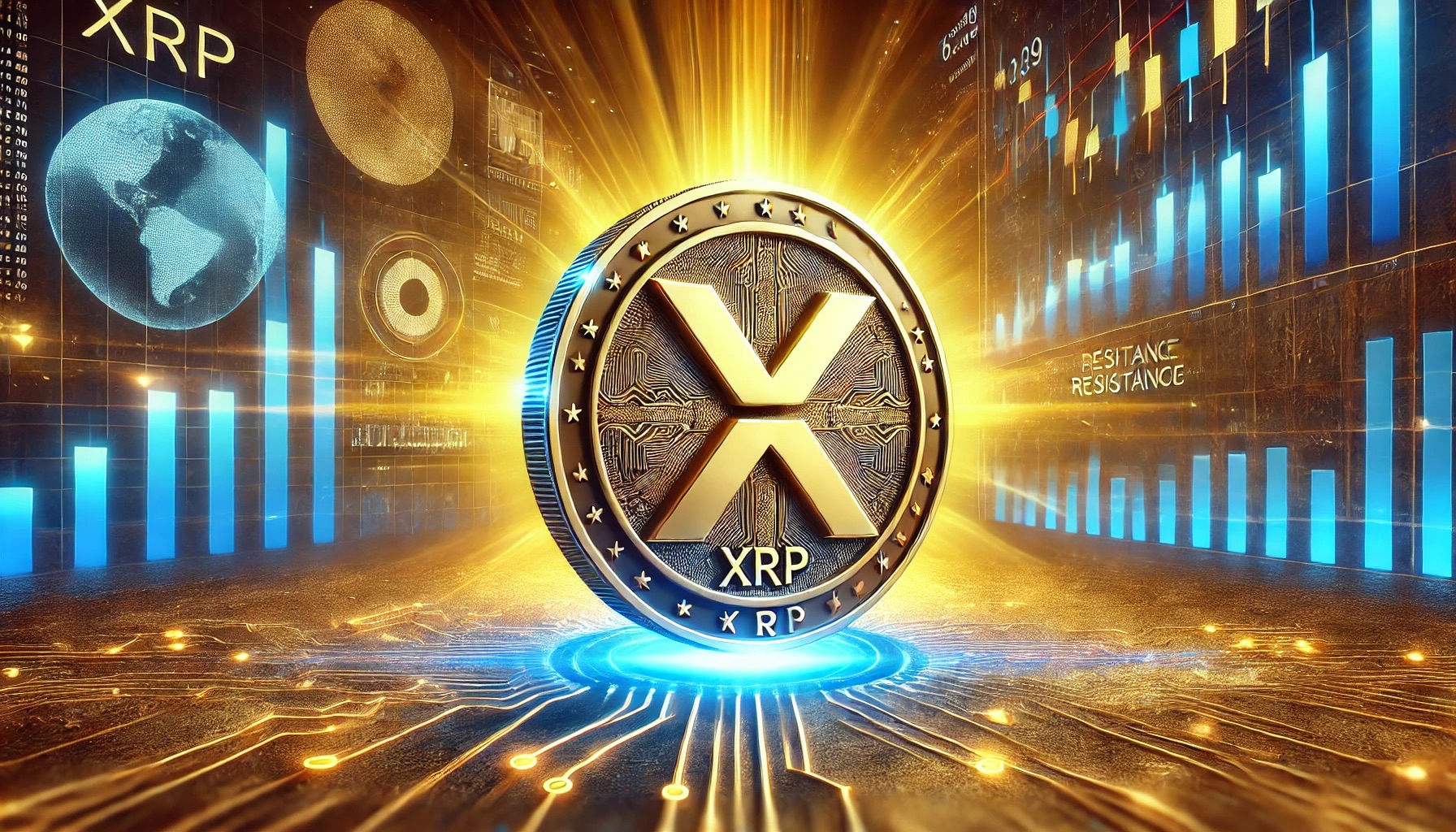
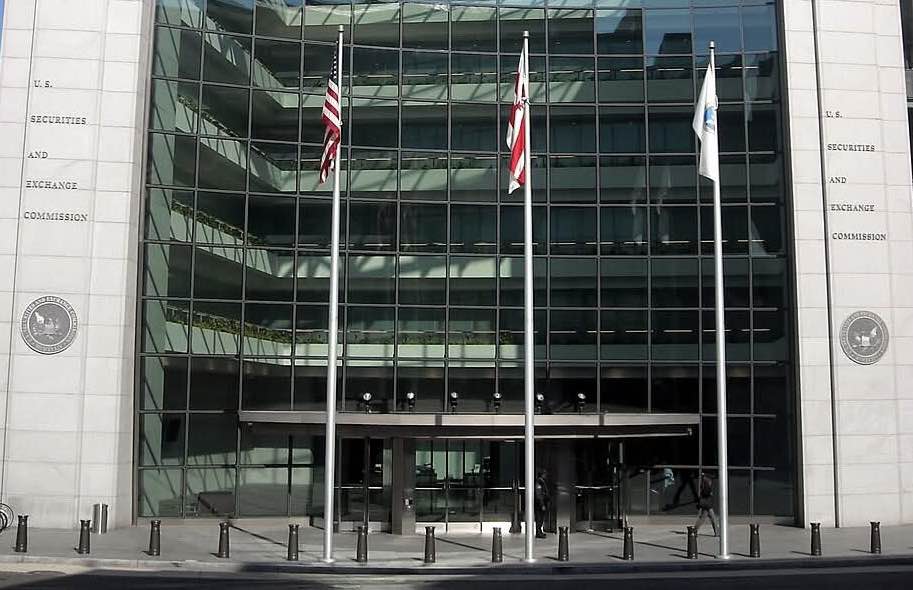
Ripple’s XRP is back in focus after the U.S. Securities and Exchange Commission (SEC) issued what market participants view as a long-awaited clarification that helps lift a cloud of regulatory uncertainty—an overhang that has shaped XRP trading and institutional risk appetite for years.
As of Friday, March 20, XRP was trading around $1.44, down 0.55% over the prior 24 hours. Despite a 3.57% gain over the past week, the token remains sharply lower across a longer window, with a roughly 27% decline over the past 60 days underscoring persistent volatility even as the regulatory narrative improves.
The shift in sentiment follows an official SEC document in which the chair categorized XRP among 16 cryptocurrencies deemed non-security 'digital assets'. While the SEC has not framed the move as a blanket rulemaking for the industry, traders and legal observers interpreted the language as a meaningful signal that the multi-year dispute surrounding XRP is entering an endgame phase. Ripple responded positively, arguing the updated stance improves the 'institutional investment environment' and could lower compliance friction for counterparties evaluating XRP exposure.
XRP has long occupied a uniquely contentious position in U.S. crypto markets. The SEC’s 2020 lawsuit against Ripple effectively turned XRP into a bellwether for how broadly U.S. securities laws might be applied to token distribution and secondary-market trading. By explicitly placing XRP in the same general category as Bitcoin (BTC) and Ethereum (ETH)—assets frequently discussed as commodities-like digital instruments—the agency’s new classification is being treated by many investors as more than a Ripple-specific win, potentially setting a constructive precedent for the wider sector.
That said, the immediate market response has been measured. XRP’s 24-hour trading volume was about $1.9 billion, down 23.5% day over day, suggesting that while the headline offers clarity, liquidity has not yet surged in tandem. Activity remains dominated by centralized exchanges (CEXs), which accounted for roughly $1.898 billion in turnover, while decentralized exchanges (DEXs) contributed only about $1.52 million—highlighting how price discovery for XRP is still largely concentrated on large venues.
In derivatives and spot commentary, some analysts have floated scenarios in which a cleaner U.S. regulatory posture could unlock a repricing—often framed as a potential 3x to 5x move from current levels, implying a range near $4.33 to $7.22. Those projections, however, hinge on more than classification language alone, including sustained 'institutional demand', deeper U.S. onshore liquidity, and expanded real-world usage that translates into consistent transactional flows rather than episodic speculation.
From a fundamentals perspective, proponents argue XRP’s core proposition is not simply as a tradable asset but as infrastructure for cross-border payments. Ripple has positioned XRP as a bridge asset within its international settlement network, marketing faster and cheaper transfers than legacy correspondent banking rails. The company also points to XRP’s alignment with the ISO 20022 messaging standard—a feature supporters say improves compatibility with modernized financial plumbing and could matter for future integration with bank and public-sector payment systems, including potential central bank digital currency (CBDC) frameworks.
Ripple says it maintains partnerships with more than 300 financial institutions globally and continues to expand in Asia, the Middle East, and Europe. For investors, the strategic question is whether those relationships translate into durable volume that can support valuation through utility, particularly as competition intensifies among token-based payment networks and traditional fintech corridors.
Meanwhile, U.S. policy momentum is adding another layer to market expectations. Several U.S. senators have recently suggested that crypto-related legislation could advance within a specific timeframe, though negotiations and political variables remain. The broader industry has pushed for a clear statutory framework in order to reduce compliance ambiguity and encourage regulated participation by banks, brokers, and asset managers. If legislation materializes, it could accelerate the market’s shift toward 'institutionalization'—with XRP potentially benefiting disproportionately now that its classification risk appears to be easing.
Ripple indicated it plans to treat the improving environment as an opening to expand its U.S. footprint, reiterating that regulatory clarity is a prerequisite for innovation and long-term capital formation. For now, traders are watching whether the SEC’s language becomes a durable reference point for other agencies and market intermediaries—and whether XRP can convert this policy tailwind into sustained liquidity inflows and broader adoption.
🔎 Market Interpretation
- Regulatory overhang eases: An SEC document reportedly categorizing XRP among 16 “non-security” digital assets is being read as a major de-risking signal after years of uncertainty tied to the 2020 lawsuit.
- Price reaction is restrained: XRP trades near $1.44 (-0.55% 24H), up 3.57% weekly but down ~27% over 60 days, indicating sentiment improved, but volatility and longer-term drawdown persist.
- Liquidity not yet confirming the headline: 24H volume is about $1.9B (down 23.5% day-over-day), suggesting cautious positioning rather than an immediate “risk-on” rotation.
- Price discovery remains CEX-led: Centralized exchanges account for ~$1.898B of volume versus ~$1.52M on DEXs, keeping XRP’s trading dynamics concentrated on large venues.
- Precedent risk/reward: By placing XRP in a category compared alongside BTC/ETH (often treated as commodities-like), the market interprets this as potentially constructive for broader U.S. crypto positioning—not only Ripple.
💡 Strategic Points
- Endgame narrative, not a final rule: The SEC language is viewed as meaningful, but it is not described as blanket industry rulemaking; investors should distinguish “signal” from “settled framework.”
- Upside scenarios need follow-through: Analyst talk of a 3x–5x repricing (roughly $4.33–$7.22) depends on sustained institutional demand, deeper U.S. onshore liquidity, and real usage—not classification language alone.
- Utility thesis focus: Ripple positions XRP as a bridge asset for cross-border payments; the investment case strengthens if partnerships convert into repeatable transactional flow rather than event-driven speculation.
- Adoption and competition: Ripple cites 300+ financial-institution partnerships and expansion in Asia/Middle East/Europe, but competitive pressure from other token networks and fintech rails will determine durability of volumes.
- Policy catalyst watch: Potential U.S. crypto legislation could reduce compliance ambiguity and accelerate “institutionalization.” If it advances, XRP could benefit given the perceived easing of classification risk.
- Key near-term indicators: Watch (1) volume recovery and tighter spreads, (2) growth in regulated U.S. venues and custody support, (3) sustained ODL/settlement-related flow metrics, and (4) whether other agencies/intermediaries adopt the SEC wording as a reference.
📘 Glossary
- SEC (Securities and Exchange Commission): U.S. regulator overseeing securities markets; its classifications and enforcement actions strongly influence crypto compliance risk.
- Non-security digital asset: A token the market interprets as not being regulated like a security; typically implies fewer registration and disclosure burdens (context-dependent).
- Regulatory overhang: Persistent uncertainty (often from lawsuits or unclear rules) that suppresses valuation, liquidity, or institutional participation.
- Institutional demand: Participation by professional investors (banks, asset managers, hedge funds) often associated with larger, steadier liquidity and stricter compliance requirements.
- CEX (Centralized Exchange): Custodial trading venue (e.g., major exchanges) where most XRP volume currently occurs.
- DEX (Decentralized Exchange): On-chain exchange using smart contracts/liquidity pools; currently a small share of XRP turnover in the article’s data.
- Bridge asset: An intermediary token used to move value between two currencies/ledgers efficiently in cross-border settlement.
- ISO 20022: A global financial messaging standard; alignment is often cited as improving interoperability with modern payment infrastructure.
- CBDC (Central Bank Digital Currency): A digital form of sovereign currency issued by a central bank; potential future integration point for payment networks.


















Comment 0