

 News
News  Coin Information
  About us
  Customer Service


 Add as a preferred source on Google

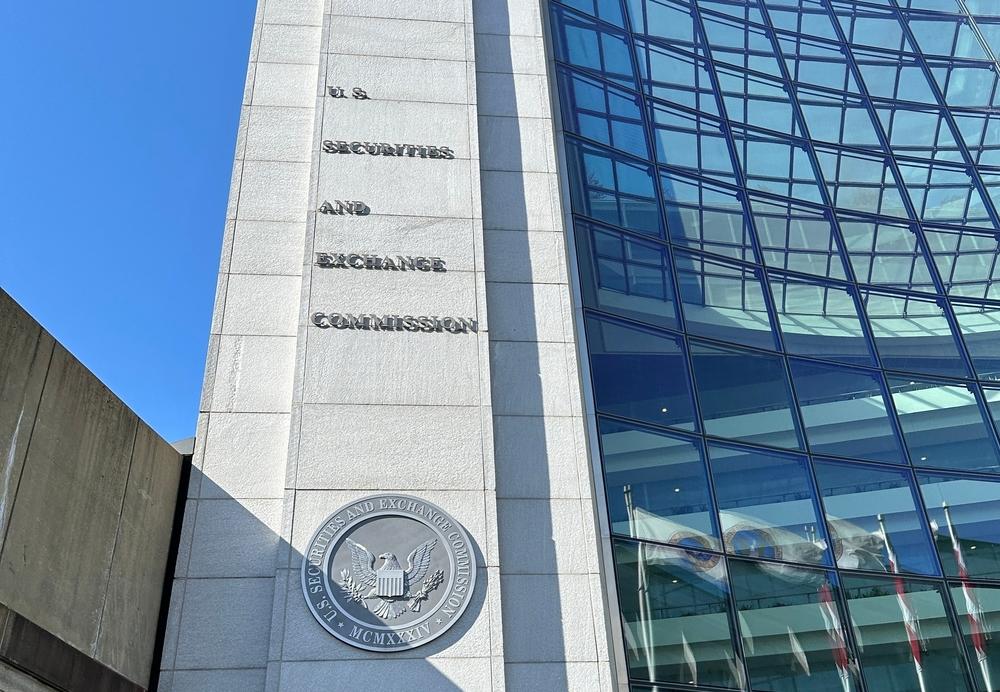
The U.S. Securities and Exchange Commission (SEC) has approved Nasdaq’s framework for trading 'tokenized securities', a move that could accelerate the migration of traditional capital markets onto blockchain rails while keeping the existing U.S. market plumbing largely intact.
Under the approved model, a subset of Nasdaq-listed stocks and exchange-traded funds (ETFs) will be able to be issued and traded as blockchain-based tokens. Investors would custody these tokenized instruments in digital wallets, while clearing and settlement would continue to run through the Depository Trust & Clearing Corporation (DTCC), preserving familiar post-trade processes. In effect, the market structure remains the same—only the record-keeping layer for ownership shifts to blockchain.
Nasdaq plans to work with crypto exchange Kraken to distribute tokenized equities to global investors through Kraken’s tokenized stock platform, xStocks. Val Gui of xStocks described the SEC’s decision as a signal that the $126 trillion global equities market is moving toward blockchain-enabled infrastructure, framing the approval as more than a niche crypto milestone and instead a step toward modernizing core market rails.
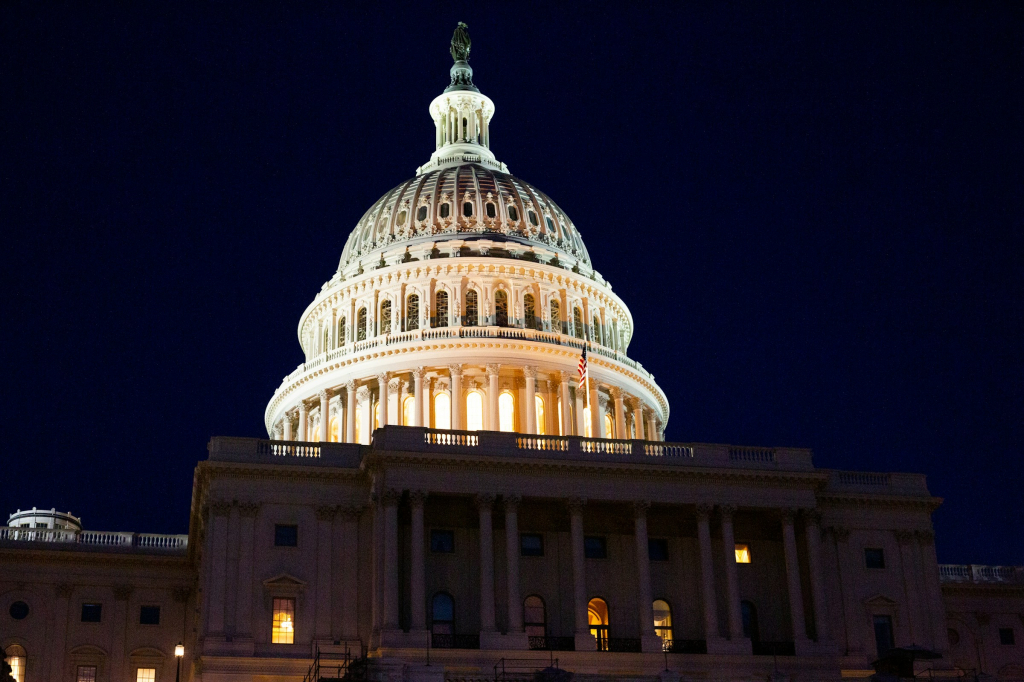
The decision lands amid broader U.S. policy momentum around digital assets. Political outlet Politico reported that leading U.S. senators and the White House have reached an agreement on how 'stablecoin yield'—the interest or return generated within stablecoin business models—should be handled. The reported compromise is being viewed in Washington as a potential breakthrough that could help advance broader legislation shaping the legal architecture for Bitcoin (BTC) and the wider crypto market.
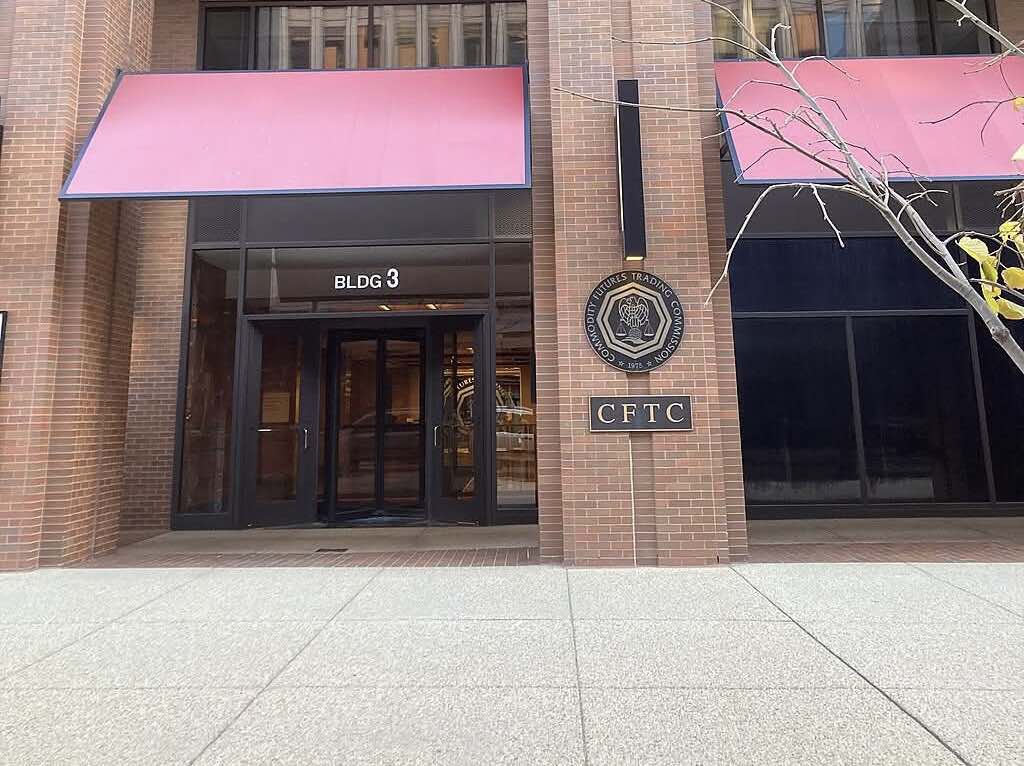
Regulatory messaging is also shifting. According to crypto outlet Watcher.Guru, Commodity Futures Trading Commission (CFTC) Chair Mike Selig said crypto and blockchain are positioned to lead a new frontier as finance moves 'on-chain', underscoring a view that public and permissioned ledgers could increasingly underpin trading, collateral, and settlement.
Separately, Watcher.Guru reported that SEC Chair Paul Atkins pledged to rework the agency’s rulebook by removing regulations deemed unrealistic or inefficient, arguing that simplifying the framework would help 'advance', 'clarify', and 'transform' U.S. financial markets. While details and timelines remain unclear, the comments add to expectations that U.S. regulators may seek more explicit, operationally workable standards for digital-asset-linked activity, including tokenized instruments.
Market participants, meanwhile, are tracking near-term flow signals. Whale-alert account Whale Alert reported that 878 BTC—worth about $61.29 million at the time—was transferred from an unidentified wallet to Coinbase ($COIN) on March 20. Large deposits to centralized exchanges are often interpreted as potential 'sell-side liquidity' entering the market, though the intent behind individual transfers cannot be confirmed from on-chain data alone.
ETF flows also pointed to cooling risk appetite. Lookonchain said U.S.-listed spot Bitcoin ETFs recorded net outflows of 1,488 BTC over the prior day, while spot Ethereum (ETH) ETFs saw net outflows of 62,184 ETH. The tracker also reported outflows of 1,914 Solana (SOL) from Solana-linked ETF products. With spot ETFs now a primary access point for many U.S. institutions and retail investors, daily creations and redemptions have become a closely watched gauge for short-term price pressure.
Beyond markets and regulation, tech and industry narratives continued to evolve. Andreessen Horowitz co-founder Marc Andreessen told interviewer David Senra on March 15 that the AI era could produce more 'single-person unicorns'—massive companies built with very small teams—arguing that automation will change the relationship between headcount, execution speed, and innovation control.
Social platform X also rolled out an AI-generated content detection capability, according to Watcher.Guru, a step likely to influence how crypto communities manage viral narratives and misinformation in a market where sentiment can move quickly.
In Bitcoin-focused corporate accumulation, Bitcoin Magazine reported that Michael Saylor’s Bitcoin investment effort continues to buy BTC via STRC, reinforcing perceptions that 'institutional demand' for long-duration exposure remains resilient even as ETF flows fluctuate day to day. (Saylor is best known for pioneering corporate Bitcoin treasury strategies through Strategy.)
Finally, a debate over crypto’s consumer-facing use cases resurfaced after Solana Foundation President Lily Liu wrote on X that blockchain-based gaming “won’t come back,” declaring that 'blockchain gaming' is effectively dead—a blunt assessment prompted by a recent discussion tied to prediction-market platform Polymarket. The comment highlights the widening split between projects focused on on-chain financial infrastructure and those aiming for mainstream entertainment adoption.
Taken together, the SEC’s green light for Nasdaq’s tokenized securities framework stands out as the day’s most market-structural development—suggesting that regulated tokenization is moving from pilot concepts toward production pathways, even as policy negotiations, liquidity indicators, and sector narratives continue to shape crypto’s near-term volatility and long-term direction.
🔎 Market Interpretation
- Regulated tokenization moves closer to production: The SEC’s approval of Nasdaq’s tokenized securities framework signals a shift from experiments to deployable, compliant tokenized equity/ETF offerings.
- Market structure is conserved; the ledger layer changes: Ownership records move onto blockchain, but DTCC clearing and settlement remain, reducing operational disruption and increasing the odds of institutional adoption.
- Distribution expands via crypto-native venues: Nasdaq’s partnership path (via Kraken/xStocks) implies tokenized equities could reach global users more easily than traditional brokerage rails, potentially increasing 24/7 demand dynamics over time.
- Policy tone is warming but still uncertain: Senate/White House progress on “stablecoin yield,” plus CFTC and SEC leadership comments about on-chain finance and rule simplification, suggest momentum toward clearer rules—though timelines and specifics remain unresolved.
- Near-term risk signals softened: Whale BTC deposits to Coinbase and net ETF outflows across BTC/ETH/SOL point to potential short-term sell pressure and cooling risk appetite (not definitive, but widely monitored).
- Narratives diverge across crypto sectors: Infrastructure/tokenization narratives strengthen, while consumer app optimism is challenged (e.g., Solana Foundation’s stance that blockchain gaming is effectively “dead”).
💡 Strategic Points
- Watch for “tokenized equity supply” catalysts: Track which Nasdaq-listed stocks/ETFs are selected, issuance volumes, and whether tokenized shares trade at parity with the underlying (premium/discount and arbitrage feasibility).
- DTCC compatibility lowers integration risk: Because post-trade plumbing remains familiar, adoption may come first from institutions seeking efficiency in record-keeping, corporate actions, and cross-border distribution rather than a full settlement overhaul.
- Key dependency: custody and wallet standards: Investor custody in digital wallets introduces new requirements (qualified custody models, key management, recovery procedures). Competitive advantage may accrue to compliant custody and brokerage wrappers.
- Regulatory roadmap indicators: Monitor outcomes on stablecoin-yield treatment and any SEC rulebook revisions—these may determine how tokenized instruments, staking/yield products, and broker-dealer obligations are structured.
- Liquidity/flow dashboard for tactical positioning: Combine (1) spot ETF net flows, (2) large exchange deposits/withdrawals, and (3) funding/basis metrics to distinguish macro risk-off from transient rebalancing.
- Infrastructure vs. app-layer allocation split: The article’s signals favor “on-chain rails” (tokenization, settlement, collateral) over gaming/entertainment narratives; diversification may mean higher weight to compliant infrastructure plays during policy transitions.
📘 Glossary
- Tokenized securities: Traditional financial assets (e.g., stocks/ETFs) represented as blockchain-based tokens that track legal/economic ownership.
- DTCC (Depository Trust & Clearing Corporation): The primary U.S. post-trade infrastructure provider for clearing, settlement, and custody of many securities.
- Clearing & settlement: The processes that confirm trades, net obligations, and deliver securities/cash to finalize transactions.
- Digital wallet custody: Holding tokenized assets via cryptographic keys in a wallet; may be self-custody or through regulated custodians.
- xStocks: Kraken’s platform branding for tokenized stock distribution referenced in the article.
- Stablecoin yield: Interest/return generated within stablecoin models (e.g., reserves income, lending, or protocol-based yields), often a regulatory focus.
- Spot crypto ETF flows: Daily creations/redemptions indicating net investor demand; inflows can support prices while outflows can add sell pressure.
- Whale transfer: A large on-chain asset movement (e.g., BTC) often monitored as a potential indicator of intent to sell or reposition.
- On-chain finance: Financial activity conducted on blockchain networks, potentially covering trading, collateral posting, and settlement.



















Comment 0