

 News
News  Coin Information
  About us
  Customer Service


 Add as a preferred source on Google

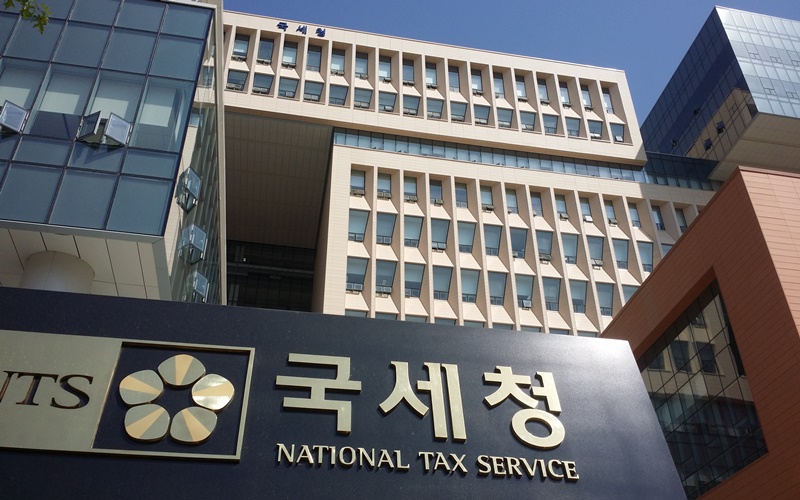
A recent decision by South Korea’s Tax Tribunal is reshaping how Korean blockchain companies think about “going offshore,” underscoring that a foreign registration alone may not shield firms from Korean corporate taxes or supervision.
The ruling, issued last summer, backed the National Tax Service’s position that a domestic blockchain business operating through an overseas entity can still be taxed in Korea if its 'place of effective management' is in the country. In practical terms, if strategic decisions, executive control, and day-to-day management are carried out in Seoul, the company may be treated as Korean for tax purposes regardless of where its incorporation papers sit.
Industry participants were caught off guard, but the reasoning aligns with a broader global enforcement trend: regulators and tax authorities increasingly focus on substance over form. The tribunal’s approach mirrors an international shift toward scrutinizing whether offshore structures reflect real operational relocation or merely 'paper residency' intended to reduce compliance burdens.
For years, incorporating in jurisdictions such as Singapore or other crypto-friendly hubs has been a common workaround in the Korean digital-asset sector—used to navigate uncertain domestic rules and to establish a legal footing for token issuance. Yet, in many cases, the operational center of gravity remained unchanged: management meetings in Seoul, engineering teams based in Gangnam, and founders’ personal and professional lives still rooted in Korea.
The tribunal’s emphasis on where control is exercised effectively draws a line under that model. Tax exposure becomes harder to avoid when the facts indicate that the overseas entity is managed from Korea, and the decision signals that authorities will likely rely on operational evidence—such as where executives reside, where budgets are approved, and where product roadmaps are set—rather than corporate stationery.
Market observers say the more important message is strategic, not merely legal: ‘global expansion’ now requires genuine execution abroad. That means building compliance capabilities in the target jurisdiction, cultivating local investors, and embedding within local developer and user communities—work that is difficult to accomplish while the entire organization remains physically anchored in Seoul.
The column compared this moment to the international spread of Taekwondo in the 1970s and 1980s, when instructors left Korea out of necessity and built bottom-up networks by relocating for real—learning local languages, training students, and creating self-sustaining communities. The uncomfortable distance, rather than symbolic brand export, became the foundation for Taekwondo’s eventual global legitimacy.
Applied to crypto, the contrast is straightforward: an offshore structure designed primarily to sidestep Korean rules still depends on Korea’s talent pool, capital networks, and operational infrastructure, while a true overseas move accepts separation and builds a new base of operations. In that framing, the industry’s next phase is binary—either withstand domestic scrutiny with transparent, Korea-based operations, or relocate decisively and establish real substance abroad.
The tribunal decision may be only an opening salvo. The column warned that extraterritorial-style enforcement has not yet fully accelerated, and that firms incorporated overseas may still face Korean oversight if they actively serve Korean users. As cross-border digital-asset supervision tightens, companies that rely on 'signboard changes' without operational migration could find that both tax and regulatory risks follow them anyway.



















Comment 0