

 News
News  Coin Information
  About us
  Customer Service


 Add as a preferred source on Google

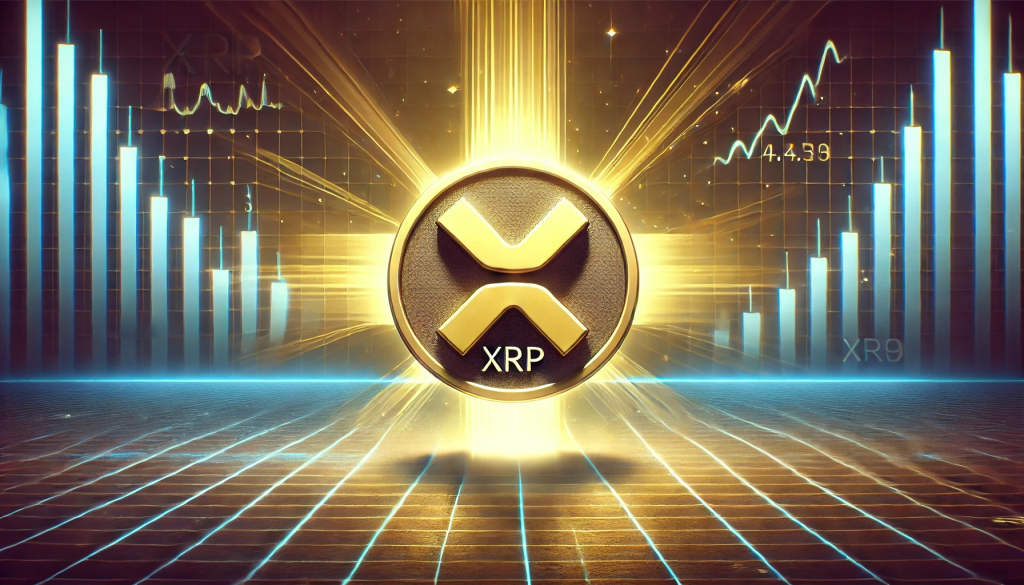
XRP (XRP) hovered around the $1.07 level on Wednesday UTC as traders weighed a growing list of regulatory tailwinds in Hong Kong and Europe against two persistent U.S. overhangs: the Federal Reserve’s next rate decision and the Securities and Exchange Commission’s (SEC) continuing appeal in the Ripple case.
According to CoinMarketCap data referenced in local reports, XRP was trading at about $1.0771 as of 8:42 a.m. UTC on July 30, down 0.89% over 24 hours. Trading volume over the same period totaled roughly $1.31 billion, while market capitalization stood near $67.35 billion. Circulating supply was estimated at 62.53 billion XRP—about 62.5% of the network’s 100 billion maximum supply.
Price performance has been mixed across timeframes, underscoring the current consolidation. XRP is down about 5.1% over seven days, but up roughly 3.4% over 30 days. Over longer windows, the token remains in a deeper pullback, with 60-day and 90-day returns of approximately -19.4% and -21.9%, respectively—signals that the mid-term recovery remains fragile despite headline catalysts.
Technical analysts cited in the Korean coverage described the $1.07–$1.10 range as a key near-term battleground. Brave New Coin characterized XRP as probing for direction between support and resistance, with immediate support clustered around $1.03–$1.05 and a more psychological floor at $1.00. On the upside, resistance was framed at $1.10–$1.14; a clean break could open a path toward $1.18, the report said.
Momentum readings also point to a market lacking conviction. The relative strength index (RSI) was around 46.5—squarely neutral—while TradingKey flagged bearish signals from MACD and Williams %R, warning that near-term momentum could remain soft even if price stays rangebound.
Still, the fundamental narrative has improved in several jurisdictions. In Hong Kong—one of Asia’s leading international financial centers—licensed digital asset exchange OSL HK has begun offering XRP retail trading, supporting XRP/USD and XRP/HKD pairs via spot and over-the-counter channels. Deposits and withdrawals are processed on the XRP Ledger. DMarketForces reported that the launch coincided with a sharp, roughly 4% 24-hour move higher in XRP to about $1.09 on the day of the announcement, outpacing the broader market’s gains at the time—an indication that investors interpreted the development as more than symbolic compliance and closer to a direct retail-demand catalyst.
In Europe, Ripple has also secured authorization under the European Union’s Markets in Crypto-Assets (MiCA) framework, according to the same coverage. MiCA creates a unified regulatory regime across the EU’s 27 member states, and approval provides clearer legal grounding for operating under formal supervisory oversight. Market observers described the milestone as supportive for XRP’s longer-term positioning, as regulatory clarity increasingly dictates where liquidity and product development concentrate.
Beyond licensing headlines, activity on the XRP Ledger is being framed as a sign of non-speculative usage. DMarketForces cited estimates that roughly $2.6 billion in real-world assets (RWA) have flowed into the XRP Ledger ecosystem over the past six months, a category that typically spans tokenized bonds, real estate-linked instruments, and payment-oriented assets. If sustained, that trend would strengthen the argument that network activity is not solely dependent on cyclical trading volume.
Use cases tied to cross-border payments are also resurfacing in market discussion. The Rio Times reported that XRP’s recent rebound has been supported by renewed attention to its role as a settlement token for international transfers, pointing to pilot efforts in Latin American remittance corridors aimed at reducing fees and shortening settlement times. While such pilots do not automatically translate into broad commercial adoption, they have helped revive debate around XRP’s 'utility-driven demand' versus purely speculative flows.
Institutional positioning remains a sensitive datapoint. TradingKey pointed to institutional demand and inflows tied to spot-ETF-adjacent ecosystems as one factor behind recent price resilience. Separately, the report highlighted that Grayscale’s XRP Trust (GXRP) drew attention after CEO Peter Mintzberg filed a Form 144 indicating the potential sale of 2,611 shares at about $20.45 per share—roughly $53,394 in value. A Form 144 does not necessarily mean a sale has occurred, but it can signal portfolio adjustments within regulated vehicles that some traders treat as an early sentiment indicator.
The largest structural risk, however, remains U.S. regulatory uncertainty. The SEC’s ongoing appeal related to the Ripple litigation continues to hang over institutional sentiment, with TradingKey warning that adverse developments at the Second Circuit could unsettle perceptions of XRP’s regulatory standing. Brave New Coin also pointed to uncertainty around the proposed U.S. digital-asset framework legislation known as the 'CLARITY Act'; delays, the report argued, could increase the likelihood that the SEC advances its own rulemaking agenda in the interim, prolonging ambiguity for token issuers and exchanges.
Macro risk is the other dominant variable. With markets awaiting the Fed’s next policy signal, analysts said XRP and other major tokens appear increasingly tethered to broader risk appetite rather than idiosyncratic crypto catalysts. Brave New Coin noted that near-term volatility could be shaped by U.S. GDP updates, Personal Consumption Expenditures (PCE) inflation data, and jobless-claims prints—releases that can quickly shift expectations for rates and liquidity conditions.
For now, XRP’s steady trade around $1.07 reflects a market in pause: regulatory developments abroad are building a more constructive long-term backdrop, but U.S. legal uncertainty and macro policy risk continue to cap follow-through. The next decisive move is likely to hinge on whether XRP can reclaim the $1.10–$1.14 resistance zone amid a clearer read on the SEC appeal path and the Fed’s trajectory.
🔎 Market Interpretation
- Current price action: XRP is consolidating near $1.07 (around $1.077), with light downside on the day (-0.89%) and mixed performance across timeframes (7D -5.1%, 30D +3.4%, 60–90D roughly -19% to -22%).
- Key technical zone: The market is treating $1.07–$1.10 as the immediate battleground. Support sits at $1.03–$1.05 with a psychological floor near $1.00; resistance is $1.10–$1.14, and a breakout could target $1.18.
- Momentum is neutral-to-soft: RSI near 46.5 suggests no strong trend; MACD and Williams %R signals cited remain bearish, implying rallies may struggle without a catalyst.
- Regulatory tailwinds outside the U.S.: Positive developments in Hong Kong (licensed retail access via OSL HK) and EU MiCA authorization improve the long-term backdrop and may support liquidity/product expansion.
- Two U.S. overhangs cap follow-through: (1) the SEC’s ongoing appeal in the Ripple case and (2) macro risk tied to the Fed’s rate path and U.S. data (GDP, PCE inflation, jobless claims).
- Positioning/sentiment watch: Mentions of institutional demand and the Grayscale XRP Trust (GXRP) Form 144 filing are being monitored as signals of potential allocation shifts, though filings do not confirm actual sales.
💡 Strategic Points
- Range-trading framework: With price trapped between support ($1.03–$1.05) and resistance ($1.10–$1.14), traders may treat the market as mean-reverting until a breakout/ breakdown is confirmed.
- Breakout checklist: A sustained move above $1.10–$1.14 would likely need improving momentum (RSI rising, MACD turning) and a clearer macro/regulatory signal; the next upside reference discussed is $1.18.
- Downside risk markers: Failure to hold $1.03–$1.05 increases odds of testing $1.00. Any negative headline on the SEC appeal could accelerate risk-off moves.
- Macro sensitivity remains high: Even strong crypto-specific headlines may be muted if the Fed outlook tightens or risk appetite declines following U.S. data surprises.
- Regulatory-driven adoption angle: Hong Kong’s licensed retail trading and MiCA authorization may help normalize XRP access and infrastructure, potentially supporting steadier demand vs. purely speculative spikes.
- Utility narrative to monitor: Reported $2.6B RWA activity on XRPL and cross-border payment pilots (e.g., Latin America remittance corridors) reinforce the “usage” narrative, but still require evidence of durable, scalable commercialization.
📘 Glossary
- MiCA (Markets in Crypto-Assets): The EU-wide regulatory framework creating standardized rules for crypto issuance and service providers across 27 member states.
- XRPL (XRP Ledger): The blockchain network used for XRP transactions, including transfers, exchange operations, and token-related activity.
- RWA (Real-World Assets): Tokenized representations of off-chain assets (e.g., bonds, real estate-linked claims) recorded/transacted on a blockchain.
- RSI (Relative Strength Index): A momentum indicator (0–100). Around 50 is neutral; higher can indicate stronger momentum, lower can signal weakness.
- MACD: A trend/momentum indicator derived from moving averages; bearish signals often reflect weakening upside momentum.
- Williams %R: A momentum oscillator used to gauge overbought/oversold conditions and short-term turning points.
- OTC (Over-the-Counter): Trading conducted directly between parties rather than via a public order book, often used for larger trades.
- Form 144: A U.S. SEC filing indicating an intent to potentially sell restricted/controlled securities; it is not proof that a sale occurred.
- SEC appeal (Ripple case): The U.S. regulator’s continuing legal process that may influence how market participants assess XRP’s regulatory status.
- Fed rate decision: The U.S. central bank’s policy setting that affects liquidity and risk appetite across markets, including crypto.




















Comment 0