

 News
News  Coin Information
  About us
  Customer Service


 Add as a preferred source on Google
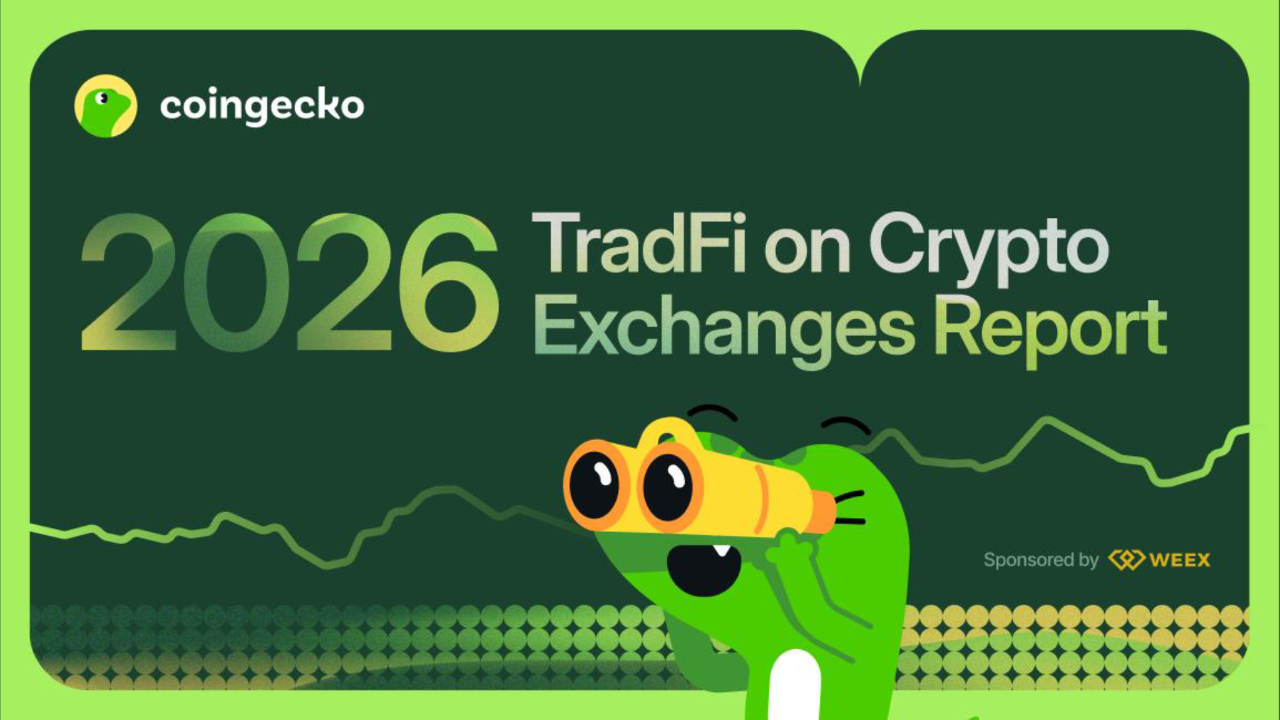
Crypto exchanges are rapidly pulling traditional financial instruments into their own trading stacks, and a new CoinGecko report argues the shift is now large enough to reshape market structure. From tokenized commodities and equities to ETFs and even pre-IPO exposure, a growing share of ‘real-world assets (RWA)’ and TradFi-linked products is being repackaged for 24/7 trading—often with leverage—inside crypto-native venues.
In its latest study, CoinGecko analyzed listings and trading activity across major centralized and decentralized exchanges between January 2025 and May 2026, finding that multi-asset product expansion has accelerated as regulatory conditions improved in some jurisdictions, issuance and distribution models matured, and exchange infrastructure became more capable of supporting non-crypto underlyings. What began as a niche dominated by tokenized gold has broadened quickly into tokenized stocks, ETFs, commodities, FX products, and pre-IPO contracts.
CoinGecko highlighted distribution programs such as Ondo Finance’s Catalyst initiative and Backed Finance’s xStocks model as key catalysts that lowered the friction for exchanges to list RWA-style spot assets at scale. As issuers standardized supply channels and exchanges gained confidence in operational tooling—custody, pricing, collateral management, and liquidation procedures—the barriers to listing ‘tokenized TradFi’ products fell materially.
That shift has triggered an aggressive listing race. Over the period studied, MEXC added 199 spot RWA products and 159 TradFi-linked perpetual futures, bringing its total to 358 newly listed assets. Gate.io listed 224, while WEEX listed 192. Kraken, following its acquisition of Backed Finance, leaned into a spot-heavy playbook with 105 spot RWA listings. Coinbase ($COIN), by contrast, added only 23 products, signaling a more conservative stance. CoinGecko noted that among 12 centralized exchanges surveyed, five prioritized expansion in perpetuals over spot listings.
Spot volumes underscore how quickly user behavior is changing. Monthly spot trading in tokenized RWA jumped from $850 million in January 2025 to $41.26 billion in January 2026, before settling at $19.07 billion in May 2026. In the first five months of 2026 alone, cumulative spot volume reached $153.71 billion—already exceeding the $102.71 billion recorded in all of 2025.
Tokenized commodities accounted for more than half of the incremental growth. Year-to-date spot turnover in tokenized commodities hit $116.26 billion, with trading surging around periods when gold tested cycle highs—suggesting a mix of hedging demand, speculative positioning, and headline-driven flows migrating into exchange-listed crypto wrappers.
Tokenized equities and ETFs also expanded, though from a smaller base. Tokenized stock spot volume increased from $2.53 billion in January 2025 to $7.51 billion by May 2026. Tokenized ETFs grew from $200 million to $1.06 billion over the same period. For market participants, the appeal is straightforward: exposure to familiar assets inside a single crypto account, without relying on a brokerage relationship or traditional market hours—one reason CoinGecko sees this as a structural ‘access’ trade rather than a short-lived product experiment.
The report emphasised, however, that the market’s most dramatic growth is occurring in derivatives. TradFi-linked perpetual futures listed on crypto venues function less like traditional regulated futures and more like the crypto industry’s own perpetual swaps: no expiry, pricing anchored through funding rates, trading that can continue while the underlying cash market is closed, and generally higher leverage. This design can extend price discovery beyond regular trading sessions, but it also amplifies volatility and liquidation risk.
CoinGecko also pointed to an important plumbing difference. Traditional futures markets rely on clearinghouses and standardized margin frameworks. Crypto exchanges, by contrast, often lean on insurance funds, auto-deleveraging (ADL), and in some cases on-chain liquidation mechanisms. As TradFi-linked perps scale, the resilience of these systems—and their ability to handle correlated moves during macro shocks—becomes a central market integrity question.
Perpetuals have outpaced spot by a wide margin. Monthly trading volume in RWA and TradFi perpetual futures rose from $230 million in early 2025 to $347.17 billion in May 2026, a 1,472x increase. Cumulative volume in 2026 surpassed $1.32 trillion, far above 2025’s full-year total of $104.21 billion. While spot and perps were broadly balanced in 2025, by 2026 perpetuals were generating more than eight times the trading activity of spot products.
Commodities led the derivative boom. Average monthly commodity-perp volume jumped from $5.68 billion in 2025 to $223.17 billion in 2026-to-date. Stock perpetuals rose from $4.34 billion to $26.84 billion, and ETF perpetuals increased from $1.5 billion to $8.74 billion. FX-linked products remained comparatively small but followed the same upward trajectory. Open interest (OI) climbed in parallel, rising from $9.7 million in January 2025 to $6.24 billion by the end of May 2026.
Exchange leadership is becoming more defined as liquidity concentrates. By total volume over the 17-month window, Binance led with $498.66 billion, followed by MEXC at $323.86 billion and Hyperliquid at $272.39 billion. In open interest, however, Hyperliquid held a commanding position: as of late May 2026 it controlled 46.4% share, with daily OI peaking around $2.89 billion. Binance posted roughly $1.18 billion and MEXC around $480 million at the same point. CoinGecko also flagged WEEX as a fast-rising mid-tier venue gaining visibility through rapid volume growth.
Tokenized stock perpetuals drew particular attention alongside the AI-driven equity narrative. Across 13 major exchanges, monthly volume for these products increased from $831.17 million in July 2025 to $34.0 billion in May 2026—about 40x growth. The most actively traded names were Nvidia ($NVDA) and Tesla ($TSLA), with Micron ($MU) also seeing sharp expansion. Even so, CoinGecko cautioned that this activity remains a sliver of traditional equity market turnover—under 1%—reinforcing the view that the segment is still largely speculative in character.
Open interest data supports that interpretation. The top 15 tokenized stock contracts reached $1.09 billion in OI by May 2026, with Hyperliquid accounting for 58.8%. Total trading volume was roughly 30 times larger than aggregate OI, a ratio that implies rapid turnover and short-duration positioning rather than long-term exposure. In other words, ‘tokenized stocks’ are often being used less as investment substitutes and more as high-velocity leveraged instruments for volatility bets.
Pre-IPO perpetuals are emerging as another hotspot for leveraged speculation. In May 2026, trading volume reached $701.44 million—more than 10x higher than the prior month—with SpaceX pre-IPO contracts representing 43.55% of the total. OpenAI and Anthropic-related contracts followed, and the trio accounted for 95.62% of monthly volume. Binance captured 43.45% market share within 10 days of launching the products, with WEEX and OKX also gaining traction, while Hyperliquid ceded part of its early lead.
Open interest in pre-IPO products expanded as well, rising from $1.09 million in November 2025 to $42.3 million in May 2026—about 38x growth—driven in part by growing positions in Polymarket and SpaceX-linked contracts. CoinGecko noted that OpenAI and Anthropic products showed relatively low OI compared with volume, suggesting that in the most volatile names traders prefer short-term rotation over holding risk through time.
Despite the explosive pace, the segment remains modest relative to the broader crypto derivatives complex. As of May 2026, TradFi and RWA-linked perpetuals accounted for 7.48% of total perpetual futures volume and 6.14% of total OI across the top 13 exchanges. Still, CoinGecko stressed that the share has increased even during periods when overall exchange volumes and OI were falling—an important signal that this is not just cyclical flow, but a potential ‘structural growth’ line inside the exchange business model.
The report pointed to SpaceX pre-IPO pricing as an example of the market’s evolving function. Prices diverged meaningfully across exchanges ahead of listing, but converged into a $160–$165 band as information accumulated. On the listing day, the average closing price was about $157—roughly 4.67% above the $150 opening level—indicating that while distortions remain, exchange-based pre-IPO markets can provide at least partial pre-listing price discovery.
CoinGecko’s broader conclusion is that RWA and TradFi perpetuals are becoming the fastest-growing channel for crypto exchanges to expand beyond native tokens: combining product diversification, round-the-clock trading, high accessibility, and persistent leverage demand. The sustainability of that expansion, the report suggested, will depend less on headline growth rates and more on whether the market can strengthen ‘regulatory alignment,’ maintain credible linkage to underlying assets, and improve liquidation and risk-management frameworks as volumes scale.
🔎 Market Interpretation
- Crypto venues are “absorbing TradFi” via wrappers: Exchanges are listing tokenized commodities, stocks, ETFs, FX, and even pre-IPO exposure to offer familiar assets within crypto accounts, 24/7 and often with leverage.
- Shift looks structural, not a fad: CoinGecko frames this as an “access trade”—users want one account, fewer intermediaries, and trading outside traditional market hours.
- Derivatives are the real engine: TradFi-linked perpetuals (perps) expanded far faster than spot, turning tokenized exposure into high-velocity, leveraged trading instruments rather than buy-and-hold substitutes.
- Commodities dominate flows: Tokenized commodities drove most incremental growth in both spot and perps, with activity spiking around gold’s cycle highs (hedging + speculation + headline-driven flows).
- Market microstructure risk is rising: Perps extend price discovery beyond underlying market hours, but they also amplify liquidation cascades and volatility—especially during macro shocks when correlations rise.
- Liquidity is concentrating into leaders: Binance led total volume across the window, while Hyperliquid led open interest share—suggesting a split between trading flow leadership and positioning/margin leadership.
- Tokenized equities remain speculative: Even with strong growth (notably $NVDA and $TSLA perps), activity is still under 1% of traditional equity turnover, and high volume-to-OI ratios imply short-duration bets.
- Pre-IPO perps are a new speculative frontier: Rapid growth and concentration in a few names (SpaceX, OpenAI, Anthropic) signals demand for early narrative exposure more than fundamental valuation.
💡 Strategic Points
- Expect listing competition to continue: As issuers standardize distribution (e.g., Catalyst, xStocks), exchanges can add products quickly—reinforcing a “who lists first” dynamic.
- Watch spot vs perp mix as a risk signal: A market skewed heavily toward perps implies leverage-driven activity; monitor funding rates, liquidation data, and OI growth versus spot volume.
- Commodity-linked products may be the gateway: Given their dominant share and clear macro hedging narratives, commodities can act as the on-ramp for broader tokenized TradFi adoption.
- Assess exchange resilience, not just volume: Crypto perps rely on insurance funds and ADL rather than clearinghouses; the key question is whether these mechanisms can withstand correlated drawdowns.
- Track linkage credibility to underlyings: Sustainability depends on transparent pricing, custody/settlement assurances, and robust collateral/liquidation procedures to maintain market confidence.
- Pre-IPO markets: usable but noisy price discovery: The SpaceX example shows cross-exchange dispersion can converge as information improves, but distortions remain—treat prices as indicative, not definitive.
- Regulatory alignment is the main constraint: Growth accelerates where rules are clearer; jurisdictions with enforceable standards may become hubs for compliant tokenized listings.
📘 Glossary
- RWA (Real-World Assets): Tokenized representations of off-chain assets (e.g., gold, equities) traded on crypto rails.
- Tokenized Commodity/Stock/ETF: A crypto-listed instrument designed to track the price of a commodity, equity, or ETF, enabling trading via crypto platforms.
- Perpetual Futures / Perpetual Swaps (Perps): Derivatives with no expiry that use funding rates to keep prices aligned with a reference/spot index.
- Funding Rate: Periodic payments between longs and shorts that anchor perp prices to an index; persistent positive funding often signals crowded longs.
- Open Interest (OI): The total notional value of outstanding derivative positions; rising OI can indicate growing leverage and positioning risk.
- Liquidation: Forced closing of leveraged positions when margin is insufficient, which can accelerate price moves during volatility spikes.
- ADL (Auto-Deleveraging): A mechanism some exchanges use to reduce counterparty risk by automatically lowering positions when losses exceed insurance resources.
- Insurance Fund: Exchange-managed reserve intended to cover losses from liquidations that cannot be executed at the bankruptcy price.
- Price Discovery: The process through which markets incorporate information into prices; perps can extend this process beyond traditional trading hours.
- Pre-IPO Contract: A derivative or tokenized instrument referencing a private company’s implied value before a public listing, typically used for speculative exposure.













Comment 0