

 News
News  Coin Information
  About us
  Customer Service


 Add as a preferred source on Google
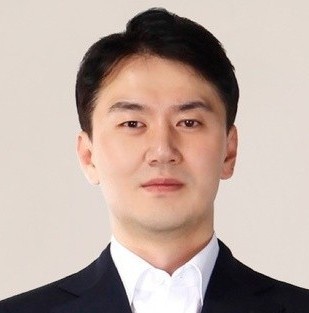
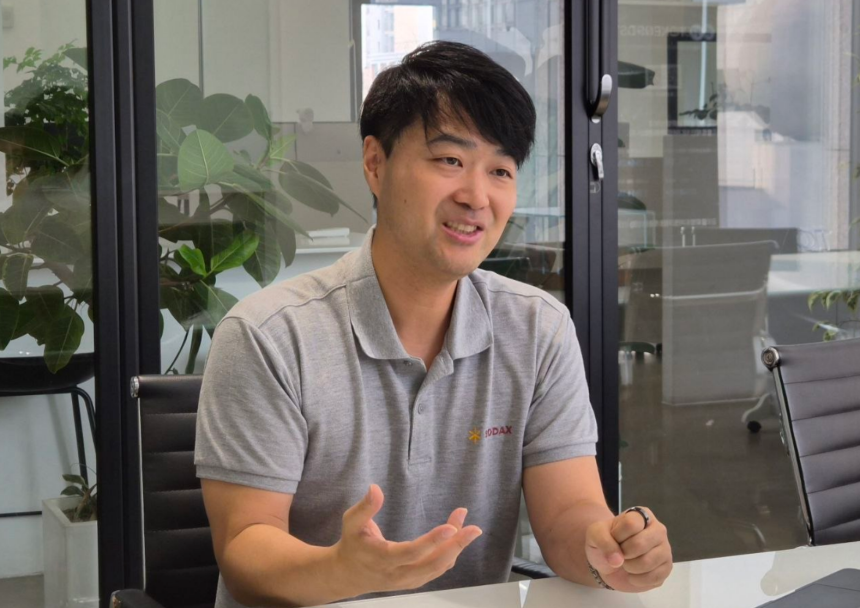
SODAX, founded by ICON's Min Kim, is building a cross-network execution and settlement protocol across 18+ blockchains — and argues the industry's next job isn't moving assets between chains, but coordinating them
SEOUL — For most of crypto's short history, the problem of getting value from one blockchain to another has been framed as a bridge problem: lock an asset here, mint a wrapped version there, hope nothing breaks in between. Min Kim thinks that framing is already obsolete.
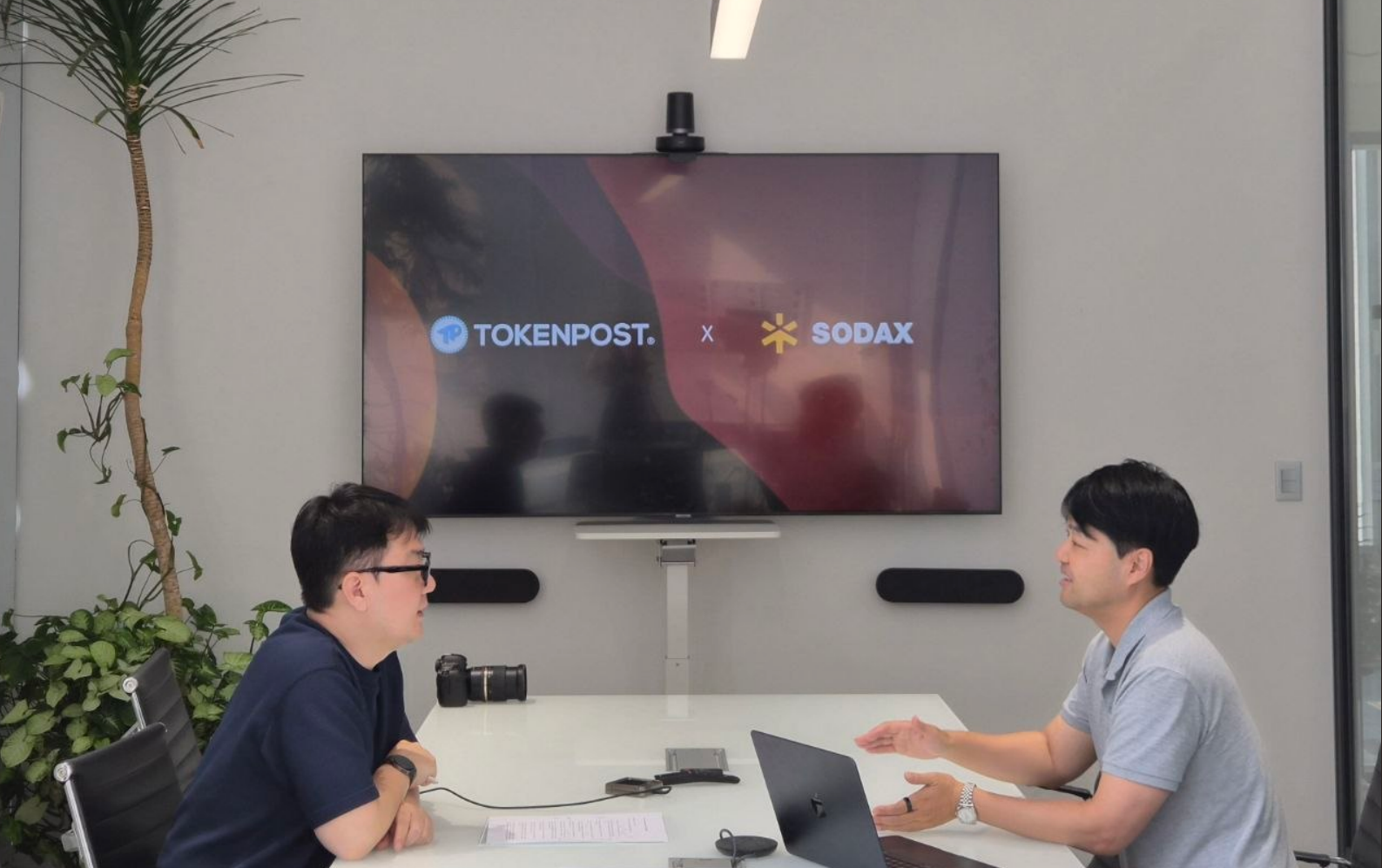
"The keyword is shifting from interoperability to orchestration, coordination and execution," the founder and chief executive of SODAX said in an interview at TokenPost's Seoul headquarters. SODAX, he argues, is not a bridge but a "financial coordination layer" — the execution and settlement plumbing that sits beneath a multichain world and decides how transactions actually clear.
The distinction is the company's entire pitch. SODAX bills itself as an intent-based cross-network execution and settlement protocol. The "X" in SODAX, Kim notes, stands for execution, not exchange. It currently supports 18 blockchains, with plans to exceed 20 by year-end, and it is the project on which Kim — one of the best-known founders in Korean crypto — is now staking his reputation.
Unified Liquidity — One pool, 18 chains
The clearest way to understand SODAX, Kim says, is by analogy to traditional finance: a central securities depository, but on-chain and spanning many networks. The closer technical comparisons are the settlement systems banks and institutions rely on — the IMF's Special Drawing Rights(SDR) for internal balances, or the tokenized-deposit networks lenders use to clear payments among themselves. SODAX aims to be that clearing layer, except across chains.
For developers, the pitch is infrastructure. "Without AWS, every internet company would have had to build its infrastructure from scratch," Kim said. "With SODAX, you can launch an app in a short time without learning on-chain plumbing from zero." The business model is transaction-based revenue share rather than a subscription: the more volume flows through, the more fees accrue.
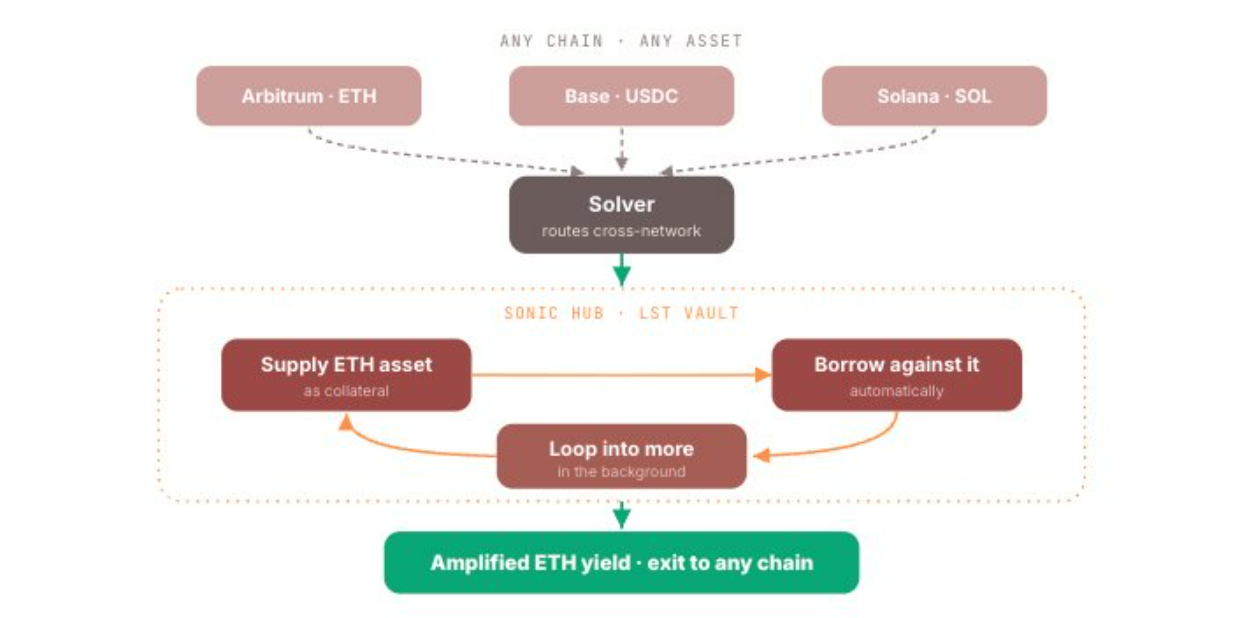
The efficiency claim rests on liquidity. Normally a token issuer that launches on one chain has to seed liquidity again on every network it expands to. "With SODAX you add it once, and it's tradeable across all 18," Kim said. Transactions are atomic and gasless — bundled together, executed on intent, and refunded in full if they fail. "Nothing gets stuck halfway. It's very clean."
Under the hood is a hub-and-spoke design: assets are locked on each spoke chain while mirror tokens settle on the hub. Kim likens it to the pooling model used by cross-border fintechs such as Currencycloud, which debits its own balance immediately and rebalances on a schedule rather than wiring every transaction live. "Settle once, properly, and you cut both cost and transfer risk," he said. SODAX, in his telling, ports that model on-chain to be "fast, cheap and safe."
The user-facing idea is "intent." Kim compares it to vibe coding — describe what you want and let the system assemble it. "You just set the destination, like Uber, and we handle the route," he said. That, he argues, makes the protocol as legible to AI agents as it is to people.
Why "not a bridge" matters
Against incumbents like Chainlink's CCIP, deBridge and LayerZero, Kim draws two distinctions. The first is that SODAX is complementary, not competitive: "We have our own bridge, but if someone wants to use OFT or LayerZero standards, we support all of it."
The second is sharper. He considers first-generation cross-chain tools solutions rather than infrastructure — and, crucially, sequential. Swapping an asset into another chain's native token means bridging, swapping on a decentralized exchange, then bridging again, with the user approving each step and troubleshooting by hand if it gets stuck. "That's the hardest part of the first generation," he said. A coordination layer, by contrast, is meant to make those steps disappear into a single intent.
The ICON years — and "we got it wrong"
SODAX is not Kim's first attempt at building Korean crypto infrastructure. In 2017 he founded ICON, registering a non-profit foundation in Switzerland for regulatory reasons and building what became the country's marquee blockchain — at its peak a global top-30 token. This year, ICON is being fully wound down, its functions migrating to SODAX.
Kim is unsentimental about why. ICON was a first-generation Layer 1 that tried to solve scalability with delegated proof-of-stake and, unusually, built its smart contracts in Java rather than Solidity — a bet aimed at Korean enterprises whose systems run on the Java stack. "We doubted Solidity would be adopted in Korea," he said. "So our thesis was that we had to go non-EVM."
It worked, for a while. ICON became one of the largest non-EVM ecosystems after Ethereum, most of it organic, by Kim's account. Then DeFi Summer arrived in 2021, and the composability of EVM chains — the ability to fork and recombine protocols almost by copy-paste — let Ethereum-compatible ecosystems compound faster than anything non-EVM could match. Builders drained away.
"We got it wrong," Kim said of the non-EVM thesis. "Nobody knew the future, and we did our best. But I’d be the first to admit that we got it wrong, and I'll own it."
What he says ICON got right was cross-chain — and the hard-won experience of building every component ourselves: the mainnet, wallet, explorer, DeFi primitives, and interoperability. "All of that experience and hardship became our asset," he said. Two years ago, the team made the call to drop the Layer 1 and concentrate on what the team did best. "We were doing too much. Running an L1 is expensive and hard, and there are now plenty of new players to handle infrastructure," he said. Working with community developers who had built automated market makers, money markets and overcollateralized stablecoin, the team asked what they would build if they started over knowing what they know now. The answer was SODAX — less a migration than a ground-up rebuild on a new stack, now running on the Sonic blockchain and able to absorb the broader EVM universe, including Kaia and Optimism-based chains.
Kim's own path to this point ran through traditional finance: a UC Berkeley Haas graduate who started his career at Deutsche Bank in San Francisco working on technology IPOs and M&A, then moved into operating roles — including Chief )perating Officer of web publishing platform Tapas Media, later acquired by Kakao Entertainment — before becoming Chief Strategy Officer at Dayli Financial Group, which had 20+ fintech portfolio companies. One was the crypto exchange Coinone where the company helped with the Cosmos’ ATOM token sale. It showed Kim the power of blockchain technology. "It wasn't perfect, but for the first time I saw a use case powerful enough to raise money from people all over the world in a very short time," he said. That insight eventually led to ICON.
SODA, and the Protocol Owned Liquidity
SODAX's governance and utility token, SODA — for Secure On-Chain Digital Assets — anchors what Kim calls protocol owned liquidity, the pool that makes settlement possible and grows as volume rises. He put it at $6 million. Holders of ICON's ICX can migrate to SODA, whose supply has been changed from uncapped to a fixed 1.5 billion.
Designing for agents — and for truth
Asked about DeFi's migration from human users to AI agents, Kim started with what is already shipping. SODAX provides an MCP server so agents can read its documentation and site directly. "An intern of ours who can't code uses Claude to instruct applications and spin up a DEX or a cross-chain payments service, then runs live demos on YouTube," he said. On the company's partner page, feeding in a project's URL generates an instant, tailored report on what SODAX could do for it.
The deeper bet is about data. "There's too much fake and false data in the world," Kim said. "What AI needs is truthful data. What blockchain can provide is the authenticity of data. You have to combine the two." A cross-chain architecture, he argues, is well suited to that: data verified on one chain can be re-verified on another. "It's not just coins moving. The more authenticated data there is, the more we can put it through our platform and make it transactable."
Writing regulation into code
Pressed on where blockchain matters most beyond trading, Kim kept returning to finance — precisely because it is so heavily regulated. Step back, he says, and the reason is that finance is a trust layer: the rules exist because participants don't trust each other.
He uses fund management as his example. A general partner, an LP agreement, auditors — all of it, he argues, is machinery built to protect investors from a manager who might run off with the money. A DeFi vault encodes those rules into the program itself. "The manager can't take the money and run. They can only manage. The balance is verifiable on-chain, transparently, so you don't need a separate auditor."
The payoff, in his framing, is lower cost and higher safety at once, with code enforcing what a contract only promises. He points to a vanished tier of finance to make the case: 2o years ago, young traders in New York once ran $5 million micro hedge funds because legal and accounting overhead was light. "Now compliance costs have exploded — you need $30 million to $50 million just to start a fund," he said. Vaults, with safety enforced inside the contract, could bring that tier back. Does that mean finance itself gets tokenized? "It's already heading that way," Kim said. "It's an early sign of what's to come."
When does it go mainstream
On whether blockchain becomes core infrastructure, Kim is candid that it is a question he wrestles with daily. In Korea, he notes, crypto is still seen as speculation; retail trading is world-class, but real utility is rare. He counts even Kakao's Klip wallet as ultimately a speculative use case. "The paradigm-shifting project — the infrastructure — hasn't arrived yet."
He sees the shift starting elsewhere. Hyperliquid, a decentralized perpetuals exchange, has grown large enough to pressure Binance — evidence, he says, that self-custody is getting easier to use. Stablecoins, he expects, will soon fold into daily life. "When it happens in the US, Korea follows. If the US loosens regulation, Korea loosens regulation. Korea is a fast follower."
His one worry is that big incumbents repeat the fintech story. "Fintech's promise was good — cut fees, pass the savings to customers. But when the boom faded, the banks absorbed it, and both the benefits and the competitors disappeared." The crucial difference with crypto, he argues, is that it invents new infrastructure rather than working inside the old one. He came away from meetings with Korean financial institutions convinced they sense the same thing: many are now building DeFi and self-custody wallets, bracing for customers to migrate. His frustration is with talent: with regulatory and tax uncertainty pushing strong Korean engineers offshore, "SODAX, Kaia — we're all working abroad. Regulation has to ease so they can come back and revive the ecosystem."
Advice for a down market
For founders grinding through the current slump, Kim offers a long-cycle view. "I've been through countless up-and-down cycles, and I don't think this market is the problem. It's more stable than before — institutions are investing, financial firms are preparing, builders keep building."
He quotes Warren Buffett: markets always swing, but the underlying value is higher than it was a year ago, five years ago, ten years ago. He sees the AI boom as a mirror. "People think it happened overnight, but I was hearing about AI 20 years ago in banking. OpenAI researched for a decade before ChatGPT landed." The internet, too, was dismissed as a bubble before YouTube and Facebook emerged over more than a decade. The tipping point, he agrees, hasn't come — but his conviction hasn't moved. "Every expert, every well-known VC, every financial institution sees the same thing — that this technology is simply better than the financial tech we have now."
What's next
The headline metric for SODAX, Kim says, is volume — specifically cross-network volume, which he says has roughly doubled month over month since the protocol launched earlier this year, with around ten strategies to push it higher.
One is unique real-world assets(RWA). "We look for unique assets you can't find overseas, and we found a few on this trip to Korea," he said, hinting at — without confirming — tokenized K-pop assets. Another is asset coverage: the day before the interview, SODAX added xStock, the tokenized equities distributed through Kraken, onto the platform. "Any customer using our SDK can now offer xStock to their users," he said. "It's a stock, but on-chain it opens up derivatives and uses you can't build elsewhere."
Stack data verification on top, and Kim sees a flywheel: more customers using the technology, more volume, more growth. "The goal is to be more stable, cheaper, safer," he said. "The value proposition of the architecture is clear, so I think it's a matter of time. The early signs are very good."
Kim keeps coming back to the nine years. "When you spend nine years on a single project, you've put your life into it," he said. "I haven't stopped believing it will work — and I'd ask people to take another look at what we're building at SODAX."








Comment 0