

 News
News  Coin Information
  About us
  Customer Service


 Add as a preferred source on Google

Wealthier crypto investors are increasingly concentrating their portfolios in major assets such as Bitcoin (BTC) and Ethereum (ETH), while a separate pocket of the market is flashing extreme 'oversold' signals in smaller altcoins—highlighting a clear split between a safety-first allocation stance and tactical, high-risk rebound watching.
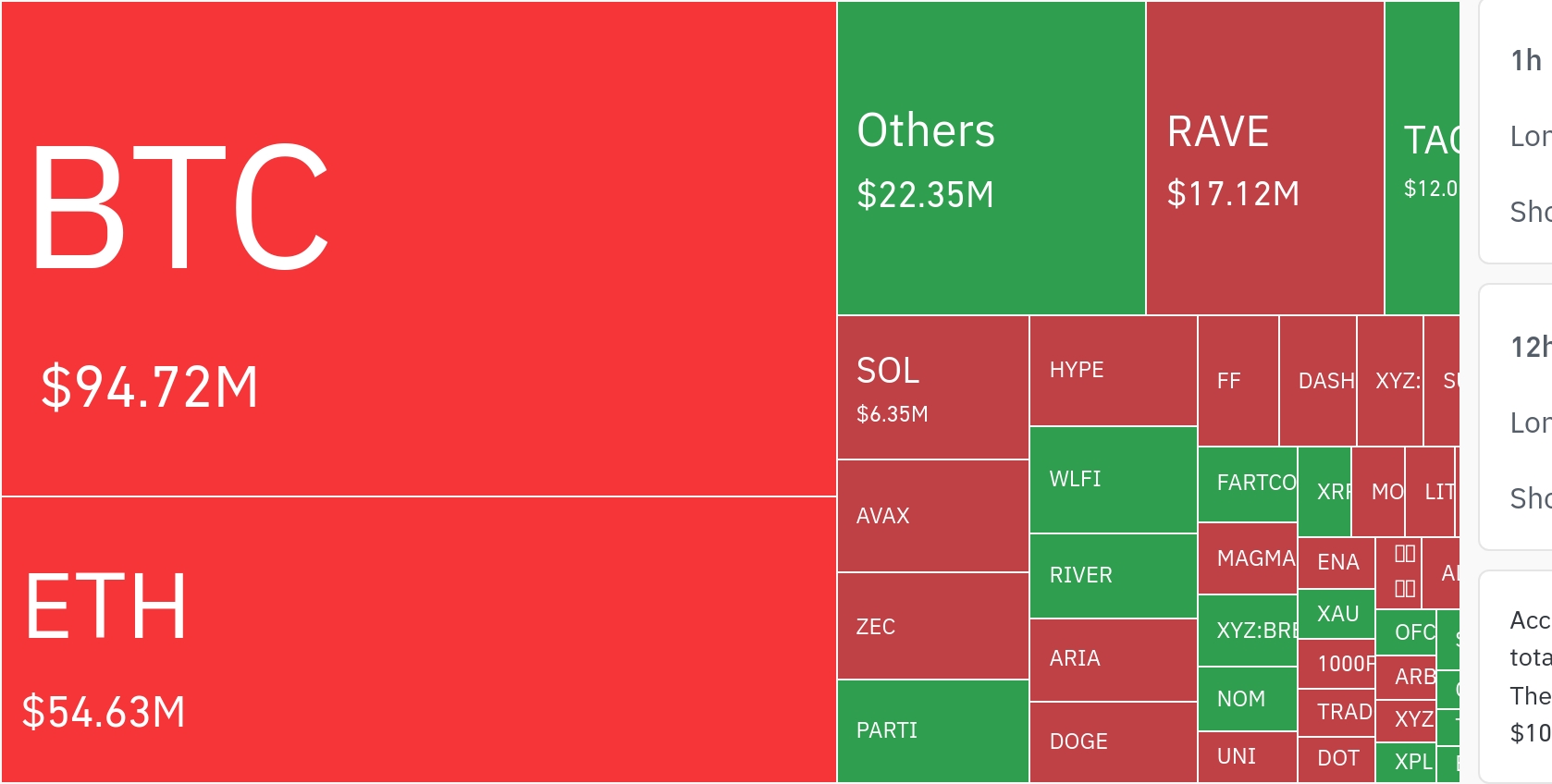
As of Friday ET (based on data taken Saturday in Korea), Bitcoin (BTC) accounted for 83% of holdings among high-net-worth participants tracked in the dataset, making it the most heavily weighted asset. Ethereum (ETH) followed closely at 80%, while XRP (XRP) held a still-elevated 70% share. Solana (SOL) registered 49%, and Ethereum Classic (ETC) came in at 36%.
The skew toward large-cap assets suggests investors are prioritizing perceived 'liquidity' and relative resilience during a volatile tape. In practice, BTC and ETH tend to benefit from deeper order books, broader institutional access, and more developed derivatives markets—features that can matter when risk appetite fades and slippage becomes a concern.
At the same time, technical indicators are pointing to unusually stressed conditions in several smaller tokens. At 10:59 p.m. ET Friday (11:59 a.m. KST Saturday), Katana (KAT) posted a Relative Strength Index (RSI) of 7.05 alongside a -1.10% move, marking the most extreme reading on the list. Core (CORE) showed an RSI of 9.66 and was nearly flat at -0.02%. Fabric Protocol (ROBO) printed an RSI of 11.76 while edging up +0.95%.
Other names also appeared deeply compressed: Particle Network (PARTI) recorded an RSI of 13.79 as it fell -5.72%, and Amp (AMP) posted an RSI of 16.45 with a -1.05% decline.
RSI is a widely used momentum oscillator that compares the magnitude of recent gains to recent losses to gauge whether an asset is 'overbought' or 'oversold'. Readings below 30 are commonly interpreted as oversold, sometimes raising expectations of a short-term technical rebound. However, traders typically treat RSI as a contextual tool rather than a standalone trigger, weighing it against volume trends, broader risk-on/risk-off shifts, and any asset-specific catalysts that could justify a reversal—or confirm further downside.
The broader takeaway is that capital appears to be clustering in top-tier tokens for stability, while selective altcoins are slipping into extreme technical territory. If market risk appetite improves, deep-oversold segments could see sharp reflexive moves; if it doesn’t, concentration in majors may persist as investors prioritize defensiveness over speculative exposure.















Comment 0