

 News
News  Coin Information
  About us
  Customer Service


 Add as a preferred source on Google
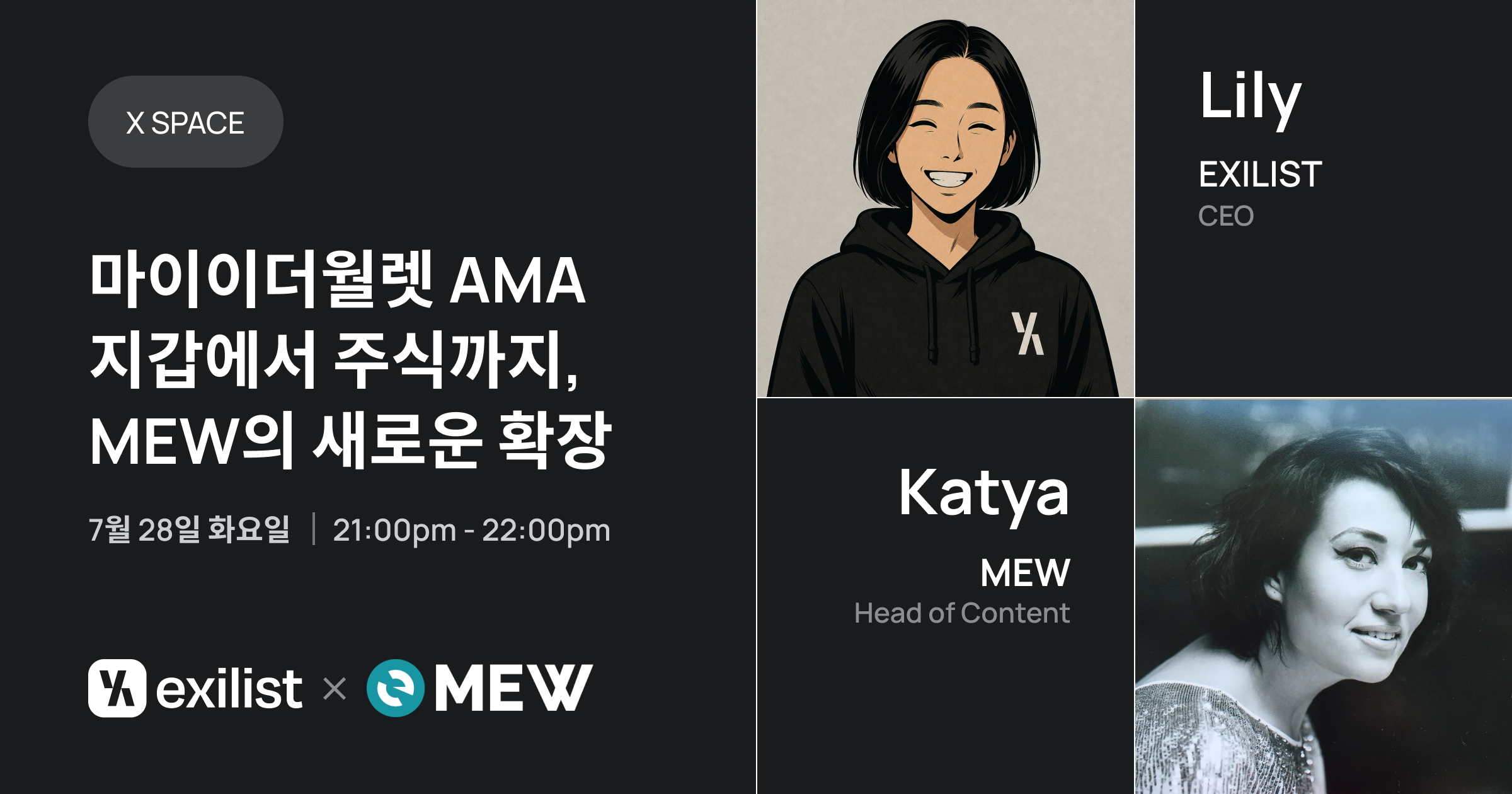
MyEtherWallet (MEW), one of Ethereum’s longest-running wallet brands, is repositioning itself from a simple self-custody tool into a broader ‘onchain finance’ interface—most notably by integrating ‘tokenized stocks’ through Ondo Stocks. The shift reflects a growing push across crypto to bring traditional assets on-chain, while keeping users in control of their private keys rather than moving them back into brokerage or exchange accounts.
The strategy was outlined in an AMA featuring Katya Michaels, MEW’s head of content and community, and later analyzed by Exilist Research. Michaels, who has worked with MEW since 2018, described the company’s product roadmap as a deliberate expansion from an Ethereum (ETH) wallet into an asset-management layer that can hold and interact with multiple asset classes—from crypto to real-world assets (RWAs) and equity-linked tokens.
MEW launched in 2015 as a web interface designed to make Ethereum wallet creation and asset management accessible without command-line complexity. During the 2016–2018 ICO boom, it became a default gateway for many users holding Ethereum-based tokens. In the years that followed, MEW broadened its footprint: a mobile wallet launch in 2018, a redesigned beginner-focused web experience in 2019, and early support for Ethereum staking in 2020 alongside gradual additions of DeFi and layer-2 functionality.
In 2022, MEW introduced Enkrypt, a multichain browser wallet, and has since continued to widen its scope beyond Ethereum. According to Exilist’s summary of the AMA, MEW today supports exposure not only to Bitcoin (BTC) and Solana (SOL), but also RWAs, ‘tokenized stocks,’ and even perpetual futures—signaling a pivot from “wallet as storage” to “wallet as financial console.”
One pillar of MEW’s positioning is its insistence on an open-source, client-side, non-custodial model—what Michaels described as the foundation of long-term user trust. In practice, that means users keep control of their private keys and assets, reducing reliance on centralized platforms that can impose account freezes or introduce custodial and counterparty risks. Michaels also emphasized that MEW grew without external venture funding, which the team argues has helped it avoid incentive misalignment, and that it has maintained a stance against collecting personally identifiable user data.
MEW is also leaning into an interoperability-first approach rather than forcing users into a single proprietary wallet. The product supports a ‘Bring Your Own Wallet’ model, allowing users to connect existing wallets such as MetaMask and OKX Wallet and transact through MEW’s portfolio interface. Michaels framed this as an extension of MEW’s original mission: lowering barriers to blockchain access regardless of technical sophistication or geography. She added that MEW’s historically aggressive support for hardware wallets was driven by the same logic—meeting users where they already are, rather than trying to replace entrenched tooling.
The most consequential expansion, however, is MEW’s bet that ‘tokenized stocks’ can bring U.S. equity exposure into the on-chain environment for users who face friction with traditional brokerage access. Michaels pointed to obstacles that vary by jurisdiction—regulatory constraints, minimum investment requirements, paperwork, settlement delays, and onboarding complexity—as recurring reasons global users struggle to gain efficient access to U.S. stocks. By contrast, tokenized representations of equities can offer a more seamless path to obtaining market exposure inside a crypto-native workflow.
MEW also sees portfolio construction benefits. Stocks, in general, tend to have longer track records and different volatility profiles than many crypto assets, and integrating them within a single wallet interface could enable more diversified on-chain portfolios. Beyond holding, the longer-term implication is composability: if tokenized equities become more broadly accepted, they could potentially be used across DeFi as collateral or liquidity-building instruments—though such use would depend on token design, counterparties, and market infrastructure.
Michaels cautioned that not all tokenized stock products are structured the same way. Some offerings may not be backed by underlying shares in a straightforward manner, liquidity conditions can differ sharply between issuers, and closed, permissioned models can limit transferability compared with more ‘permissionless’ designs. The practical takeaway, she argued, is that users should focus less on branding and more on understanding issuance, custody, redemption mechanics, and liquidity—details Exilist said it examined further in its research note.
To accelerate adoption, MEW is running reward-driven initiatives—such as Trade & Hold, Trade & Get, and Layer3 missions—designed to encourage hands-on experimentation rather than passive awareness. Michaels described the campaigns as an effort to shift user behavior: getting crypto-native users to experience what it feels like to hold equity exposure directly inside a self-custody wallet, and to see how stocks and crypto can coexist within a single portfolio view. The requirement to hold assets for a period of time, she added, is meant to push deeper exploration of the product model rather than short-term reward extraction.
MEW’s roadmap suggests the company views wallets as the next battleground for financial aggregation—where traditional finance exposure and on-chain rails converge behind a single interface. The team recently added perpetual futures to its web platform and has signaled plans for broader mobile support, alongside deeper integration of DeFi functions. Michaels also pointed to Korea as a target market, highlighting full Korean-language localization for both the wallet experience and educational content, and indicating interest in gathering direct feedback from Korean users on feature demand and usability pain points.
The AMA, as framed by Exilist, underscored a broader industry thesis: the next phase of on-chain finance may be defined less by how many asset types can be tokenized, and more by how naturally they can be connected into a coherent user experience. For MEW, now nearing a decade since its launch, the push into ‘tokenized stocks’ is a bid to redefine what a crypto wallet can be—shifting from a transaction tool into a self-sovereign, multi-asset financial interface.
🔎 Market Interpretation
- MEW’s repositioning: MyEtherWallet is evolving from an Ethereum self-custody wallet into an “onchain finance” front-end that aggregates multi-asset exposure (crypto, RWAs, tokenized equities, perps) inside one interface.
- Tokenized stocks as the headline wedge: Integration of Ondo Stocks signals rising demand to access traditional markets (notably U.S. equities) via on-chain rails—especially for users facing brokerage friction across jurisdictions.
- Wallets as the new distribution layer: The article frames wallets as the next battleground for financial aggregation—competing on UX, composability, and asset coverage rather than simple storage and transfers.
- Trust as competitive moat: MEW emphasizes open-source, client-side, non-custodial design, no VC funding narrative, and limited PII collection to differentiate from custodial exchanges/brokers and reduce counterparty risk concerns.
- Interoperability over lock-in: “Bring Your Own Wallet” connectivity (e.g., MetaMask, OKX Wallet) positions MEW more like a portfolio/transaction console than a closed wallet ecosystem.
💡 Strategic Points
- Understand product structure before buying “tokenized stocks”: Users should evaluate whether tokens are backed by underlying shares, how custody is handled, redemption rights, transfer restrictions (permissioned vs permissionless), and issuer-specific liquidity.
- Access thesis: Tokenized equities may reduce onboarding friction versus brokers (paperwork, minimums, settlement delays), but users still face design- and counterparty-specific risks that differ by provider.
- Diversification inside self-custody: Adding equity-linked exposure could change portfolio construction by blending crypto volatility with longer-track-record assets—without moving funds back to custodial venues.
- Composability upside (conditional): If market infrastructure matures, tokenized equities could become usable across DeFi (e.g., collateral/liquidity). This depends on token design, legal structure, liquidity depth, and protocol acceptance.
- Behavior change via incentives: MEW’s campaigns (Trade & Hold, Trade & Get, Layer3 missions) are aimed at driving hands-on usage and longer holding periods, discouraging purely short-term reward farming.
- Product expansion path: Continued additions (perpetual futures on web, deeper DeFi functions, broader mobile support) suggest MEW is building a full financial dashboard rather than a single-purpose wallet.
- Go-to-market localization: Korea is highlighted as a focus market with full Korean-language support and an intent to gather local user feedback—implying regional UX and education are key adoption levers.
📘 Glossary
- Self-custody (non-custodial): A setup where users control private keys and therefore directly control assets, rather than relying on an exchange/broker to hold them.
- Client-side wallet: Wallet operations (like key handling/signing) occur on the user’s device/browser, reducing reliance on a central server for sensitive actions.
- Onchain finance: Financial activity executed on blockchain rails (trading, lending, staking, asset issuance) using smart contracts and tokenized instruments.
- RWA (Real-World Asset): A token representing an off-chain asset or claim (e.g., treasuries, credit, commodities, equities), typically involving legal/custodial structures.
- Tokenized stocks: Blockchain tokens designed to provide exposure to equity performance; structures vary widely (backing, redemption, transfer rules, liquidity).
- Composability: The ability for on-chain assets and protocols to interoperate—e.g., using a token as collateral in DeFi or integrating it into other applications.
- Permissioned vs permissionless: Permissioned tokens restrict who can hold/transfer (often for compliance); permissionless tokens can generally be transferred freely on-chain.
- Perpetual futures (perps): Derivatives without expiry that track an underlying price via funding payments; carry leverage and liquidation risk.
- Layer-2 (L2): Scaling networks built on top of Ethereum to reduce fees and increase throughput while inheriting aspects of Ethereum security.











Comment 0