

 News
News  Coin Information
  About us
  Customer Service


 Add as a preferred source on Google

Ripple (XRP) rallied nearly 6% on Wednesday, touching a three-week high as traders scrambled for a catalyst. While some market participants initially pointed to a U.S. Securities and Exchange Commission (SEC) ‘roundtable’ as the driver, the move appeared far more closely tied to a concrete adoption headline: Rakuten’s expansion of XRP into its payments and wallet ecosystem in Japan.
According to CoinMarketCap data, XRP was trading around $1.4447 as of 6:58 p.m. UTC on April 16, up 4.2% on the day and 6.55% over the past week. The token briefly pushed above the $1.42 level intraday, marking its strongest price action in roughly three weeks and lifting its market capitalization above $88.9 billion. In a notable session for relative performance, XRP outperformed Bitcoin (BTC), Ethereum (ETH), and Solana (SOL) over the same window—an uncommon configuration in recent weeks as majors have typically moved in tandem.
Liquidity followed price. XRP’s 24-hour trading volume reached roughly $4.05 billion, a 63.5% jump from the prior day, signaling a rapid pickup in speculative participation and repositioning. Activity remained overwhelmingly concentrated on centralized exchanges, which accounted for nearly all reported volume, while decentralized exchange flows stayed minimal by comparison—suggesting the move was driven by broader market rotation rather than on-chain venue demand.
The more durable narrative, however, came from Japan. On April 15, Rakuten Wallet began offering XRP spot trading and enabling payments functionality tied to Rakuten Pay, effectively opening a pathway for XRP to be used beyond trading. The integration allows Rakuten Pay’s estimated 44 million users to convert Rakuten Points into XRP and spend it across more than 5 million merchant locations nationwide. Market participants framed the development as more than another exchange listing, since it embeds XRP into a consumer payments loop—an area where crypto adoption tends to be measured in repeat usage rather than one-off inflows.
Analysts also noted the strategic alignment with Ripple’s long-standing positioning around ‘real-economy’ integration and cross-border settlement. While Japan’s regulatory environment has historically been more prescriptive than in many jurisdictions, Rakuten’s scale gives the announcement outsized signaling value: it links a major retail platform’s loyalty and payments rails to a liquid crypto asset, potentially supporting incremental transactional demand if user conversion becomes habitual.
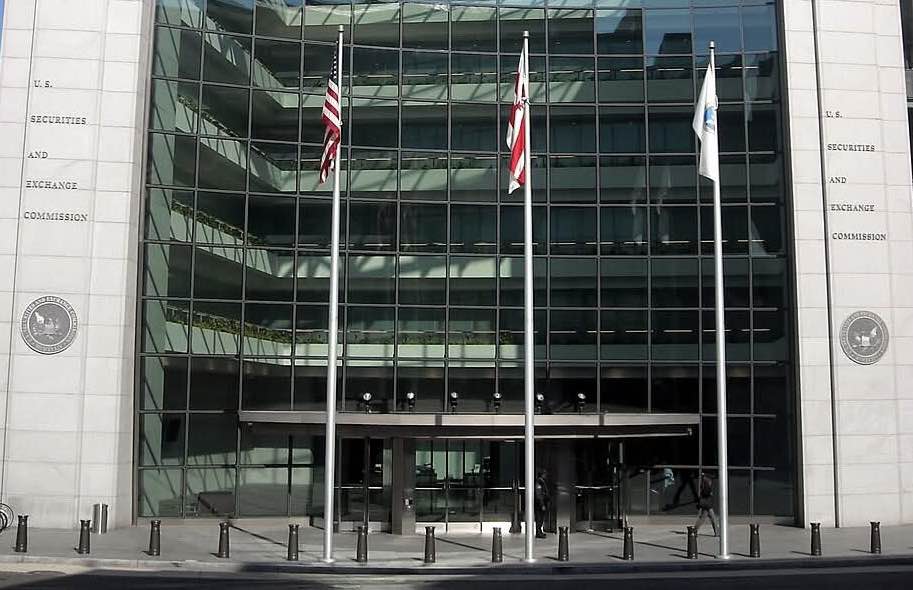
By contrast, expectations around the SEC event looked misplaced. Some traders had anticipated that the April 16 SEC ‘roundtable’ would provide crypto-relevant signals—particularly on digital asset classification or the trajectory of the CLARITY bill frequently discussed in U.S. regulatory circles. But the published agenda focused on traditional market structure topics in options markets, including competition among liquidity providers, improvements to retail options trading experiences, and the direction of options market growth. Crypto—and XRP specifically—did not feature in the official topics, undermining the idea that the session itself justified a token-specific repricing.
Regulatory optimism has also cooled at the margins. Ripple CEO Brad Garlinghouse has recently suggested that a timeline for the CLARITY bill could slip toward late May, citing ongoing negotiations around stablecoin-related issues such as interest payments. While Garlinghouse maintained a high subjective probability for passage, Senate Banking Committee Chairman Tim Scott has indicated that an April vote may be difficult—comments that contributed to a broader reassessment of timing risk.
That shift has been reflected in prediction markets. On Polymarket, implied odds for the CLARITY bill passing in 2026 reportedly fell from 82% to 54%, signaling that traders see a less certain path for near-term regulatory clarity. For XRP, this matters because parts of its prior rallies have been sensitive to U.S. policy headlines, even when the linkage is indirect. A weakening of ‘regulatory catalyst’ narratives can reduce the durability of momentum once initial spot-driven demand fades.
Technically, XRP also faces a near-term supply overhang. On-chain metrics indicate a dense band of holder cost basis between $1.45 and $1.47, with roughly 1.24 billion XRP concentrated in wallets around that range. The zone is widely viewed as a ‘break-even’ region for buyers from earlier in 2026, meaning it can attract profit-taking and defensive selling pressure as price revisits it. Previous attempts to clear similar cost-basis clusters have seen rallies stall as sidelined liquidity becomes active supply.
As of the latest figures cited by CoinMarketCap, XRP’s circulating supply stands near 61.57 billion tokens, with fully diluted valuation around $144.4 billion. The asset has held its position as the No. 4 cryptocurrency by market capitalization.
For the broader market, the day’s takeaway was less about Washington and more about distribution. XRP’s move highlighted how ‘payments integration’ headlines—especially those tied to large consumer platforms—can still generate meaningful price response in a market otherwise dominated by macro positioning and regulatory speculation. Whether that impulse persists will likely depend on follow-through adoption signals in Japan and the market’s ability to absorb supply near the $1.45–$1.47 resistance band.
🔎 Market Interpretation
- XRP jumped on adoption, not regulation: XRP rallied ~6% to a three-week high, but the more credible catalyst was Rakuten’s XRP payments + wallet expansion in Japan, not the U.S. SEC “roundtable.”
- Rotation + speculation showed up in volume: 24h volume rose ~63.5% to ~$4.05B, with activity concentrated on centralized exchanges, implying a fast sentiment shift rather than on-chain demand leading the move.
- Relative strength stood out: XRP outperformed BTC/ETH/SOL on the session—uncommon recently—suggesting a token-specific narrative bid rather than broad market beta.
- SEC expectations were mispriced: The SEC agenda centered on options market structure (liquidity providers, retail options experience, market growth), with no crypto/XRP focus, weakening the “regulatory catalyst” explanation.
- Regulatory optimism cooled at the margins: CLARITY bill timing looks less certain (late May risk, stablecoin issues), and Polymarket odds for passage in 2026 reportedly fell 82% → 54%, which can reduce the durability of policy-driven rallies.
- Near-term technical friction: A dense cost-basis cluster around $1.45–$1.47 (~1.24B XRP) may act as resistance as holders near break-even sell into strength.
💡 Strategic Points
- Differentiate “headline pumps” from “adoption loops”: Integrations that enable repeat payments usage (Rakuten Pay + points conversion) tend to be more durable than one-off exchange listings or speculative regulatory rumors.
- Watch Japan follow-through metrics: Key signals include Rakuten Points-to-XRP conversion frequency, merchant payment volumes, and sustained user activity across Rakuten Pay’s large footprint (reported ~44M users; >5M merchant locations).
- Expect supply at $1.45–$1.47: Traders may treat the band as a tactical decision zone—either a breakout confirmation (accepting higher risk) or a fade area if sell pressure repeatedly caps rallies.
- Volume quality matters: Because the surge was largely CEX-driven, momentum may be more sensitive to rapid positioning changes; monitor whether liquidity stays elevated or quickly mean-reverts.
- Policy narrative should be scoped: Since the SEC event is unrelated to crypto, near-term U.S. policy impact would more likely come from CLARITY/stablecoin negotiations and realistic legislative timelines rather than generic SEC meeting chatter.
- Macro vs. micro balance: In a market dominated by macro/regulation themes, sizable consumer-platform distribution deals can still temporarily override broader correlations—until resistance/supply forces reassert.
📘 Glossary
- SEC “Roundtable”: A public discussion forum; here it focused on options market structure, not crypto asset classification.
- CLARITY bill: Proposed U.S. digital-asset market structure legislation aimed at clarifying regulatory jurisdiction and rules; timing uncertainty can affect crypto sentiment.
- Rakuten Wallet / Rakuten Pay: Rakuten’s crypto wallet and payments services; integration enables XRP trading and potential payment usage within a large consumer ecosystem in Japan.
- Rakuten Points: Loyalty rewards that users can convert; the article notes a pathway to convert points into XRP, linking rewards to crypto usage.
- Centralized exchange (CEX) vs. decentralized exchange (DEX): CEX volume implies trading via intermediaries (order books on exchanges), while DEX volume reflects on-chain swapping; the move was predominantly CEX-led.
- Cost basis cluster: A price band where many holders acquired tokens; when revisited, it often becomes resistance as break-even holders sell.
- Fully Diluted Valuation (FDV): Market cap assuming all tokens are in circulation; used to gauge potential valuation if supply unlocks/enters circulation.
- Resistance band: A price zone where selling pressure typically increases, potentially stalling rallies.
















Comment 0