

 News
News  Coin Information
  About us
  Customer Service


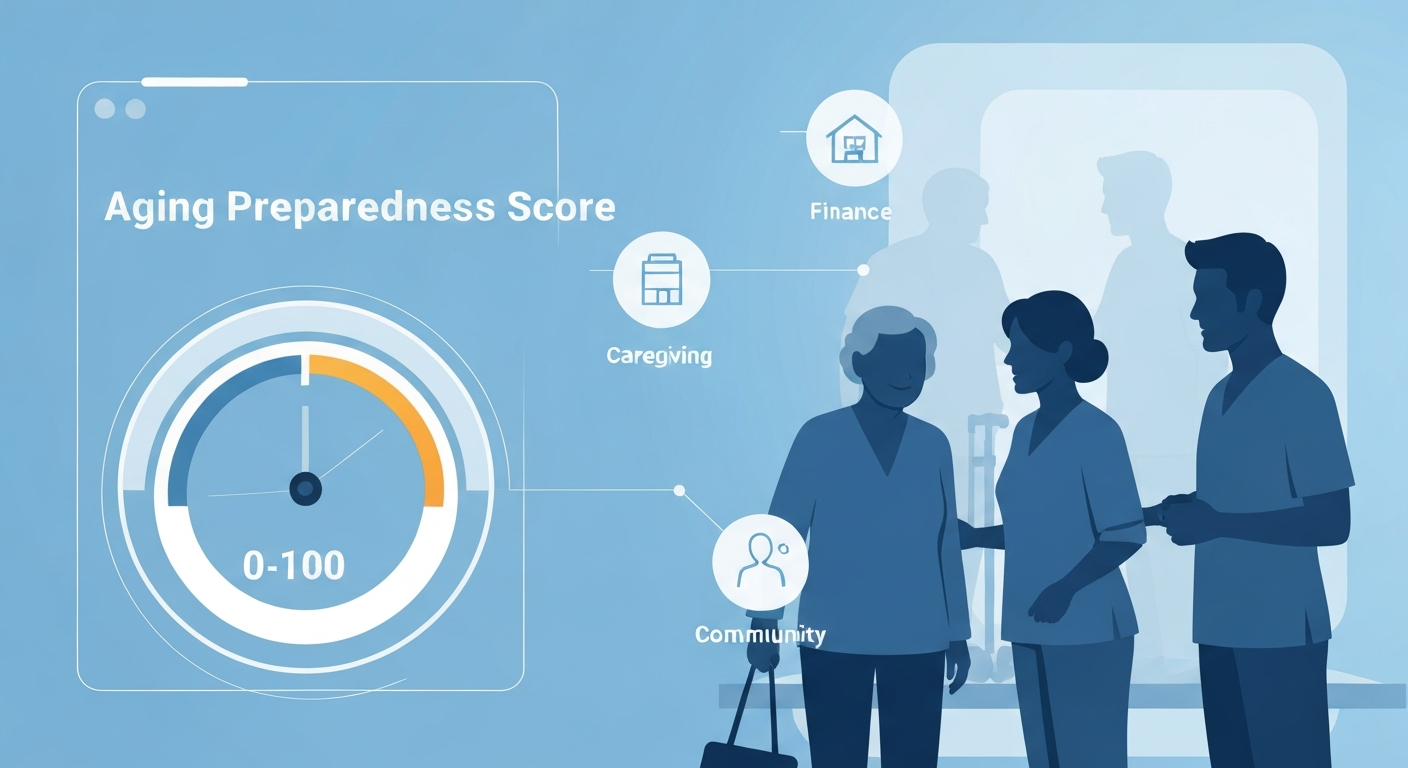
John Hancock (Manulife Financial) ($MFC) has launched a new assessment tool designed to help individuals quantify how well they are prepared for longevity—turning an often vague idea of retirement readiness into a scored snapshot with concrete next steps as populations age and post-retirement timelines stretch.
The insurer said Tuesday ET that the tool was developed in collaboration with the MIT AgeLab and is built on the 2025 ‘Longevity Preparedness Index.’ After users input information about their current circumstances, the platform generates an overall score and category-level scores from 0 to 100, providing a structured view of strengths and potential gaps.
Unlike traditional retirement calculators that lean heavily on savings targets, the assessment evaluates eight areas: health, finances, caregiving, housing, daily activities, community, life transitions, and social connections. The broader framework reflects a growing industry view that ‘longevity risk’ is not only about outliving assets, but also about sustaining health, support systems, and quality of life through extended later years.
John Hancock (Manulife Financial) ($MFC) said the tool is designed to pair measurement with action. If a user’s financial score is low, the platform may prompt steps such as strengthening budgeting habits or increasing savings discipline. If social connection scores lag, recommendations could include rebuilding relationships or engaging more consistently with local groups—guidance aimed at translating diagnostic results into achievable behavioral changes.
Industry observers have increasingly noted that longer life expectancy, evolving healthcare needs, and shifting family structures are pushing insurers and wealth managers to expand beyond product-centric approaches. Services that blend screening, education, and personalized planning have gained traction as firms compete to position themselves as partners in ‘healthy longevity,’ not merely providers of insurance coverage or investment solutions.
John Hancock (Manulife Financial) ($MFC)’s move also underscores the intensifying race across insurance and asset management to differentiate with higher-touch longevity services. As more companies develop tools that connect assessment results to tailored guidance, the market is likely to see deeper integration of health, lifestyle, and financial planning—reflecting the reality that retirement preparedness increasingly spans the whole of life, not just the balance sheet.
Ultimately, the new assessment frames longevity less as a question of living longer and more as one of living well for longer. By scoring preparedness and highlighting practical priorities, the tool may serve as an entry point for individuals looking to build a more stable and connected later-life plan amid rapid demographic change.
🔎 Market Interpretation
- Shift from “retirement funding” to “longevity readiness”: John Hancock (Manulife Financial) positions longevity risk as multidimensional—covering health, housing, caregiving, and social resilience, not just asset drawdown.
- Data-driven differentiation: Basing the tool on MIT AgeLab collaboration and a 2025 Longevity Preparedness Index signals an evidence-oriented approach, helping the firm compete on credibility and personalization rather than products alone.
- Service layer arms race: The launch reflects intensifying competition among insurers/wealth managers to add “high-touch” planning services that deepen client relationships and create cross-sell opportunities over time.
- Growing addressable need: Longer lifespans, changing family structures, and more complex healthcare trajectories expand demand for tools that translate an abstract longevity concept into measurable gaps and actions.
💡 Strategic Points
- Eight-domain scoring creates a fuller risk map: Health, finances, caregiving, housing, daily activities, community, life transitions, and social connections provide a structured snapshot (0–100) that can reveal “non-financial” fragilities that still drive retirement outcomes.
- From diagnosis to behavior change: The tool emphasizes next steps (e.g., budgeting habits, savings discipline, rebuilding social ties), aiming to convert assessment results into actionable, repeatable improvements.
- Advisor and ecosystem integration potential: Scores can be used to triage client needs, guide follow-up planning, and connect users to resources (financial planning, caregiving support, community engagement), enabling a broader “healthy longevity” offering.
- Engagement flywheel: Periodic rescoring can encourage ongoing interaction and progress tracking, turning a one-time check into a longitudinal planning journey.
- Holistic planning message: By framing longevity as “living well for longer,” the tool aligns with a wellness-and-quality-of-life narrative that may resonate more than traditional retirement calculators.
📘 Glossary
- Longevity risk: The risk that a person’s later-life needs exceed their resources—financially, physically, and socially—over a longer-than-expected lifespan.
- Longevity Preparedness Index (2025): A research-based framework used to score how prepared someone is for extended later life across multiple life domains (not only finances).
- Category-level score (0–100): A numeric score for each domain (e.g., health or housing) that highlights strengths and gaps relative to overall preparedness.
- Traditional retirement calculator: A tool typically focused on savings targets, portfolio growth, and withdrawal rates, often underweighting health, caregiving, and social factors.
- Healthy longevity: Industry concept emphasizing sustained well-being, independence, and support networks throughout longer lifespans.
- Life transitions: Major later-life changes (retirement, bereavement, relocation, health events) that can materially affect finances, routines, and support systems.
















Comment 0