

 News
News  Coin Information
  About us
  Customer Service



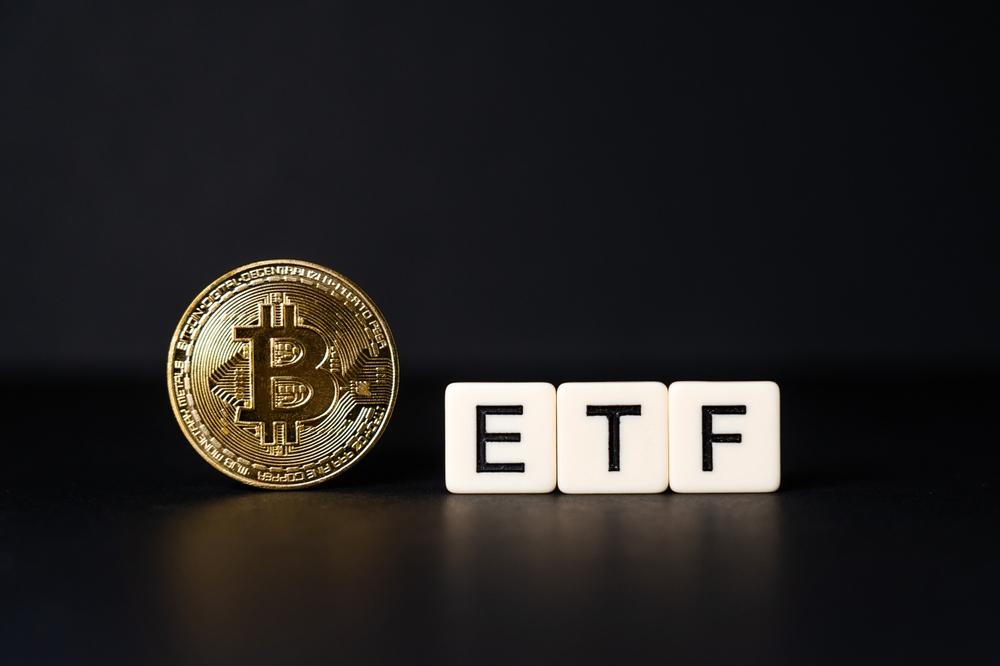
Asset manager 21Shares has launched an actively managed cryptocurrency exchange-traded fund (ETF) called ‘TKNS’, signaling a fresh push to bring hedge fund-style portfolio management into the familiar wrapper of an equity-like ETF.
According to PANews, the new product is designed to be adjusted dynamically by a professional management team, which can change the fund’s crypto holdings in response to shifting market conditions. The approach contrasts with passive crypto index products, which typically track a fixed benchmark and rebalance on a predetermined schedule.
21Shares’ pitch for TKNS centers on the promise of potentially higher returns than passive index funds—though, as with most active strategies, that goal generally comes with higher turnover and greater dependence on manager skill and execution. In practice, an active crypto ETF may increase exposure to assets showing strong momentum, reduce positions amid heightened volatility, or rotate between sectors such as smart contract platforms, infrastructure tokens, or other segments depending on liquidity and risk appetite.
Structurally, TKNS is intended to operate similarly to a traditional stock ETF, offering investors a vehicle that can be bought and sold throughout the trading day rather than requiring direct interaction with crypto exchanges or self-custody. PANews reported that the fund is available for trading on certain securities exchanges, potentially broadening access for investors who prefer regulated brokerage channels.
The launch arrives as competition intensifies in the crypto ETF market, where issuers are increasingly differentiating products by fee levels, custody arrangements, and portfolio construction. Active management is emerging as one of the more notable points of divergence, particularly after passive offerings became more widely available and compressed margins across the category.
For the broader market, TKNS highlights the ongoing institutionalization of crypto exposure—packaging digital assets into formats that investors already understand, while testing whether ‘active management’ can consistently add value in a market known for rapid regime shifts and liquidity-driven price action.
🔎 Market Interpretation
- Active-crypto ETF product differentiation: 21Shares is positioning TKNS as a hedge-fund-like, actively managed alternative to passive crypto index ETFs, reflecting intensifying competition and fee/margin compression in the category.
- Institutional packaging trend: The launch underscores continued “institutionalization” of crypto exposure—moving participation from crypto exchanges/self-custody into regulated, brokerage-traded wrappers that many investors already use.
- Core market test: TKNS implicitly bets that active management can add net value in crypto—an environment marked by fast regime shifts, momentum-driven moves, volatility spikes, and liquidity-sensitive pricing.
- Access + comfort vs. pure crypto rails: By trading like a stock ETF intraday on securities exchanges, TKNS may appeal to investors seeking operational simplicity, familiar trade workflows, and perceived regulatory safeguards.
💡 Strategic Points
- What “active” could mean in practice: Dynamic tilts toward higher-momentum tokens, de-risking during volatility, and rotations across segments (e.g., smart contract platforms, infrastructure tokens) based on liquidity and risk appetite.
- Potential upside: If manager skill is strong, active reallocation could capture trends faster than scheduled index rebalances and potentially improve risk-adjusted returns versus passive benchmarks.
- Key trade-offs to watch: Higher turnover (and associated transaction/cost drag), stronger dependence on execution timing, and greater dispersion of outcomes versus transparent index-tracking products.
- Due-diligence checklist for investors:
- Mandate clarity (eligible assets, concentration limits, use of derivatives if any).
- Rebalance frequency and decision framework (discretionary vs. rules-based signals).
- Total cost profile (management fee + implied trading costs + potential tracking vs. stated objectives).
- Liquidity and market impact (ability to move in/out without degrading performance).
- Custody, risk controls, and operational safeguards.
- Competitive implication: As passive crypto ETFs become commoditized, issuers may increasingly compete on portfolio construction (active, thematic, risk-managed) rather than only fees and custody branding.
📘 Glossary
- Active ETF: An ETF where a manager actively selects and adjusts holdings with the goal of outperforming a benchmark, rather than tracking an index.
- Passive (index) ETF: An ETF designed to replicate an index or benchmark, typically rebalancing on a fixed schedule with limited discretion.
- Turnover: The rate at which a fund buys/sells holdings; higher turnover can increase transaction costs and tax/efficiency considerations (depending on jurisdiction/structure).
- Momentum: A strategy factor where assets with recent strong performance are favored, assuming trends persist in the near term.
- Volatility: The degree of price fluctuation; higher volatility generally implies higher risk and wider performance swings.
- Sector rotation (crypto context): Shifting allocation among crypto segments (e.g., smart-contract platforms, infrastructure tokens) based on perceived opportunity and risk.
- Liquidity: How easily an asset can be traded without materially affecting its price; crucial for active strategies moving across smaller tokens.
- Self-custody: Holding crypto directly by controlling the private keys, rather than owning exposure through a fund or intermediary.
- Intraday trading: Ability to buy/sell ETF shares throughout the trading day at market prices, similar to equities.


















Comment 0