

 News
News  Coin Information
  About us
  Customer Service


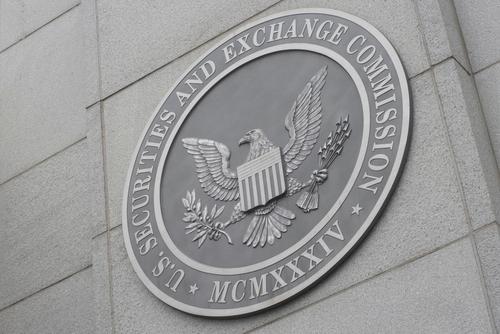
The U.S. Securities and Exchange Commission (SEC) is moving to formally examine what a near ‘24-hour trading’ model could look like for American equities, signaling that round-the-clock access—long a defining feature of crypto markets—may be edging closer to the traditional stock market.
According to Cointelegraph, the SEC will hold a public roundtable at its Washington, D.C. headquarters on Sept. 17. The session is expected to focus on the practical and regulatory groundwork required to support expanded overnight trading, including operational design, market oversight, and how exchanges and intermediaries would maintain ‘resilience’ in an always-on environment.
SEC Chair Paul Atkins framed the shift as structural rather than incremental. Speaking Thursday, Atkins said U.S. stock markets are entering “a new era of day and night,” adding that as overnight activity grows, he expects American venues to increasingly align with markets that already operate on a continuous basis.
The roundtable comes as major exchanges globally explore longer trading hours to meet demand from retail investors who have become accustomed to ‘24/7 liquidity’ in crypto. In digital assets, price discovery happens continuously across jurisdictions, and major market moves often occur outside U.S. equity trading hours—an experience that has reshaped expectations about accessibility, speed, and responsiveness.
Traditional equities, by contrast, still concentrate liquidity during regular hours, with pre-market and after-hours sessions offering thinner volumes and wider spreads for many names. Expanding trading further into the night raises questions about whether liquidity would fragment, how to ensure consistent best execution, and what new risks might emerge from a market that rarely pauses—especially during periods of breaking news or geopolitical shocks.
Industry momentum is building. Reports indicate the London Stock Exchange is considering launching an overnight trading venue in early 2027. Nasdaq ($NDAQ) has also said it began discussions with U.S. regulators in March about enabling 24-hour trading five days a week, and has pointed to the second half of 2026 as a target window, contingent on regulatory approvals and rule changes.
While the SEC’s meeting does not guarantee a policy outcome, it underscores a growing recognition that investor behavior—and global competition among trading venues—may push equities toward a model that looks more like crypto’s continuous marketplace. The key question for regulators and market operators will be whether they can extend access without undermining the stability, transparency, and concentrated liquidity that have traditionally defined U.S. equity market structure.
🔎 Market Interpretation
- SEC signals a structural shift: The agency is exploring what near-24-hour U.S. equities trading could look like, reflecting growing demand for continuous access similar to crypto markets.
- Regulatory focus moves from “whether” to “how”: The Sept. 17 SEC roundtable suggests the conversation is advancing toward operational design, supervision, and market resilience in extended-hours trading.
- Competitive pressure among venues is rising: Nasdaq and the London Stock Exchange are evaluating longer-hours models, implying global competition could accelerate U.S. adoption.
- Liquidity is the central trade-off: U.S. stocks currently benefit from concentrated liquidity during regular hours; expanding overnight trading risks thinner books and wider spreads, especially for less-liquid names.
- Crypto is reshaping expectations: Investors accustomed to 24/7 price discovery and rapid reaction to news may increasingly demand comparable access in equities.
💡 Strategic Points
- Prepare for a multi-session market structure: If overnight trading expands, participants may need distinct strategies for regular vs. overnight sessions (different liquidity, volatility, and execution costs).
- Execution and routing become more complex: Brokers and institutions may need upgraded best-execution frameworks, including deciding when to trade overnight versus waiting for peak liquidity.
- Risk management must run “always-on”: Continuous markets increase the need for 24/7 monitoring, automated controls, and incident response plans for sudden news, geopolitical shocks, or outages.
- Watch for liquidity fragmentation: More trading hours can split volume across time blocks and venues; this may affect spreads, depth, and the reliability of reference prices used for valuations and hedging.
- Operational resilience is a gating item: Exchanges, clearing, market data, and intermediaries must withstand longer uptime requirements—maintenance windows, staffing, and system redundancy become decisive.
- Timeline catalysts to monitor: SEC roundtable outcomes (Sept. 17), Nasdaq’s stated goal (24-hour trading five days/week targeted for 2H 2026 pending approvals), and LSE’s reported overnight venue consideration (early 2027).
📘 Glossary
- 24-hour (near-24/7) trading: Extending equity trading availability deep into overnight hours; proposals often mean 24 hours a day on weekdays rather than true 24/7.
- Roundtable: A public SEC forum to gather feedback from market participants on policy, market structure, and implementation feasibility.
- Market resilience: The ability of trading, clearing, and broker systems to operate reliably under stress (spikes in volume, outages, cyber events) with minimal disruption.
- Price discovery: The process by which markets incorporate information into prices through trading activity across participants and venues.
- Liquidity: How easily an asset can be bought/sold without significantly moving its price; typically higher during regular U.S. trading hours for equities.
- Pre-market/after-hours: Limited trading sessions outside regular hours, often with thinner volume and wider bid-ask spreads.
- Bid-ask spread: The difference between the highest price a buyer will pay (bid) and the lowest price a seller will accept (ask); often widens when liquidity is low.
- Best execution: A broker’s duty to seek the most favorable terms reasonably available for a client order (price, speed, likelihood of execution, and costs).
- Liquidity fragmentation: When trading volume disperses across multiple venues or time windows, potentially reducing depth and increasing trading costs.













Comment 0