

 News
News  Coin Information
  About us
  Customer Service


 Add as a preferred source on Google
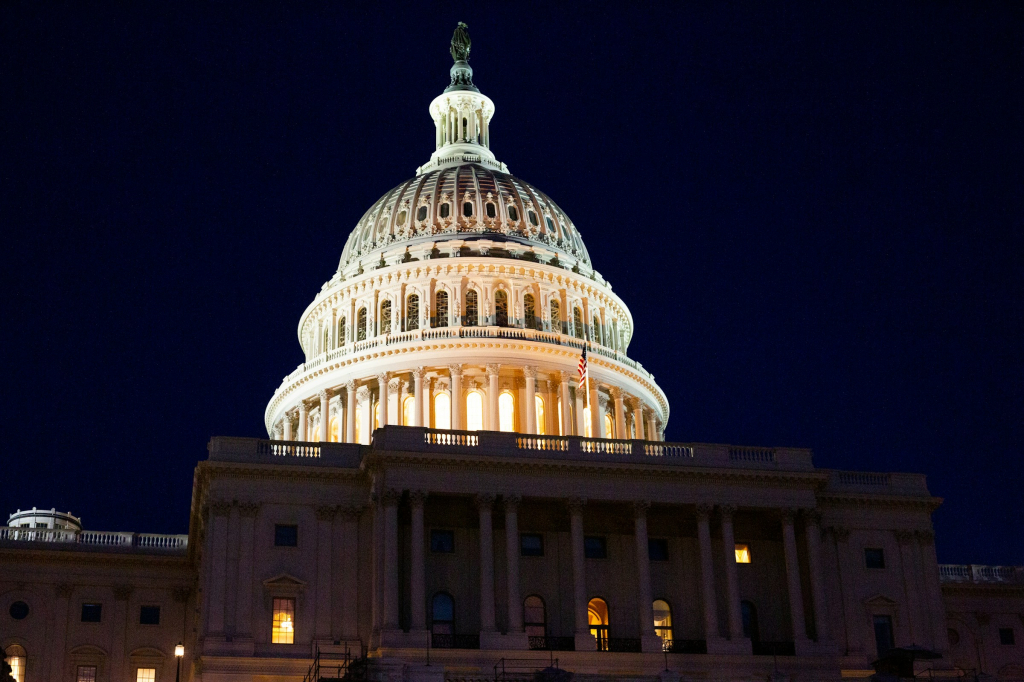
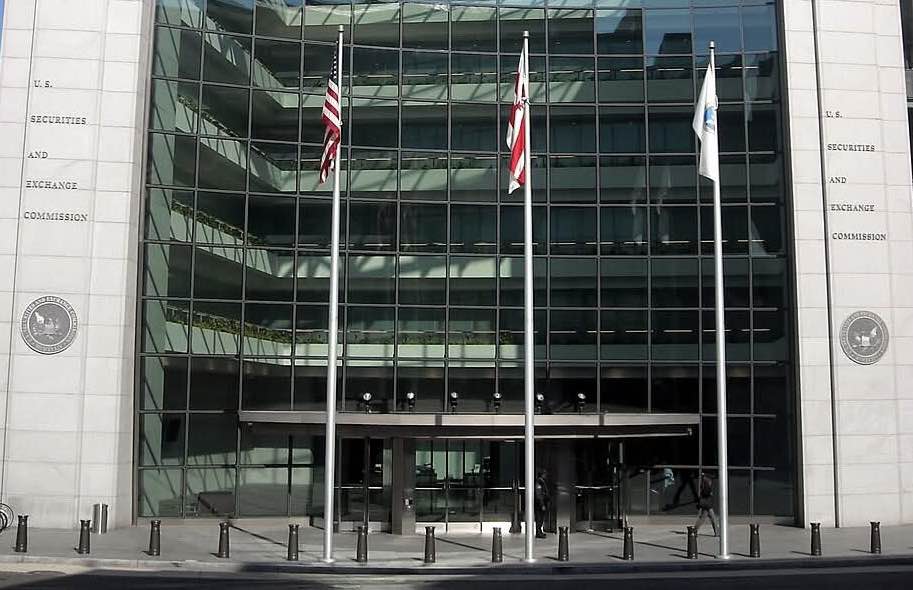
The U.S. Securities and Exchange Commission may move as soon as this month to propose a sweeping set of crypto-specific rules—an initiative that would mark one of the agency’s first major attempts to set formal standards for token issuance, tokenized securities, and related custody and trading practices. The prospect of clearer federal guidance is drawing close attention from market participants who have long argued that regulatory ambiguity has distorted capital formation and limited institutional participation.
According to an SEC agenda cited by PANews, the proposal under consideration would streamline fundraising procedures for token developers and provide a temporary registration exemption for developers issuing crypto ‘investment contracts.’ The framework is also expected to clarify custody and trading requirements for ‘tokenized securities,’ an area where broker-dealers, exchanges, and custodians have faced overlapping interpretations from securities and banking regulators.
SEC Chair Paul Atkins said the initiative is intended to clarify crypto fundraising rules in line with President Trump’s stated goal of turning the U.S. into a global crypto hub. The draft is currently under review by the White House Office of Information and Regulatory Affairs (OIRA), a step that often precedes formal publication of proposed rules and the start of a public comment period.
Regulatory developments are unfolding alongside a complex macro backdrop. Geopolitical tensions in the Middle East escalated after U.S. Central Command said it carried out additional strikes on Iran, targeting more than 80 sites including air defenses, command-and-control nodes, coastal radar facilities, and anti-ship missile capabilities. The U.S. military said it also destroyed more than 60 small vessels linked to Iran’s Islamic Revolutionary Guard Corps near the Strait of Hormuz, describing the action as a direct response to recent attacks on three commercial ships transiting the area. The security situation has been closely watched by global markets given the strait’s importance to energy flows and broader risk sentiment.
In traditional finance, Vanguard—one of the world’s largest asset managers with roughly $12 trillion in assets under management—has created a new head of digital assets role, according to reporting cited by PANews via Bitcoin Magazine. The position will evaluate tokenization, stablecoins, digital wallets, custody, and blockchain-based payments, and assess whether Vanguard should build in-house capabilities, partner externally, or delay entry into certain segments. Vanguard emphasized that the hire does not signal an imminent launch of crypto investment products and said it currently has no plans to roll out proprietary crypto offerings.
In South Korea, fintech firm Toss is exploring potential applications for a won-linked stablecoin with Optimism and Sunnyside Labs, The Block reported. The companies plan to run a proof of concept over the coming months, testing whether the ‘OP Stack’ can support a compliance-oriented blockchain infrastructure for digital finance. The initiative reflects a broader push among payment and fintech firms to assess stablecoin-based rails as regulators globally sharpen their focus on reserve standards, consumer protections, and settlement risk.
ETF flows in the U.S. remained constructive. Data cited by Wu Blockchain from SoSoValue indicated that U.S. spot Bitcoin (BTC) ETFs recorded net inflows of about $21.4 million on July 7 ET, extending to three consecutive sessions of inflows. U.S. spot Ethereum (ETH) ETFs posted net inflows of about $26.9 million the same day, marking four straight sessions of net additions. While daily flows can be volatile, sustained inflows are widely read as a proxy for ‘institutional demand’ and a key driver of near-term liquidity conditions.
Separately, analysts pointed to an expanded channel for indirect Bitcoin exposure through index products after SpaceX was reported to have been added to the Nasdaq-100. PANews, citing Bitcoin Magazine, said the inclusion became official on July 7. SpaceX has previously disclosed holding 18,712 BTC on its balance sheet. JPMorgan estimated the index rebalancing could drive roughly $4.3 billion in passive inflows into Nasdaq-100 tracking funds and ETFs. With the addition, the number of Nasdaq-100 constituents known to hold Bitcoin as a treasury asset rises to three—SpaceX, Tesla ($TSLA), and Strategy—potentially increasing rules-based investor exposure to corporate-held BTC.
On-chain activity also drew attention after Whale Alert reported a transfer of 500 million USDT from Tether’s treasury to Binance. Large stablecoin transfers into exchanges are often interpreted as a sign of potential ‘liquidity inflow,’ though such movements do not reliably predict immediate spot buying and can also reflect treasury operations, internal exchange needs, or counterparty settlement activity.
In Europe, crypto exchange Kraken is reportedly pursuing a full banking license and has selected Lithuania as its jurisdiction, CoinDesk reported citing sources. If approved, the license could allow Kraken to offer services across the European Economic Area, including current accounts, consumer lending, and stock trading. The move would represent a significant escalation in Kraken’s regulatory footprint as exchanges increasingly seek bank-like permissions to deepen client relationships and diversify revenue beyond trading fees.
Russia is also advancing new legislation. The State Duma’s Financial Market Committee approved a final draft of a crypto regulation bill for a second reading, according to PANews citing Bits.media. Committee chair Anatoly Aksakov said the bill was revised to remove a requirement to report wallet addresses, instead requiring disclosure of balances and transaction history to reduce the risk of sensitive data leaks. The draft would also allow crypto to be used to purchase securities and Russia’s digital financial assets, and could open a path for qualified Russian brokers and asset managers to trade on foreign crypto exchanges. For non-professional investors, annual investment would be capped at 300,000 rubles via a single broker, with activity limited to highly liquid cryptocurrencies. The bill includes a provision allowing certain large external transfers and third-party transactions to be frozen for up to two days.
At the EU level, lawmakers are urging the European Commission to consider whether decentralized finance, staking, crypto lending, NFTs, and tokenized financial assets should be included in follow-on regulation after the Markets in Crypto-Assets (MiCA) framework, according to PANews. While the document does not impose new obligations, it signals priorities for the next phase of European rulemaking and warns that uneven enforcement across member states could weaken the EU’s digital-asset single market. The Commission launched a public consultation in May on expanding MiCA’s scope and reassessing restrictions related to yield-bearing stablecoins. MiCA’s transition period ended July 1, requiring crypto service providers targeting EU customers to obtain authorization.
Across jurisdictions, the common theme is a shift from enforcement-led uncertainty toward more explicit rulebooks—an evolution that could reshape how tokens are issued, how stablecoins are deployed in payments, and how traditional financial institutions approach custody, commerce, and compliance in digital assets.
🔎 Market Interpretation
- SEC rulemaking catalyst: The SEC may soon propose crypto-specific rules covering token issuance, tokenized securities, and custody/trading—potentially reducing regulatory ambiguity that has constrained U.S. capital formation and institutional participation.
- From enforcement to frameworks: The article signals a broader pivot across major regions (U.S., EU, Russia) toward explicit rulebooks rather than case-by-case enforcement, which could lower compliance uncertainty and expand eligible market activity.
- Macro risk overlay remains: Heightened Middle East tensions around the Strait of Hormuz add risk-premium volatility, which can affect crypto via broader liquidity and risk sentiment channels.
- TradFi “watch-and-build” posture: Vanguard’s digital assets leadership role suggests large asset managers are actively evaluating tokenization and payments infrastructure, even if they are not ready to launch direct crypto products.
- Stablecoins as payments infrastructure: Toss’s won-stablecoin proof-of-concept on Optimism’s OP Stack reflects accelerating experimentation with compliant stablecoin rails amid tightening global standards on reserves and consumer protection.
- ETF flows supportive but incremental: Continued net inflows into U.S. spot BTC and ETH ETFs are read as constructive for near-term liquidity, though daily flow data is inherently volatile.
- Index-driven BTC exposure broadens: SpaceX’s reported inclusion in the Nasdaq-100 could increase passive, rules-based exposure to corporate-held BTC through index trackers, amplifying indirect demand channels.
- Exchange liquidity signals are noisy: The 500M USDT transfer to Binance may indicate potential liquidity availability, but can also reflect operational treasury movements rather than imminent spot buying.
- Europe’s regulatory arms race: Kraken’s reported pursuit of a Lithuanian banking license highlights exchanges’ push toward bank-like permissions to diversify revenue and deepen customer relationships under clearer regulatory regimes.
💡 Strategic Points
- Watch the SEC proposal timeline: OIRA review is a key gating step; a formal proposal would trigger a public comment period that can shape final rules and compliance timelines.
- Token issuance playbook may change: A temporary registration exemption and streamlined fundraising could create a clearer pathway for “investment contract” style token offerings—impacting U.S.-based launches and investor access.
- Tokenized securities infrastructure beneficiaries: Clearer custody/trading standards could benefit regulated broker-dealers, qualified custodians, and venues building tokenized product rails (settlement, compliance, reporting).
- Stablecoin due diligence priorities: Focus on reserve transparency, redemption mechanics, counterparty exposure, and jurisdictional compliance—especially as regulators scrutinize yield-bearing designs and settlement risk.
- Institutional positioning indicators: Monitor ETF inflow persistence, TradFi hires/partnerships, and banking-license pursuits as leading signals of broader institutional market entry.
- Geopolitical risk management: Consider scenario planning for energy-supply shocks and risk-off events that can tighten global dollar liquidity and impact crypto correlations.
- EU compliance inflection after MiCA transition: With the transition period ended (July 1), authorization status becomes a competitive differentiator for service providers targeting EU clients.
- Russia’s investor constraints matter: Proposed caps and liquidity limitations could shape local demand composition and reduce retail participation in higher-volatility assets, while enabling broker-mediated access for qualified players.
📘 Glossary
- OIRA (Office of Information and Regulatory Affairs): A U.S. White House office that reviews significant federal regulations before agencies formally publish proposed rules.
- Investment contract (crypto context): A token arrangement that may be treated as a security under U.S. law (often associated with the Howey test) depending on facts and expectations of profit from others’ efforts.
- Tokenized securities: Traditional financial instruments (e.g., stocks, bonds, funds) represented and transferred via blockchain-based tokens, typically requiring compliance with securities laws.
- Custody: Safekeeping of client assets (private keys or legal control of securities), generally subject to strict regulatory and operational standards.
- Spot Bitcoin/Ethereum ETFs: Exchange-traded funds that hold BTC or ETH directly (or via regulated custodial arrangements), providing investors price exposure through brokerage accounts.
- Net inflows (ETF flows): The daily net amount of capital entering an ETF (creations minus redemptions), often used as a proxy for demand.
- Stablecoin: A crypto asset designed to maintain a stable value (often pegged to a fiat currency) and commonly used for trading, payments, and settlement.
- OP Stack: An open-source framework from Optimism used to build Layer-2 blockchains on Ethereum with scalability and configurable components.
- MiCA (Markets in Crypto-Assets): The EU’s comprehensive regulatory framework for crypto-assets and crypto service providers, including authorization and consumer protection requirements.
- Nasdaq-100 rebalancing/passive inflows: Index changes can force index-tracking funds to buy/sell constituents, creating mechanical (rules-based) flows.
- Whale transfer: A large on-chain movement of crypto or stablecoins, sometimes interpreted as signaling liquidity shifts, though motives can be operational.












Comment 0