

 News
News  Coin Information
  About us
  Customer Service


 Add as a preferred source on Google
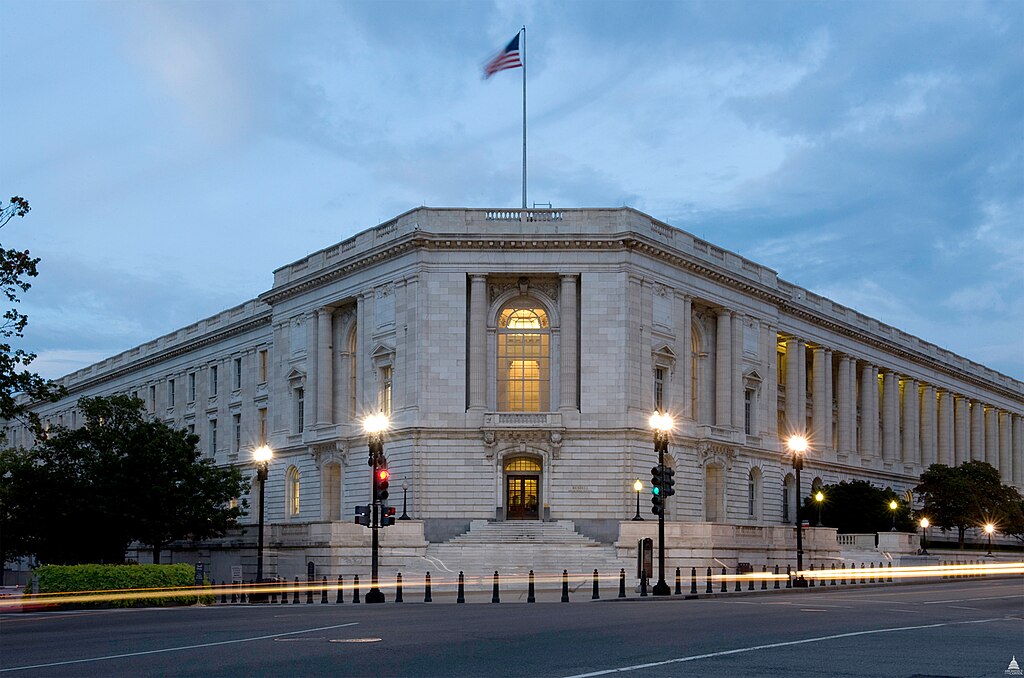
U.S. lawmakers are signaling that a long-awaited 'crypto tax' framework could surface as soon as this fall, adding fresh momentum to a regulatory calendar that is increasingly shaping market structure alongside institutional adoption and accelerating tokenization efforts.
Sen. Steve Daines, a Republican involved in drafting a Senate tax proposal, said the chamber’s cryptocurrency tax legislative framework is largely complete and could be released as early as this fall, according to The Daily Hodl. While Daines did not disclose specific provisions, he noted the Senate’s approach has “more similarities than differences” compared with a previously unveiled draft from the House Ways and Means Committee. Daines added he hopes the proposal can move into formal review within 2026.
The prospect of clearer tax rules arrives amid a broader Washington debate over the future of digital money. The U.S. House of Representatives has passed a bill that would prohibit the Federal Reserve from issuing a central bank digital currency (CBDC) until 2030, citing concerns that a retail CBDC could expand government visibility into private transactions and weaken financial privacy protections. The bill’s advancement underscores how CBDCs remain politically contentious even as stablecoins and tokenized financial products gain traction in regulated markets.
China, meanwhile, is moving in the opposite direction—toward codifying state-backed digital currency. A draft amendment to the People’s Bank of China law, submitted on Monday UTC (June 23) to the Standing Committee of the 14th National People’s Congress for initial review, explicitly adds language to 'clarify the legal status' of the digital yuan, according to Caixin cited by PANews. Earlier consultation materials in 2020 described the yuan as encompassing both physical and digital forms but stopped short of a direct legal designation. The draft also reiterates restrictions aimed at preventing entities or individuals from issuing token-like substitutes intended to circulate in place of the yuan, with penalties including cessation orders, destruction of the instruments, confiscation of illegal gains, and fines of up to five times the unlawful amount.
Institutional attitudes toward Bitcoin (BTC) also featured prominently in the day’s developments. BlackRock ($BLK), the world’s largest asset manager, described Bitcoin as a potential 'complementary diversifier' within portfolios, suggesting that a limited allocation in the 1%–2% range could improve expected returns while remaining within typical risk tolerances, according to a report relayed by Wu Blockchain. The firm’s framing reflects a maturing narrative among allocators: Bitcoin is increasingly evaluated less as a fringe trade and more as a portfolio component whose role depends on sizing, correlation behavior, and liquidity conditions—especially as ETF flows and custody infrastructure normalize access.
That institutionalization is converging with a push to rebuild market plumbing, particularly cross-border settlement. Chainlink said it has joined Project Pangea, a bank-led initiative involving 47 banks across South Korea and Europe, aimed at developing a stablecoin-based infrastructure for international payments. CoinDesk reported that the project plans to test real-time 'payment-versus-payment' settlement for foreign exchange transactions using regulated euro- and won-pegged stablecoins. The goal is to compress traditional T+2 settlement to a T+0-like model and reduce counterparty and settlement risk in an estimated $150 billion corridor tied to Europe–Korea trade payments. Pangea is designed to let banks retain SWIFT connectivity and ISO 20022 messaging standards while processing on-chain settlement on the Pangea Layer-1 network, with Chainlink providing core on-chain infrastructure.
Tokenization of mainstream investment vehicles is also moving from concept to product planning. Bank of New York Mellon ($BK) said asset managers are accelerating tokenized ETF initiatives out of concern that they could miss early demand for blockchain-based finance. Ben Slavin, BNY’s global head of ETFs, told The Block (via PANews) that the bank is working on multiple tokenized ETF projects even though regulatory and infrastructure foundations are not yet fully in place, adding that clients are pushing for early launches. Slavin argued that blockchain networks could become a new distribution channel for traditional products by enabling 24/7 ownership transfer, faster settlement, and broader access for global investors. He also warned of 'reputational risk' stemming from well-known ETFs already trading in tokenized form on unregulated venues without issuer authorization—an issue the industry is actively debating as it considers how tokenized funds should connect to existing market infrastructure, secondary trading conventions, and regulatory oversight.
On the enforcement front, the U.S. Department of Justice seized cloud computing accounts allegedly used by Cambodia-based Huione Group to move and conceal proceeds tied to large-scale cryptocurrency fraud. The Daily Hodl reported the action was part of 'Operation Riptide.' U.S. authorities have previously flagged Huione Group as a primary money-laundering concern, and investigators allege affiliates helped route funds linked to investment scams and cyber theft into the legitimate financial system. Some of the theft activity has been reported as potentially connected to North Korea-linked actors, highlighting ongoing geopolitical dimensions in crypto-related financial crime.
In Asia, South Korea’s KG Group pushed further into real-world crypto payments. The conglomerate’s fintech unit, KG Financial, signed a memorandum of understanding with the Solana Foundation to jointly develop a Web3-based digital asset payment infrastructure, according to PANews. The partners have been discussing digital asset payment models since April and have completed a proof of concept that includes stablecoin issuance and live payment services, concluding there is technical and commercial viability. KG Group plans to integrate the network of KG Inicis—one of the country’s major payment service providers—with roughly 220,000 merchants to pursue stablecoin payment commercialization. Solana (SOL) also said on X that KG Inicis plans to introduce Solana-based stablecoin payments and may later launch token-based merchant rewards programs.
ETF activity extended beyond Bitcoin, with spot exchange-traded products linked to HYPE recording continued inflows. On Monday UTC (June 23), U.S.-listed HYPE spot ETFs posted net inflows of about $1.46 million, according to SoSoValue data cited by PANews. Grayscale’s Hyperliquid Staking ETF (HYPG) led with roughly $1.10 million in daily net inflows, bringing cumulative net inflows to about $10.22 million. The 21Shares Hyperliquid ETF (THYP) added around $0.36 million, with cumulative net inflows totaling approximately $61.83 million. Total net asset value across HYPE spot ETFs stood near $203 million, with cumulative net inflows around $184 million at the time of reporting.
Finally, on-chain indicators suggest a shift in Bitcoin’s supply-side dynamics. Selling by early Bitcoin holders has fallen to its lowest level in nearly two years, The Daily Hodl reported, citing spent output data. The profit-taking that weighed on markets through 2024 and 2025 appears to be easing, with analysts pointing to reduced selling pressure from long-term holders and ETFs alike. If sustained, the slowdown in distribution could reinforce perceptions of a 'structural floor'—not as a guarantee of price direction, but as a signal that marginal supply may be tightening amid continued institutional participation.
🔎 Market Interpretation
- U.S. policy catalyst approaching: Senators indicate a U.S. crypto tax framework may be released as soon as fall, with broad alignment to the House draft—raising the odds of clearer compliance expectations and more predictable after-tax returns for investors and firms.
- CBDC divergence intensifies: The U.S. House advances a bill restricting a Fed-issued retail CBDC until 2030, emphasizing privacy concerns, while China moves to formalize the digital yuan’s legal status—highlighting competing models for state-backed digital money.
- Institutional Bitcoin narrative matures: BlackRock frames BTC as a “complementary diversifier,” pointing to a potential 1%–2% allocation that can improve portfolio efficiency—signaling continued normalization via ETFs, custody, and institutional risk frameworks.
- Settlement and payments shift on-chain: Bank-led initiatives (Project Pangea) and merchant payment rails (KG Inicis/Solana) show stablecoins and token networks moving from experimentation toward regulated, production-like tests and commercial pilots.
- Tokenization moves toward real products: BNY Mellon reports asset managers accelerating tokenized ETF plans to capture early demand, even as compliance, market structure, and authorized issuance remain unresolved.
- Risk backdrop remains active: DOJ seizures tied to alleged laundering and fraud (Operation Riptide) underscore persistent enforcement and geopolitical risks that can affect market sentiment and compliance costs.
- Flows and supply dynamics supportive: Continued inflows into HYPE spot ETFs and a reported multi-year low in early-holder BTC selling suggest easing supply-side pressure, potentially reinforcing a “structural floor” narrative if sustained.
💡 Strategic Points
- Prepare for U.S. tax rule changes: Exchanges, DeFi protocols, funds, and active traders should scenario-plan for reporting, cost-basis, staking/mining treatment, and transaction categorization—especially if Senate language tracks the House proposal closely.
- Watch timelines, not just headlines: A framework release in fall may still imply a long path to enactment (potentially formal review in 2026). Markets may price “directional clarity” before final statutory certainty.
- Portfolio construction framing matters: BlackRock’s 1%–2% BTC sizing guidance may influence institutional committees; managers could see increased demand for risk-managed BTC exposures (ETFs, overlays, liquidity sleeves) rather than high-conviction directional bets.
- Stablecoin infrastructure is becoming bank-native: Project Pangea’s design (SWIFT + ISO 20022 + on-chain settlement) suggests integration strategies that minimize operational disruption while targeting T+0-like settlement and lower counterparty risk.
- Tokenized ETFs: prioritize authorization and venue controls: BNY’s “reputational risk” warning implies issuers may push for permissioned tokenization models, transfer-agent integrations, and clear secondary trading rules to avoid unauthorized wrappers on unregulated venues.
- Compliance and counterparty diligence remain critical: Enforcement actions tied to laundering and fraud elevate expectations for KYC/AML, sanctions screening, wallet risk scoring, and cloud/infrastructure monitoring across crypto-adjacent vendors.
- Track liquidity signals across three layers:
- ETF flows: BTC and thematic products (e.g., HYPE) as near-term demand indicators.
- On-chain selling pressure: long-term holder distribution and “spent output” trends for supply tightness.
- Payment rail pilots: merchant and cross-border stablecoin pilots as adoption indicators beyond speculation.
📘 Glossary
- Crypto tax framework: Proposed legislative rules defining how digital asset transactions are taxed and reported (e.g., capital gains, income classification, cost-basis rules, broker reporting).
- House Ways and Means Committee: A key U.S. congressional committee responsible for tax legislation; its draft can shape Senate alignment and final tax rules.
- CBDC (Central Bank Digital Currency): A digital form of sovereign currency issued by a central bank; a “retail CBDC” is accessible to the general public.
- Digital yuan (e-CNY): China’s state-backed digital currency; legal-status clarification can strengthen enforceability and adoption within the monetary system.
- Stablecoin: A token designed to track a reference value (often fiat like USD/EUR/KRW) to reduce volatility and enable payments/settlement.
- Payment-versus-payment (PvP): A settlement method ensuring two legs of an FX transaction settle simultaneously, reducing settlement risk.
- T+2 / T+0 settlement: Trade settlement timelines; T+2 settles two business days after trade date, while T+0 aims for same-day/real-time settlement.
- ISO 20022: A global messaging standard for financial transactions used by banks and payment networks.
- Tokenized ETF: A representation of ETF ownership on a blockchain, potentially enabling 24/7 transfer and faster settlement—subject to regulatory and issuer authorization requirements.
- Spent output data: On-chain metrics tracking movement of previously unspent coins; often used to infer holder selling behavior and distribution trends.
- Money laundering concern / Operation Riptide: Enforcement designation and investigative action targeting infrastructure allegedly used to conceal illicit crypto proceeds.
- HYPE spot ETFs: Exchange-traded products providing spot exposure to HYPE-linked assets; inflows/outflows help gauge investor demand.


















Comment 0