

 News
News  Coin Information
  About us
  Customer Service




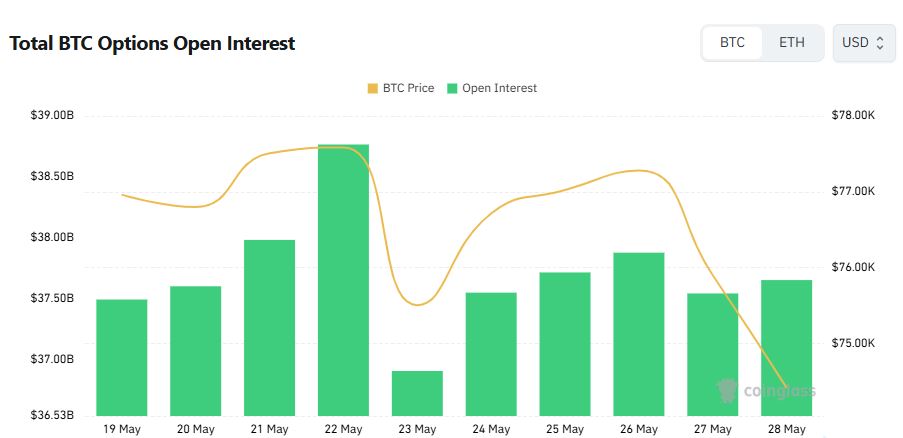
Bitcoin (BTC) remained under pressure despite favorable macroeconomic developments, highlighting the growing importance of regulatory clarity in shaping crypto market sentiment. The world's largest cryptocurrency hovered around $73,000 after posting a weekly decline of nearly 6%, as institutional investors appeared more focused on upcoming U.S. cryptocurrency regulations than on positive global market trends.
Ethereum (ETH) traded just below $2,000, recording a 6.4% weekly loss despite a modest daily recovery. Other major cryptocurrencies, including Solana (SOL), XRP, and Dogecoin (DOGE), also experienced declines ranging from 4.9% to 6.7% over the past week. Hyperliquid's HYPE token stood out as one of the few gainers, rising 5.8% during the same period.
Meanwhile, traditional financial markets continued to strengthen. The MSCI All Country World Index reached a new record high, while Asian equities surged to all-time highs as investor confidence improved globally. At the same time, Brent crude oil prices slipped to around $93 per barrel, marking an 18% monthly decline after reports of a tentative 60-day extension of the U.S.-Iran ceasefire and renewed discussions regarding Iran’s nuclear program.
Under normal circumstances, a combination of rising global stocks, falling oil prices, and reduced geopolitical risk would typically support risk assets such as Bitcoin. However, crypto markets failed to respond positively. According to market participants, much of the optimism surrounding the ceasefire extension had already been priced into digital assets, leading traders to unwind positions when Bitcoin failed to break above key resistance levels.
Industry experts suggest that institutional investors are now prioritizing developments in Washington, particularly cryptocurrency legislation such as the CLARITY Act. Regulatory certainty is increasingly viewed as a critical catalyst for the next phase of crypto market growth.
Technical indicators also point to continued caution. Bitcoin recently fell below its 50-day moving average, while its 200-day moving average continues to trend downward. Analysts note that such patterns have historically signaled extended periods of market weakness.
Adding to bearish sentiment, demand for spot Bitcoin ETFs has softened in recent weeks. The reduced inflow into these investment products, combined with fading geopolitical catalysts, has left the cryptocurrency market searching for a new driver. Until stronger institutional demand or meaningful regulatory progress emerges, Bitcoin and the broader digital asset market may continue to face near-term volatility.



















Comment 0