

 News
News  Coin Information
  About us
  Customer Service


 Add as a preferred source on Google
Solana (SOL) is hovering near a critical technical threshold after slipping back into the low-$80s, fueling renewed debate over whether the token is at risk of a deeper breakdown. While SOL was last trading around $83.60 on May 1, 2026 UTC—up roughly 0.9% over the past 24 hours—chart signals and weakening participation have kept downside concerns firmly in focus.
The immediate issue is the loss of the $85 area, which had functioned as a near-term floor for much of the recent consolidation. Traders pointed to a downside break from a short-term triangle formation on the hourly chart, a pattern that typically reflects tightening ranges followed by a sharp expansion in volatility. In this case, the expansion has so far skewed lower, reinforcing bearish momentum.
Momentum indicators are also flashing caution. Relative Strength Index (RSI) readings and the Moving Average Convergence Divergence (MACD) signal have been widely interpreted as consistent with a market that remains biased to the downside. At the same time, trading activity has thinned: 24-hour volume was reported at about $3.18 billion, down more than 31% day-over-day. Thin liquidity can amplify price swings and make support levels more vulnerable when sellers press.
Several market watchers have identified $80 as the next key line to defend, with additional supports commonly cited near $77 and $67 if selling accelerates. Some analysts have gone further, warning that a sustained breakdown could open the door to a move into the $50–$40 region—an outcome that would likely require broader risk-off conditions or a renewed deterioration in Solana’s on-chain demand. On the upside, bulls are watching for a recovery through the $86–$88 band and a reclamation of $90, levels seen as necessary to shift the market structure back toward a constructive trend.
Beyond the charts, the narrative has been complicated by signs of cooling network engagement and muted 'institutional demand'. The report cited nine consecutive weeks of declining network usage, a dynamic that can weigh on sentiment in smart contract platforms where activity metrics—transactions, active addresses, and application usage—are often treated as a real-time proxy for organic demand. SOL is also described as down roughly 33% year-to-date, underscoring its struggles in 2026 despite intermittent rallies across parts of the digital asset market.
Still, longer-term signals are not uniformly negative. Some forecasts referenced a 2026 trading range of roughly $83 to $109, implying that the current weakness could ultimately be a consolidation phase rather than the start of a prolonged downtrend. That more cautious view rests on the argument that demand can return quickly if liquidity improves and if network usage stabilizes, potentially enabling a rebound toward—or above—the $100 level.
Supporters of the bull case also point to a set of ecosystem indicators that appear to be improving even as price softens. The report highlighted growth in select metrics, progress in real-world asset (RWA) tokenization, and increasing institutional accessibility through exchange-traded products. In particular, a Solana spot ETF launched in late 2025 was said to have surpassed $1 billion in assets under management, a milestone that, if sustained, would strengthen the case that professional allocators are building exposure despite periods of volatility.
Corporate and treasury-related activity has also been cited as evidence of ongoing interest. Forward Industries was reported to hold 6.9 million SOL in its treasury and to be testing payment-related systems, adding to a broader narrative that some firms are exploring Solana-based infrastructure. Meanwhile, planned network upgrades, scaling initiatives, DeFi growth efforts, and institutional onboarding remain part of Solana’s 2026 roadmap—factors that could support fundamentals even if the market remains choppy in the short term.
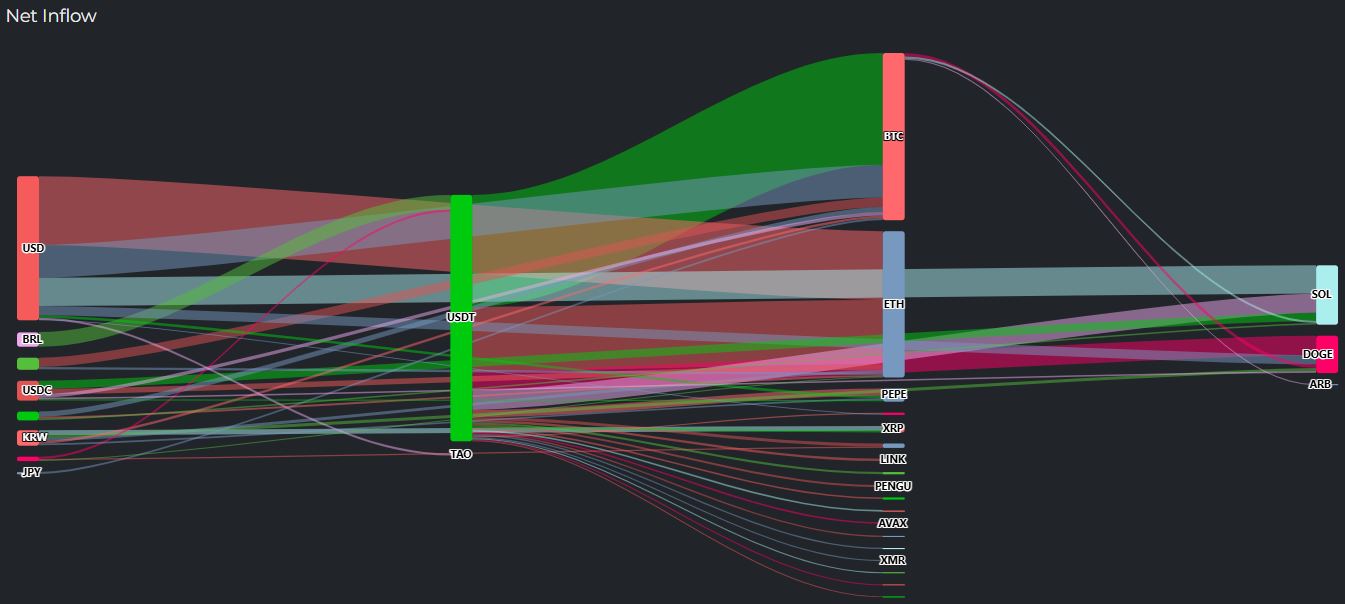
For now, the near-term market hinges on whether SOL can hold the $80 region and whether volume returns alongside improving on-chain activity. A decisive bounce would likely require both a technical reclaim of overhead resistance and clearer signs of 'liquidity inflow' from larger investors. Conversely, another leg lower—especially on rising sell volume—would reinforce the probability of a deeper retracement as traders reassess risk across major altcoins.
Solana’s circulating supply was reported at approximately 576.08 million tokens, with total supply around 625.43 million. The token showed mixed performance across timeframes, with modest gains on the week and month but a sharp decline over the past 90 days—an indicator of the elevated volatility still defining the asset’s 2026 trading environment.














Comment 0