

 News
News  Coin Information
  About us
  Customer Service


 Add as a preferred source on Google
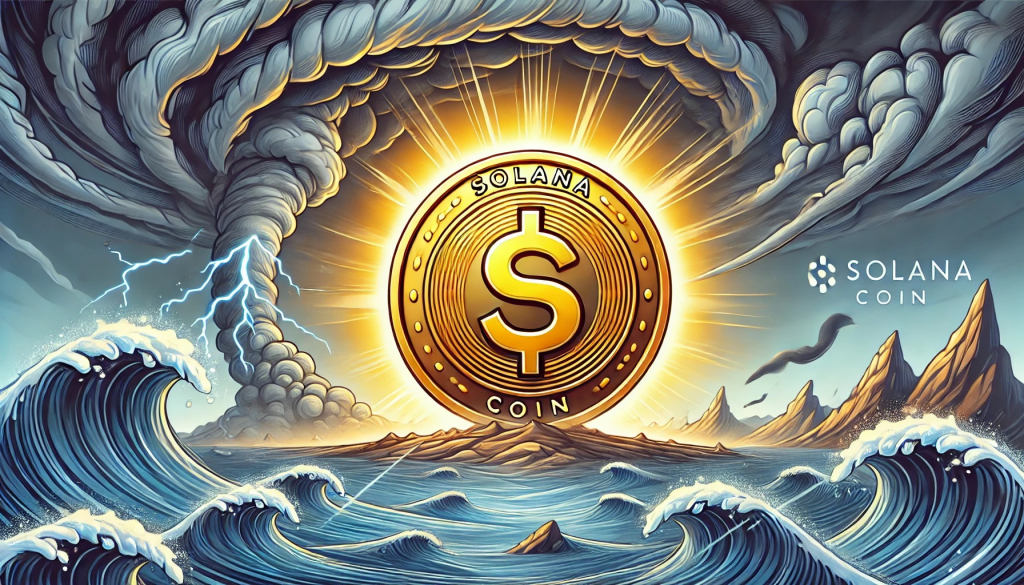
Solana (SOL) is drawing renewed attention from both retail and institutional investors after the network posted a record 25.3 billion transactions in the first quarter of 2026, while Goldman Sachs reportedly built a nine-figure position in Solana exchange-traded fund (ETF) products. The combination of surging on-chain activity and visible Wall Street participation is reinforcing market confidence at a time when investors are increasingly sorting crypto assets by throughput, user demand, and institutional-grade infrastructure.
As of Friday at 10:59 p.m. ET, SOL traded at $86.30, up 0.48% over the past 24 hours, according to CoinMarketCap data cited in the report. Solana’s market capitalization stood near $49.7 billion, ranking seventh in the global crypto market with roughly 1.91% dominance, while 24-hour trading volume was about $3.59 billion.
The headline metric was Solana’s first-quarter transaction count: 25.3 billion. The report contrasted that with roughly 200 million transactions on Ethereum (ETH) over the same period, underscoring Solana’s positioning as a high-throughput chain designed for low fees and high-frequency use cases. While transaction counts are not a direct proxy for value transferred—since activity can be driven by bots, arbitrage, and micro-transactions—the scale often matters for developers and applications that depend on speed and cost certainty.
Institutional flows have become a central part of the Solana narrative. Goldman Sachs was said to have established an approximately $108 million position tied to Solana ETFs, a move that market participants interpret as a signal of rising 'institutional demand' for SOL-linked exposure. The report added that major Solana ETF products—including Bitwise’s BSOL and Fidelity’s FSOL—now collectively exceed $1 billion in assets under management, while extending a five-session streak of net inflows that brought in $35.17 million over the past week.
Cumulative inflows since the launch of Solana ETFs were reported at $1.45 billion, positioning the category as one of the more closely watched gauges of TradFi appetite for SOL. Meanwhile, Anchorage Digital’s integration with Marinade Finance to offer automated SOL staking services for institutions was highlighted as an effort to expand 'institutional-grade' staking and custody infrastructure—an area that many asset managers view as essential before allocating at scale.
Beyond capital markets, the report emphasized Solana’s traction among builders. In Q1 2026, the ecosystem reportedly attracted 4,100 new developers—about 23% of total blockchain developer inflows—placing Solana ahead of rivals in new developer onboarding for the quarter. Developer momentum is often treated as a forward indicator, because it tends to precede growth in applications, user activity, and fee generation.
On decentralized exchange activity, Solana was said to account for 41% of global DEX volume, and to have led dApp revenue rankings for five consecutive weeks. The ecosystem’s push into tokenized 'real-world assets' (RWA)—a sector where traditional financial instruments are represented on-chain—was also cited as a key driver of narrative strength. The report claimed $1.23 billion in RWA-related lending volume, alongside growing activity in tokenized equities and pre-IPO trading via platforms such as Ondo Finance, xStocks, and PreStocks.
Momentum in the RWA theme has also fueled broader speculation about market-structure experiments on Solana. The Solana Foundation’s April 21 unveiling of an 'Onchain Nasdaq' concept was framed as an attempt to position the network as a venue for tokenized stock trading—an idea that, if pursued at scale, would likely intensify regulatory scrutiny even as it attracts fintech and broker interest.
On the technology roadmap, attention is increasingly focused on Firedancer, a next-generation validator client that aims to diversify Solana’s software stack and materially improve performance and resiliency. In tests cited by the report, Firedancer demonstrated throughput of up to 1 million transactions per second, with expected finality narrowed to roughly 100–150 milliseconds. Mainnet deployment is slated for the second half of 2026, and proponents argue it could make Solana more viable for large institutional flows and high-frequency trading workloads where latency is critical.
Some banks and trading firms have attached aggressive targets to the upgrade cycle. Standard Chartered was cited with a $250 price target for SOL, while research firm Two Prime suggested upside to $336 following Firedancer’s launch—projections that reflect optimistic assumptions about continued market share gains, sustained liquidity inflows, and a supportive macro backdrop.
From a market-structure standpoint, the report described SOL as trading between an $80–$82 support zone and resistance near $90, roughly aligned with the 50-day exponential moving average. It also pointed to a potential breakout from a symmetrical triangle formation and said the MACD indicator had flashed a 'buy' signal—setups that technical traders often interpret as a precursor to a larger move, though they remain sensitive to broader risk sentiment across crypto and equities.
Liquidity conditions on Solana have also been bolstered by stablecoin issuance. The report noted that Tether minted $1 billion in USDT on the Solana network in April, a development frequently interpreted as a signal of anticipated trading demand and deeper on-chain liquidity. SOL circulating supply was cited at roughly 575.73 million coins, with total supply near 625.04 million.
Still, the report cautioned that rapid ecosystem growth continues to collide with security risks in DeFi. An April exploit of Drift Protocol was said to have resulted in losses of about $285 million, renewing concerns that composable on-chain finance can amplify vulnerabilities even as it accelerates innovation. For Solana, which has become a major venue for high-velocity trading and DeFi activity, repeated security incidents could temper institutional enthusiasm unless auditing, risk controls, and incident response continue to mature.
Even with that overhang, the broader picture outlined in the report is one of strengthening fundamentals: rising transaction capacity, deepening ETF participation, accelerating developer inflows, and an expanding footprint in tokenized assets. If those trends persist into the second half of 2026 alongside Firedancer’s expected rollout, Solana could further consolidate its position as a leading high-performance blockchain—while the market watches whether security and regulatory challenges can be managed without slowing adoption.
🔎 Market Interpretation
- Renewed SOL focus driven by dual catalysts: record on-chain activity (25.3B Q1 2026 transactions) plus visible TradFi participation (Goldman Sachs reportedly ~$108M exposure via Solana ETF products) is strengthening confidence in Solana’s “high-throughput + institutional rails” narrative.
- Price/positioning snapshot: SOL around $86.30; market cap near $49.7B (rank #7), ~1.91% dominance; 24h volume ~$3.59B. Market structure described as support $80–$82 and resistance near $90 (around the 50-day EMA).
- Throughput narrative vs Ethereum: the report contrasts Solana’s 25.3B transactions vs Ethereum’s ~200M in Q1, reinforcing Solana’s positioning for low-fee, high-frequency use—while noting transaction count can be inflated by bots/arbitrage and isn’t a direct “value transferred” measure.
- ETF flows as a sentiment barometer: Solana ETFs (e.g., Bitwise BSOL, Fidelity FSOL) reportedly exceed $1B AUM, with a five-session inflow streak and $35.17M in net inflows over the past week; cumulative inflows cited at $1.45B.
- Liquidity tailwinds: Tether’s reported $1B USDT mint on Solana in April is framed as supportive for on-chain trading liquidity and activity.
- Risk overhangs remain material: DeFi security incidents (Drift Protocol exploit cited at ~$285M losses) and potential regulatory scrutiny (tokenized stocks / “Onchain Nasdaq” concept) could slow adoption if not managed.
💡 Strategic Points
- Watch the “institutional stack” buildout: reported Anchorage Digital + Marinade integration for automated institutional staking suggests efforts to reduce operational friction (custody, staking workflow, compliance expectations)—often prerequisites for larger allocations.
- Developer inflows as a forward indicator: Q1 2026 saw ~4,100 new Solana developers (~23% of total blockchain developer inflows). Sustained onboarding can precede growth in apps, users, and fee generation.
- DEX and revenue leadership supports real usage claims: Solana reportedly captured 41% of global DEX volume and led dApp revenue for five consecutive weeks—metrics that markets often treat as “product-market fit” signals when persistent.
- RWA (real-world assets) as a narrative amplifier: the report cites $1.23B in RWA-related lending volume and growing activity in tokenized equities/pre-IPO trading (Ondo Finance, xStocks, PreStocks). If sustained, RWA could broaden Solana demand beyond pure crypto trading.
- Firedancer as the key second-half 2026 catalyst: a next-gen validator client aimed at client diversity and performance/resiliency; tests cited up to 1M TPS and ~100–150ms expected finality, with mainnet targeted for H2 2026. Markets may re-rate SOL if performance gains translate into stable, real-world reliability.
- Scenario framing for traders/investors:
- Bull case: ETF inflows + stablecoin liquidity + Firedancer rollout + sustained builder activity + RWA expansion drive share gains; optimistic sell-side targets cited include $250 (Standard Chartered) and $336 (Two Prime).
- Base case: SOL remains range-bound near $80–$90 until clearer signals on Firedancer timeline, macro risk appetite, and ETF flow persistence.
- Bear case: further DeFi exploits, outages, or stricter regulation around tokenized equities reduce institutional participation and compress valuations despite high transaction counts.
- Technical signals to monitor (as cited): symmetrical triangle breakout setup and MACD “buy” signal may attract momentum traders, but follow-through is sensitive to broader crypto and equity risk sentiment.
- Supply/liquidity references: circulating supply ~575.73M SOL; total supply ~625.04M. Stablecoin growth can deepen liquidity, but also raises the impact of leveraged positioning during volatility.
📘 Glossary
- Transactions (on-chain): Recorded actions on a blockchain. High counts can reflect real usage, but may also include bot activity, arbitrage, and micro-transactions.
- Throughput (TPS): Transactions per second a network can process. Higher throughput generally supports low fees and high-frequency applications.
- Finality: The time until a transaction is considered irreversible in practice. Lower finality times can benefit trading and payments.
- Validator client: Software used by validators to run the network. Multiple clients reduce “single implementation” risk and can improve resiliency.
- Firedancer: A new Solana validator client focused on performance and client diversity; mainnet deployment targeted for H2 2026 per the report.
- ETF (Exchange-Traded Fund): A regulated product that provides market exposure (here, SOL-linked) through traditional brokerage accounts.
- AUM (Assets Under Management): Total value held in a fund or set of funds—used as a gauge of product adoption.
- Net inflows: New money entering a fund minus withdrawals over a period; often used to infer investor demand.
- DEX (Decentralized Exchange): On-chain trading venue enabling peer-to-peer swaps without a centralized intermediary.
- dApp revenue: Fees earned by decentralized applications (e.g., trading fees), sometimes used as a proxy for economic activity.
- RWA (Real-World Assets): Tokenized representations of traditional assets (e.g., equities, credit) traded/managed on-chain.
- Stablecoin mint: Creation of new stablecoin units on a network (e.g., USDT), often associated with liquidity provisioning and anticipated trading demand.
- EMA (Exponential Moving Average): A trend-following indicator that weights recent prices more heavily; often used as dynamic support/resistance.
- MACD: Momentum indicator derived from moving averages; a “buy signal” typically refers to a bullish crossover.
- Symmetrical triangle: Chart pattern indicating consolidation; breakout direction can signal potential next trend leg.












Comment 0