

 News
News  Coin Information
  About us
  Customer Service


 Add as a preferred source on Google
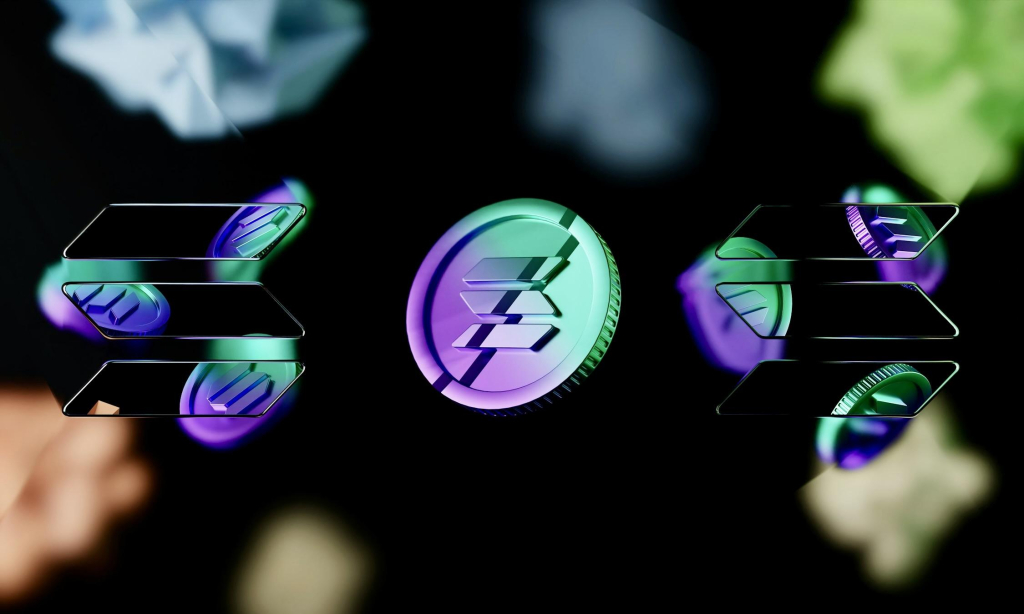
Standard Chartered has turned more constructive on Solana (SOL), projecting the token could climb to $250 by year-end as improving macro sentiment and accelerating on-chain growth bolster the case for a renewed risk-on cycle.
The global investment bank’s outlook comes as markets have stabilized following the reopening of the Strait of Hormuz earlier this week, a development that has helped revive broader appetite for risk assets. U.S. equities have reflected the shift, with the S&P 500 pushing to fresh highs—an environment that typically supports higher-beta cryptoassets such as SOL. Separately, brokerage and research firm Doo Prime outlined a more aggressive scenario that places upside potential as high as $336, underscoring the widening range of bullish forecasts tied to Solana’s network trajectory.
Price data has appeared inconsistent across regions, with some feeds briefly indicating SOL trading near $182. Market participants attributed the discrepancy to localized snapshots and currency-conversion effects rather than a true dislocation in global pricing. In India, SOL changed hands around 8,231–8,235 rupees (roughly $98) and was up about 0.8% over 24 hours, highlighting how regional liquidity and fiat pairs can skew headline figures.
In the near term, technicians are focused on whether SOL can clear a dense resistance band around $88.56–$90. A break above that zone could reopen a path toward a psychological retest of $100, according to several market watchers tracking momentum. However, downside support is widely cited between $67 and $78, suggesting that volatility remains a key risk if buyers fail to force a sustained breakout. Indonesian exchange Pintu also flagged the $95 area as a potential 'trap'—a level where short-lived rallies could fade—arguing that caution is warranted even as recovery signals emerge.
Fundamentals, meanwhile, continue to trend in Solana’s favor. The network has surpassed 167 million wallets, reflecting steady user-base expansion. Stablecoin supply on Solana increased by roughly $3.8 billion in the first quarter of 2026, while about 68% of circulating SOL is staked—an indicator of strong participation in network security. The chain’s fee-burn mechanism has helped keep net inflation below 5%, easing concerns around dilution despite Solana’s inflationary supply model and lack of a hard cap.
Cross-chain liquidity has also become a fresh tailwind. The integration of wrapped XRP (wXRP) has brought an estimated $100 million in liquidity into Solana’s DeFi ecosystem, creating a new access route for Ripple (XRP) holders to engage with Solana-based decentralized financial services and strengthening interoperability narratives that institutions increasingly monitor.
Attention is also building around a major performance upgrade. Firedancer, a new validator client being developed by Jump Crypto, has reportedly processed 1 million transactions per second in stress testing. A broader mainnet rollout is expected in the second half of 2026, and analysts say successful deployment could materially improve network stability and throughput—two factors frequently cited by large investors assessing execution risk in high-activity blockchains.
Derivatives markets are signaling growing trader engagement. SOL-linked derivatives volume rose about 35% to $14.65 billion, while open interest reached approximately $5.44 billion, pointing to heightened positioning around the next directional move. Still, spot activity showed signs of cooling, with 24-hour spot volume measured near $5.99 billion, down roughly 10% from the prior day.
Solana’s market capitalization remains above $50 billion, keeping it around seventh place among major cryptocurrencies by value. Circulating supply stands near 575.38 million SOL under an inflationary issuance schedule, reinforcing why traders are watching whether demand from 'liquidity inflow' and ecosystem expansion can outpace token emissions over time.
“Solana’s technical progress and ecosystem growth are clear strengths, but the $90 resistance level will likely define near-term direction,” one industry source said. “Whether Firedancer lands smoothly and whether institutional capital follows through will be key variables in meeting ambitious year-end targets.”
🔎 Market Interpretation
- Bank-led upside targets: Standard Chartered sees SOL reaching $250 by year-end, while Doo Prime outlines a higher bull-case near $336, signaling increasingly optimistic institutional narratives around Solana’s growth.
- Macro risk-on backdrop: Improved sentiment following the reopening of the Strait of Hormuz and S&P 500 new highs is framed as supportive for higher-beta crypto like SOL.
- Regional pricing noise, not dislocation: Conflicting price prints (e.g., $182 vs. India’s ~$98 equivalent) are attributed to localized feeds, liquidity, and FX conversion, not a global arbitrage break.
- Near-term pivot level: Traders are focused on a resistance cluster at $88.56–$90; clearing it could invite a $100 retest, while failure could reintroduce downside volatility.
- Positioning rising faster than spot: Derivatives activity is strengthening (volume up ~35%, OI at ~$5.44B) even as spot volume cools (~$5.99B, -10%), implying increasing leverage/hedging into the next move.
💡 Strategic Points
- Key technical map:
- Resistance: $88.56–$90 as the immediate breakout gate; $95 flagged by Pintu as a potential bull-trap zone.
- Upside trigger: Sustained trade above $90 increases odds of a psychological $100 test.
- Support: Widely watched buffer at $67–$78, implying the likely range where buyers may defend on pullbacks.
- Fundamentals improving token dynamics:
- User growth: Network surpassing 167M wallets supports the adoption thesis (even while acknowledging wallets ≠ unique users).
- Liquidity depth: Stablecoin supply grew by ~$3.8B in Q1 2026, typically a positive signal for DeFi activity and trading capacity on-chain.
- Supply absorption: ~68% of SOL staked reduces liquid float, which can amplify moves during demand surges but may also concentrate liquidity risk during stress.
- Inflation optics: Fee burns keeping net inflation below 5% partially offsets concerns about Solana’s inflationary issuance and lack of a hard cap.
- Interoperability as an adoption catalyst: Wrapped XRP (wXRP) integration reportedly adds ~$100M to Solana DeFi liquidity, broadening the addressable user base via cross-chain access routes.
- Execution-risk catalyst: Firedancer:
- Why it matters: A successful validator-client rollout could improve throughput and stability, key concerns for institutions assessing reliability under high activity.
- What to watch: Mainnet rollout timing (H2 2026), real-world performance vs. stress tests (1M TPS reported), and whether reliability improvements translate into measurable DeFi/user inflows.
- Market structure watchpoints:
- Derivatives-led moves: Rising OI can accelerate breakouts or breakdowns via liquidations; monitor funding rates and OI changes around $90/$100.
- Demand vs. emissions: With ~575.38M SOL circulating under inflation, sustained price appreciation likely requires ecosystem demand and liquidity inflows to outpace ongoing issuance.
- Rank/scale: Market cap >$50B (around #7) suggests SOL is large enough for institutional attention, but also more sensitive to macro shifts and risk-on/risk-off regime changes.
📘 Glossary
- Risk-on / Risk-off: A market regime where investors either seek higher returns (risk-on) or prioritize safety (risk-off), often driven by macro and geopolitical conditions.
- Resistance / Support: Price zones where selling (resistance) or buying (support) historically increases, influencing near-term direction.
- Higher-beta cryptoasset: An asset that typically moves more than the broader crypto market—up more in rallies and down more in selloffs.
- Stablecoin supply (on-chain): The amount of stablecoins available on a blockchain; higher supply can improve trading liquidity and DeFi capacity.
- Staking / Staked ratio: Locking tokens to help secure the network and earn rewards; a high staked ratio reduces liquid circulating supply.
- Fee burn: A mechanism that destroys (“burns”) a portion of transaction fees, reducing effective inflation by offsetting new issuance.
- Net inflation: Token supply growth after subtracting burns from newly issued tokens.
- Wrapped asset (e.g., wXRP): A tokenized representation of an asset from another chain, enabling it to be used in DeFi on a different network.
- Interoperability: The ability for assets/data to move across different blockchains, often via bridges or wrapped tokens.
- Validator client: Software run by validators to process transactions and produce blocks; multiple clients can improve resilience and reduce single-point failure risk.
- Firedancer: A high-performance Solana validator client developed by Jump Crypto, aimed at boosting throughput and stability.
- Derivatives volume / Open interest (OI): Volume measures traded contract value; OI measures outstanding contracts, indicating the level of active positioning and potential liquidation risk.
- Bull trap: A short-lived breakout that reverses quickly, trapping late buyers in a losing position.










Comment 0