

 News
News  Coin Information
  About us
  Customer Service


 Add as a preferred source on Google
Solana (SOL) is hovering just above the psychologically important $90 level, attempting to break higher as traders weigh strong on-chain revenue against growing skepticism that blockchain gaming can deliver a sustainable growth cycle. The token’s ability to clear near-term resistance—while holding key support—has become the central question for market participants looking for the next directional catalyst.
As of March 21, 2026 UTC, Solana was changing hands at $90.03, up 0.46% over the past 24 hours. The token has gained 3.22% over the last seven days, preserving short-term momentum, but remains down 30.05% over the past 60 days—underscoring that the broader trend has been corrective. Solana’s market capitalization stood at roughly $51.47 billion, ranking it seventh among major cryptoassets, while 24-hour trading volume totaled about $2.71 billion. Volume fell 23.48% day over day, though turnover remained elevated relative to many large-cap peers, reflecting persistent speculative interest.
Technically, SOL is trading inside a contested range, with price action largely confined between $83.42 and $94. Multiple market notes cited the $94 to $116 zone as an ‘overhead resistance’ band, while identifying $80 to $86 as the ‘core support’ region that bulls need to defend. Short-term indicators cited by several outlets lean constructive, but analysts cautioned that a breakdown below support could expose SOL to a deeper pullback toward the $59 to $64 area—a level that would likely test sentiment across the broader high-beta altcoin complex.
Several research commentaries, including those from Techbullion and AInvest, argued that a decisive move through $94 could set up a retest of $100 in the near term, a round-number level that often attracts both profit-taking and momentum flows. Conversely, they warned that losing $80 could amplify selling pressure as leveraged positions unwind and systematic strategies flip risk-off.
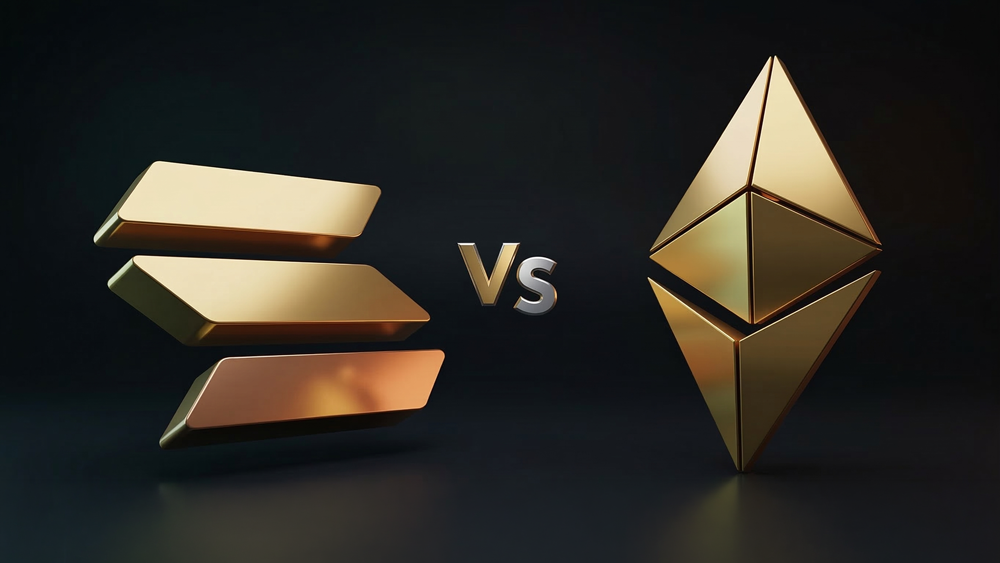
Fundamentally, Solana’s recent profitability metrics have provided a counterweight to price weakness. The network reportedly generated around $26.7 million in revenue during February 2026, surpassing Ethereum (ETH) on that measure for the month. The outperformance was attributed to Solana’s combination of low fees and high transaction throughput, with ‘meme coin’ activity, decentralized exchange (DEX) trading, and NFTs cited as major contributors. In one widely referenced datapoint, Solana recorded roughly $1.03 million in on-chain fees over a 24-hour period, outpacing most Ethereum Layer 2 networks—an indicator that, despite shifting narratives, user activity remains concentrated on Solana’s base layer in several high-frequency use cases.
The same dynamics that generate fee revenue also highlight Solana’s current positioning: it is increasingly associated with fast-moving retail flows, smaller-ticket transactions, and speculative rotation. Its low-cost, high-speed design continues to make it a preferred venue for rapid trading cycles—particularly where transaction friction can determine whether a strategy is viable.
At the same time, Solana’s strategic narrative took a hit after the Solana Foundation’s chair said on March 20 UTC that the era of blockchain gaming “will not come back,” a blunt assessment that reverberated across the sector. The comment echoed a broader industry frustration that, despite billions of dollars in investment, Web3 gaming has struggled to reach durable scale, retain users, or establish repeatable business models. Coverage from outlets including FinanceFeeds and OpenPR suggested the remark could influence not only Solana’s ecosystem prioritization but also the wider market’s willingness to fund gaming-focused projects.
The implication for Solana is a potential reallocation of attention toward areas where demand appears more measurable—DeFi, NFTs, and high-velocity token trading—rather than attempting to revive a narrative that has repeatedly failed to translate into mainstream traction. For investors, that shift may be read as pragmatic: it leans into what is already working on-chain. For builders who positioned around gaming, however, it signals a more challenging fundraising and adoption environment ahead.
Price forecasts remain divided. Some analysts have floated a year-end 2026 target of $200 for SOL—roughly a 122% gain from current levels—citing continued growth in meme coin and NFT activity alongside potential DeFi expansion. But the recent 60-day drawdown and the cooling outlook for blockchain gaming have reinforced calls for caution. Traders Union and MEXC, among others, have emphasized that volatility remains high and that the durability of the $80–$86 support range may be pivotal in the weeks ahead.
Market participants are also increasingly leaning on transparency tools such as Solscan to monitor real-time transactions and wallet activity, reflecting how quickly liquidity can shift in Solana-native markets. For now, SOL sits at the intersection of improving ‘network profitability’ and unresolved macro-level risk appetite for altcoins. Whether the token can reclaim $94—and convert it from resistance into support—may determine if the latest consolidation becomes a launchpad higher or another pause before a deeper retracement.












Comment 0