

 News
News  Coin Information
  About us
  Customer Service


 Add as a preferred source on Google
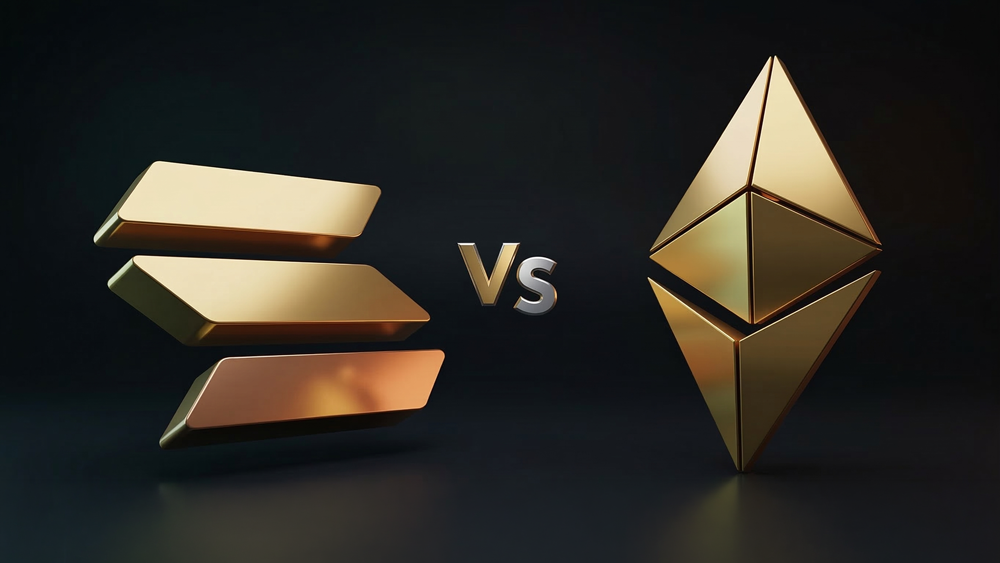
Ethereum (ETH) is showing fresh cracks—or a deliberate reshaping—in its once-dominant, high-fee revenue model. While daily fees fell sharply on March 21, the broader data suggests a deeper 'structural transition' as activity migrates toward Layer 2 networks, even as Solana (SOL) continues to close the gap with a steadier, high-throughput approach.
As of March 21 UTC, Ethereum’s 24-hour fee revenue totaled $10.61 million, down 26.27% from the prior day. Solana posted $8.26 million over the same period, slipping just 0.57%—a near-flat move that underscored the resilience of its 'high-speed, low-cost' design. The contrast has sharpened a key market question in Q1 2026: whether fee volatility is signaling weakening demand, or a reallocation of where value is captured across the stack.
Market participants largely pinned Ethereum’s sudden drop on a technology-driven cost shift rather than a straightforward slowdown in usage. The immediate catalyst was the network’s move toward post-quantum cryptography, which increases the data footprint of signatures dramatically—roughly 40 times larger than legacy formats, according to industry estimates cited by observers. Larger transaction data translates into higher gas burdens per transaction, raising costs and lowering Layer 1 (L1) utilization.
That reduced utilization has been visible in network load metrics: where Ethereum mainnet frequently operated in the 90% range during prior high-demand periods, utilization has recently hovered closer to 50%. The result has been an abrupt compression in L1 fee generation—especially as application activity that once lived on mainnet increasingly prefers cheaper execution environments.
Yet the fee decline comes with a clear paradox. Over the same period, Ethereum’s major Layer 2 ecosystems—Arbitrum, Base, and Optimism—have seen transaction costs fall into a range of roughly $0.001 to $0.05, helping drive a surge in user activity. The implication for investors and builders is that Ethereum may not be losing demand so much as 'compressing' where it monetizes it: L1 becomes a premium settlement and security layer, while routine execution shifts to L2.
Solana’s economic model is effectively the inverse. With average fees around $0.0008, the chain aims to keep virtually all activity on a single layer, optimizing for volume rather than margin. That design has tended to reduce revenue whiplash from discrete upgrades or cryptographic changes, producing more stable day-to-day fee trajectories even during periods of market turbulence.
The divergence is visible in longer windows as well. Despite Ethereum’s steep one-day decline, it remains ahead on cumulative totals:
- 24-hour fees: Ethereum (ETH) $10.6M (-26.27%) vs. Solana (SOL) $8.26M (-0.57%)
- 7-day cumulative: Ethereum (ETH) $63.2M vs. Solana (SOL) $46.1M
- 30-day cumulative: Ethereum (ETH) $330.8M vs. Solana (SOL) $240.6M
On a 30-day basis, Ethereum’s fee revenue is still roughly 37% higher, a gap many analysts interpret as evidence that 'settlement value'—not raw transaction count—continues to concentrate around Ethereum’s security and liquidity nexus. Put differently, Ethereum’s edge appears tied to processing more expensive, higher-stakes activity, even if fewer transactions occur directly on mainnet.
Another factor shaping that narrative is Circle (CRCL) and the expansion of USDC flows into institutional onchain finance. With USDC’s market capitalization around $77 billion, Circle’s institution-oriented Arc L1 initiative—described in market discussions as moving toward fuller operational deployment—has helped pull themes such as stablecoin payments, FX-style settlement, and tokenized real-world assets (RWA) into crypto rails.
Those flows can translate into chain revenues in multiple ways. Large RWA instruments—such as tokenized U.S. Treasuries or commodities—typically require heavyweight settlement, generating higher-value transactions across Ethereum’s L2s and, at key checkpoints, Ethereum L1. Data from L2 execution is also posted back to Ethereum, accruing fees through mechanisms including 'blob fees' tied to data availability publishing. At the same time, Solana can benefit as a high-volume execution and distribution venue for trading and circulation of tokenized assets, driving throughput even when per-transaction monetization is minimal.
This has contributed to an emerging division of labor some market watchers describe as 'settlement on Ethereum, execution on Solana'—a dual-track structure that aligns with each chain’s strengths. In that framing, Ethereum’s fee drop is less a bearish demand signal than a repricing of its role: shifting from maximizing fees through universal onchain activity to preserving a high-margin premium by specializing in security and settlement.
Solana, meanwhile, appears to be pursuing market share expansion by keeping costs extremely low, prioritizing scale and user growth over near-term fee intensity. While that approach can raise questions about valuation frameworks that emphasize protocol revenue—such as price-to-sales style comparisons—supporters argue it provides a durable engine for narrowing the gap through sustained volume.
With 7-day and 30-day ranges still showing Ethereum ahead but Solana steadily pressing closer, the latest moves look increasingly like a longer-term reset rather than a one-off shock. The competitive landscape is evolving beyond a simple 'fee war' into a contest between two economic models: Ethereum positioning itself as premium financial infrastructure, and Solana aiming to become an internet-scale execution layer. Ultimately, the key metric may be less about which network collects the most fees on any given day—and more about which chain consistently wins the most 'expensive transactions' that define the next phase of onchain finance.




















Comment 0