

 News
News  Coin Information
  About us
  Customer Service


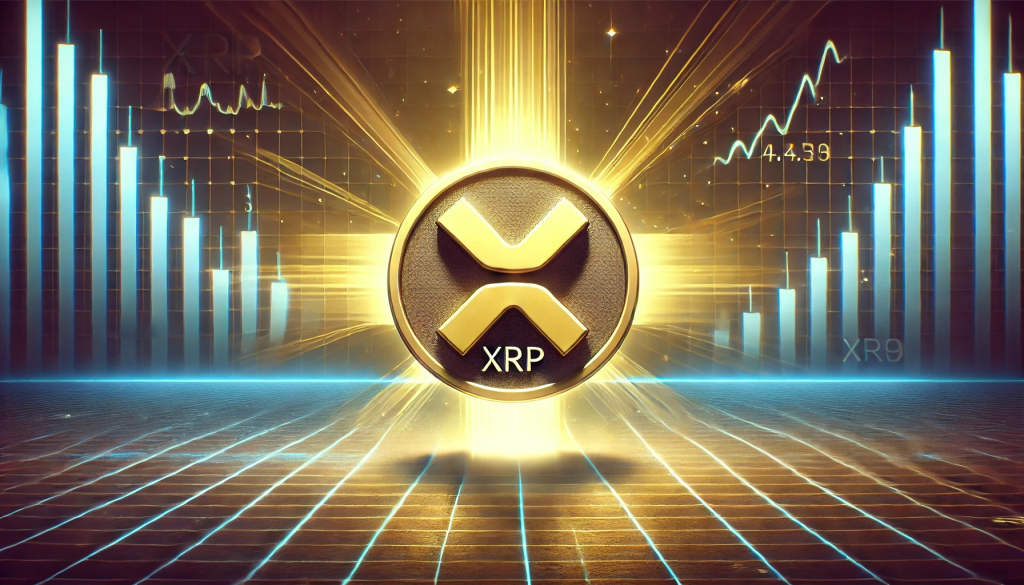
Few cryptocurrencies spark as much debate as XRP. Critics across the crypto and decentralized finance (DeFi) space argue that XRP lacks real utility and functions primarily as a speculative digital asset. Meanwhile, its passionate community, often referred to as the “XRP Army,” believes XRP will play a central role in the future of global financial infrastructure. The reality lies somewhere in between. XRP does provide real-world utility, but its applications are more specialized than many assume.
Launched in 2012, XRP is the native cryptocurrency of the XRP Ledger, a blockchain built specifically for fast, low-cost cross-border payments. Unlike Bitcoin, which is primarily viewed as a store of value, or Ethereum, which powers smart contracts and decentralized applications, XRP was designed to facilitate efficient international money transfers. Transactions on the XRP Ledger typically settle within three to five seconds and cost a fraction of a cent, making it one of the fastest and most cost-effective blockchain networks available.
One of XRP’s core use cases is serving as a bridge currency. Financial institutions and payment providers can use XRP to instantly convert one fiat currency into another without maintaining large pre-funded foreign accounts. This liquidity solution is central to Ripple’s On-Demand Liquidity (ODL) service, which is used by companies such as SBI Remit in Japan and Tranglo in Southeast Asia for international remittances.
As of early 2026, the XRP Ledger has approximately 6 to 7 million funded accounts. After accounting for exchange wallets and multiple holdings, analysts estimate that 2 to 3 million individuals worldwide hold XRP. Crypto exchanges including Binance, Kraken, Bitstamp, and Uphold also rely on XRP for liquidity management and rapid fund transfers.
While major banks like Santander, Standard Chartered, and Bank of America have integrated Ripple’s payment technology, most do not directly use XRP itself. Instead, XRP adoption is concentrated among select payment providers and liquidity partners.
Beyond payments, XRP plays a critical technical role within its ecosystem. Every account on the XRP Ledger must hold XRP, and all transactions require XRP for network fees. The token also supports decentralized trading, token issuance, and asset transfers.
XRP is neither universally adopted nor without purpose. Its utility is focused, particularly in cross-border payments, liquidity provisioning, and blockchain-based settlement infrastructure. Understanding who actually uses XRP provides a clearer, more balanced perspective on its real-world role in the evolving crypto economy.









Comment 0