

 News
News  Coin Information
  About us
  Customer Service


 Add as a preferred source on Google
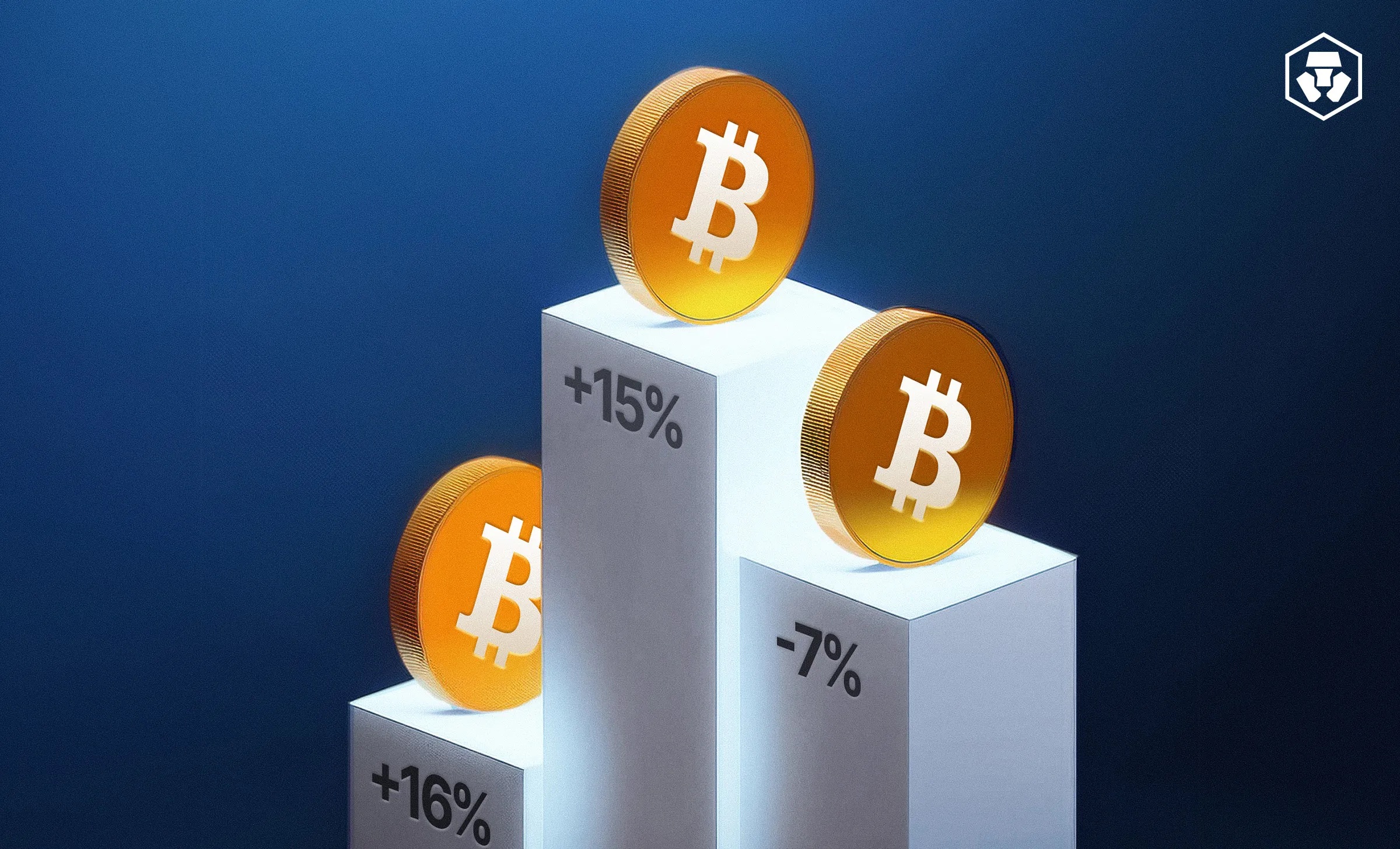
Bitcoin (BTC) volatility is back at the center of market attention, with Crypto.com saying the sharp, sometimes intraday, price swings reflect more than speculative noise—they are the product of structural forces that amplify moves in both directions.
In a recent research note released Tuesday UTC, Crypto.com framed BTC volatility as the combined outcome of five interlocking drivers: Bitcoin’s fixed supply design, uneven global regulation, fast-moving investor sentiment, the outsized influence of large holders ('whales'), and shifting technology and infrastructure risks. The firm argued that volatility in crypto is simultaneously a risk factor and a source of opportunity—making it essential for market participants to understand not just what causes price swings, but how to manage exposure when they occur.
1) Fixed supply and demand sensitivity
Crypto.com pointed first to Bitcoin’s hard cap of 21 million coins. With supply structurally constrained, even modest changes in demand can translate into disproportionately large price moves. The report noted that catalysts such as renewed 'institutional demand', macroeconomic shifts, or a broader rebound in risk appetite can push prices higher quickly due to limited incremental supply. Conversely, when demand weakens, the same rigidity can accelerate downside pressure, helping explain why BTC often moves more violently than many traditional assets.
2) Regulation as a volatility multiplier
The second factor is regulatory uncertainty. While major jurisdictions are advancing efforts to integrate digital assets into formal financial frameworks, rules remain fragmented and incomplete across countries. Crypto.com said positive headlines—such as progress around spot exchange-traded products—can lift sentiment and trigger buying, while restrictive measures involving trading access or mining can rapidly chill risk-taking. In its view, regulation frequently acts as a near-term catalyst that widens price ranges, even when underlying network fundamentals have not changed.
3) Investor sentiment in a 24/7 information loop
Third, the report highlighted market psychology and the speed of information diffusion. Because crypto markets trade around the clock and news spreads instantly across social platforms and online communities, unverified rumors, exchange-related security scares, or a single comment from a high-profile figure can swing sentiment abruptly. Crypto.com described the rapid chain reaction of 'panic buying' and 'panic selling' as a defining characteristic of BTC trading—one that can turn small triggers into outsized market moves.
4) Market depth and the impact of whales
Fourth, Crypto.com pointed to the still-limited depth of the crypto market compared with major traditional asset classes. Despite Bitcoin’s status as the sector’s bellwether, liquidity can thin out during certain hours or market conditions, making price more sensitive to large orders. The report warned that significant transfers by large holders, or irregular activity on specific venues, can create exaggerated moves—especially in low-liquidity pockets where order books are less able to absorb shocks.
5) Technology evolution and infrastructure risk
Finally, Crypto.com noted that technological change can influence both confidence and pricing. Network upgrades, hard forks, security enhancements, scalability work, and mining-efficiency debates are not merely development milestones; they can become market variables. While successful upgrades can support long-term revaluation by strengthening trust in the system, heightened uncertainty around technical changes may prompt traders to 'price in' perceived risks quickly, fueling volatility in the process.
Practical approaches to navigating volatility
Alongside the diagnosis, Crypto.com outlined several risk-management tactics it considers practical in high-volatility environments. The firm encouraged the use of technical indicators—such as moving averages (MA), the relative strength index (RSI), and Bollinger Bands—to support more rule-based decision-making. The goal, it said, is to reduce emotionally driven trades and implement more consistent entry and exit criteria amid frequent sharp swings.
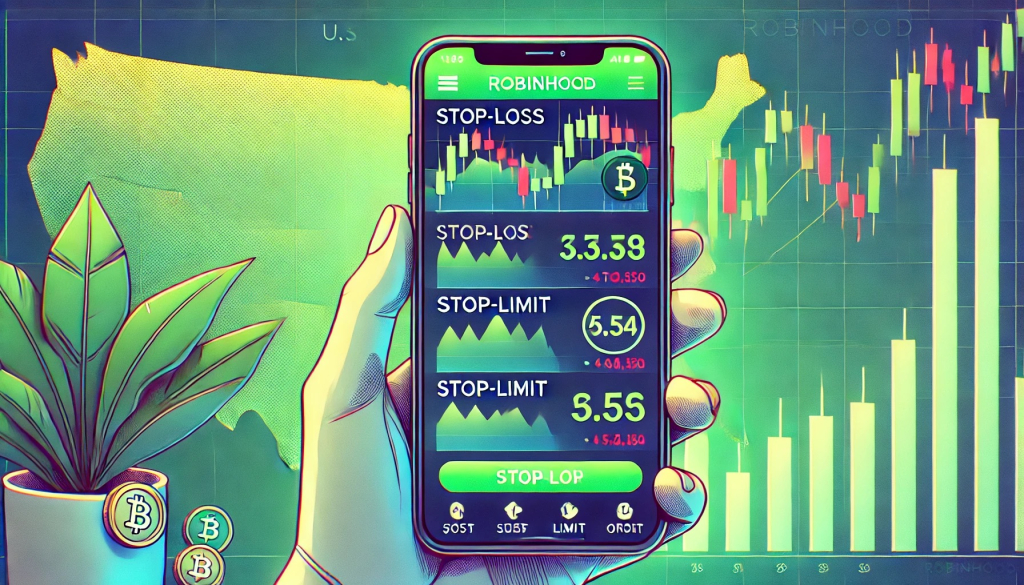
Crypto.com also emphasized the importance of setting 'stop-loss' orders to cap downside risk when price moves against a position. In volatile markets, the report argued, loss-limiting mechanisms can function as a core survival tool: without a predefined risk boundary, a single steep drop can inflict outsized damage on an entire portfolio.
For longer-term participants, the firm pointed to dollar-cost averaging (DCA) as a way to reduce timing risk by spreading purchases over time, smoothing the average entry price and lowering the pressure to predict short-term tops and bottoms. It also recommended diversification—holding assets with different correlation profiles, including stablecoins and select traditional instruments—to reduce maximum drawdowns, even if that approach can dilute upside during strong rallies.
Crypto.com’s overarching conclusion was that Bitcoin’s volatility is both a sign of the market’s current fragility and a reflection of its evolving liquidity and growth dynamics. Because it emerges from a complex mix of supply mechanics, policy shifts, sentiment shocks, participant concentration, and technical change, the firm said no single variable can fully explain it. While maturation could gradually reduce volatility over time, Crypto.com argued it remains a primary consideration for participants today—underscoring the importance of disciplined research and rules-based risk controls in BTC markets.
🔎 Market Interpretation
{
"core_takeaway": "Crypto.com argues Bitcoin’s volatility is structurally driven—not just speculative noise—arising from supply rigidity, fragmented regulation, rapid sentiment shifts, whale-driven liquidity shocks, and technology/infrastructure uncertainty.",
"why_moves_are_often_oversized": [
"Fixed supply (21M cap) makes price highly sensitive to marginal demand changes—small inflows/outflows can cause large swings.",
"Regulatory headlines act as short-term catalysts that expand trading ranges even without changes to network fundamentals.",
"24/7 trading plus instant information diffusion turns minor events/rumors into reflexive feedback loops (panic buying/selling).",
"Liquidity is uneven; thinner order books during certain hours or venues allow large orders to move price disproportionately.",
"Technical events (upgrades, forks, security issues) change perceived risk quickly, prompting repricing and volatility."
],
"market_state_signal": "Volatility reflects both current market fragility (liquidity pockets, concentrated holders) and an evolving market structure that may gradually mature, though it remains a primary near-term feature."
}
💡 Strategic Points
{
"risk_management_playbook": [
{
"tactic": "Use rule-based technical indicators",
"tools": ["Moving Averages (MA)", "Relative Strength Index (RSI)", "Bollinger Bands"],
"purpose": "Reduce emotionally driven decisions and standardize entry/exit criteria during sharp swings.",
"practical_note": "Indicators don’t remove risk; they provide a repeatable process when volatility increases noise."
},
{
"tactic": "Define downside limits with stop-loss orders",
"purpose": "Cap losses when price moves against a position—especially critical when drawdowns can expand quickly.",
"failure_mode_if_ignored": "A single steep drop can disproportionately damage portfolio equity when no risk boundary is set."
},
{
"tactic": "Dollar-Cost Averaging (DCA) for long-term exposure",
"purpose": "Reduce timing risk by spreading entries over time and smoothing average cost.",
"best_fit": "Investors with longer horizons who want exposure without predicting short-term tops/bottoms."
},
{
"tactic": "Diversify across correlation profiles",
"examples_mentioned": ["Stablecoins", "select traditional instruments"],
"purpose": "Reduce maximum drawdowns and concentration risk.",
"tradeoff": "May dilute upside during strong bull runs."
}
],
"watch_items_for_traders": [
"Demand catalysts vs. supply rigidity (institutional flows, macro shifts, risk-on/risk-off conditions).",
"Regulatory news cycle (ETF-related progress vs. restrictive actions on trading/mining).",
"Sentiment accelerants (viral rumors, security scares, high-profile comments).",
"Liquidity conditions (time-of-day effects, venue-specific order-book depth).",
"Protocol/infrastructure developments (upgrades, forks, security and mining-efficiency debates)."
],
"execution_discipline": "Because no single factor explains volatility, combining process (rules), protection (stops), and positioning (DCA/diversification) is framed as the most robust approach."
}
📘 Glossary
{
"BTC": "Bitcoin, the largest cryptocurrency by market value.",
"Volatility": "The degree and speed of price fluctuations over time.",
"Fixed supply / 21M cap": "Bitcoin’s maximum issuance limit, constraining supply and amplifying price sensitivity to demand changes.",
"Spot exchange-traded product (ETP/ETF)": "A regulated product intended to track an asset’s spot (actual) price, often seen as improving access and legitimacy.",
"Investor sentiment": "Market participants’ collective risk appetite and expectations; can shift rapidly with news and narratives.",
"Whales": "Large holders whose trades/transfers can materially impact price due to market depth limitations.",
"Market depth / liquidity": "How much buying/selling the market can absorb without large price changes; thin depth increases slippage and sharp moves.",
"Order book": "A list of buy and sell orders at various prices on an exchange.",
"Hard fork": "A protocol change that creates a potential chain split, introducing uncertainty that can affect pricing.",
"Moving Average (MA)": "A trend-following indicator that smooths price data over a chosen period.",
"Relative Strength Index (RSI)": "A momentum indicator used to gauge overbought/oversold conditions.",
"Bollinger Bands": "A volatility-based indicator using a moving average and bands that widen/narrow with volatility.",
"Stop-loss": "An order designed to exit a position if price reaches a specified level to limit losses.",
"Dollar-Cost Averaging (DCA)": "Investing a fixed amount at regular intervals to reduce timing risk.",
"Correlation profile": "How assets move relative to each other; lower correlation can reduce portfolio drawdowns.",
"Drawdown": "The peak-to-trough decline in value over a period."
}


















Comment 0