

 News
News  Coin Information
  About us
  Customer Service


 Add as a preferred source on Google
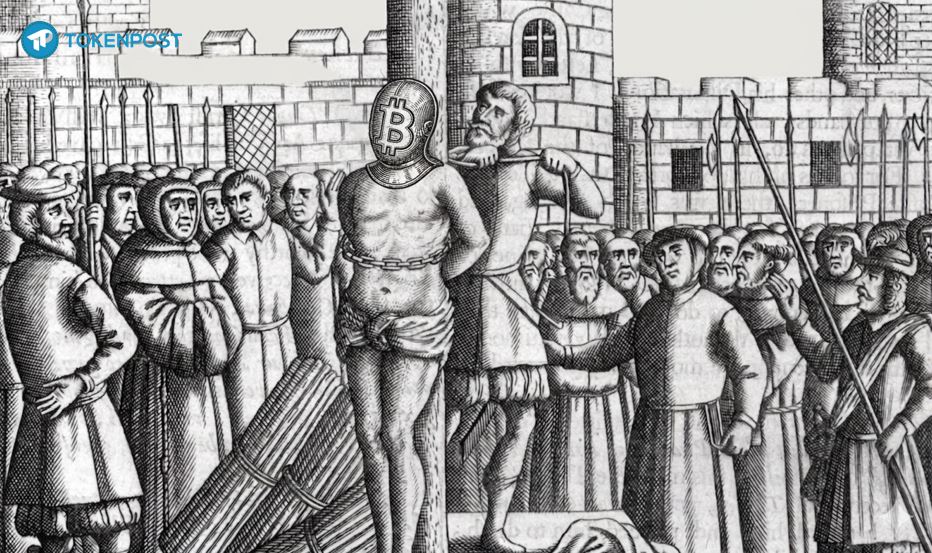
Bitcoin (BTC) was conceived in the wreckage of the 2008 financial crisis—a technological rebuttal to ‘Wall Street excess’ and a blueprint for value transfer without central banks or gatekeepers. Yet nearly two decades later, much of today’s crypto market activity is being driven not by that original promise, but by an ecosystem of highly leveraged speculation that borrows Bitcoin’s language while discarding its restraint.
The distinction matters because the underlying asset has largely behaved as designed: the Bitcoin network continues to produce blocks with quiet consistency, and spot BTC remains a bearer instrument that can be held and transferred without intermediaries. The more destabilizing forces have emerged in the layers built on top—particularly perpetual futures venues operating around the clock, with leverage offerings that can reach into the hundreds of times, and in some cases advertised up to ‘1,000x’.
Perpetual futures—derivatives that mimic a futures contract without an expiry date—have become a central engine of crypto trading volume. Funding rates keep prices tethered to spot markets, but the structure also allows speculative positioning to persist indefinitely. Unlike traditional markets, where trading halts, margin requirements, and session closures act as friction, crypto derivatives markets often run 24/7 with comparatively limited circuit breakers and inconsistent risk controls across venues, leaving ‘self-discipline’ as the primary guardrail.
That absence of enforced restraint has created conditions where liquidation cascades can amplify volatility. When traders pile into crowded positions using extreme leverage, even modest spot moves can trigger forced sell-offs or buy-ins, accelerating price swings and turning market structure into a feedback loop. The result is a market that frequently appears to be discovering prices less through fundamentals and more through the mechanical unwinding of risk.
The rise of memecoins has further sharpened this dynamic. Many of these tokens lack clear cash flows, defined utility, or durable technological differentiation, and instead trade largely on attention, narratives, and collective momentum. In rallies, they can post outsized percentage gains; in reversals, losses can be equally violent. The distribution of outcomes is stark: a small cohort may exit profitably, while late entrants—often retail traders—absorb the brunt of drawdowns.
Critics argue that this speculative superstructure has increasingly framed itself as ‘freedom’—invoking decentralization and anti-establishment rhetoric—while functioning in practice like a nonstop casino with minimal brakes. In that reading, the market is not merely volatile; it has normalized an environment in which shame, caution, and moderation are treated as outdated constraints rather than necessary conditions for sustainable participation.
Political shifts have not simplified the debate. Under President Trump, U.S. crypto policy has remained a focus of market attention, with participants closely tracking how future enforcement priorities, market-structure rules, and derivatives oversight may evolve. But regardless of the regulatory direction in Washington, the core tension highlighted by this era of crypto trading is structural: ‘freedom’ in markets is not synonymous with the absence of limits, and leverage without robust constraints can turn innovation into extraction.
Bitcoin’s origin story was a critique of a financial system that privatized gains and socialized losses. For many observers, it is an irony—if not a warning—that a trading ecosystem bearing Bitcoin’s name can sometimes appear even more punishing than the institutions it once condemned. History suggests that speculative manias end in familiar ways, and that the realization tends to arrive not at the peak, but after the crowd has already paid the cost.
🔎 Market Interpretation
- Bitcoin vs. the crypto trading stack: Spot BTC and the Bitcoin network remain relatively stable and “as-designed,” while instability is increasingly introduced by higher-layer products—especially perpetual futures and extreme leverage.
- Perpetual futures as the volume engine: Perps dominate trading activity by enabling continuous, no-expiry speculation. Funding rates loosely anchor perp prices to spot, but also sustain positioned bets for long periods.
- 24/7 markets reduce friction, increase fragility: Compared with traditional finance, crypto venues often have fewer standardized circuit breakers, trading halts, and consistent margin frameworks—making liquidation-driven volatility more likely.
- Liquidation cascades drive “mechanical” price discovery: With crowded positioning and high leverage (sometimes marketed up to 1,000x), small spot moves can trigger forced liquidations that amplify swings, creating feedback loops detached from fundamentals.
- Memecoins intensify reflexive behavior: Tokens with limited utility or cash-flow narratives can surge on attention and momentum, then reverse violently—often transferring losses to late entrants, commonly retail traders.
- Regulation is a variable, not the core issue: U.S. policy direction (including under Trump-era attention) matters for enforcement and derivatives oversight, but the article emphasizes that the deeper risk is structural: leverage without robust constraints.
- Irony of the origin story: Bitcoin emerged as a critique of a system that privatized gains and socialized losses; the current leveraged ecosystem can resemble an even harsher version of that dynamic.
💡 Strategic Points
- Separate asset thesis from venue structure: A constructive view on BTC does not automatically justify using high-leverage perps; consider whether exposure is to Bitcoin’s fundamentals or to market microstructure risk.
- Respect tail risk in leveraged products: Extreme leverage makes “small” price moves existential. Position sizing and hard risk limits (max loss, max leverage, max notional) matter more than directional conviction.
- Watch funding rates and positioning: Elevated or skewed funding can signal crowded trades; crowded positioning increases the probability of liquidation cascades and abrupt regime shifts.
- Prefer robust risk controls: When using derivatives, prioritize venues with clearer margin frameworks, liquidation transparency, and protective mechanisms (e.g., insurance funds, throttles/circuit breakers).
- Avoid momentum traps in memecoins: Treat attention-driven tokens as highly reflexive markets; plan entries/exits in advance and assume liquidity can evaporate quickly during reversals.
- Don’t confuse “freedom” with no limits: The article frames sustainable participation as requiring constraints—risk management is not optional friction but a prerequisite for survival.
- Scenario plan for policy shifts—without relying on them: Regulatory changes can alter leverage availability and market-structure rules, but prudent strategy should be resilient even if oversight remains uneven.
📘 Glossary
- Spot BTC: Buying/selling actual Bitcoin for immediate settlement; direct ownership rather than a derivative claim.
- Bearer instrument: An asset that can be held and transferred directly by the holder without needing an intermediary to validate ownership (in practice, via control of private keys).
- Perpetual futures (perps): Futures-like derivatives with no expiry date, allowing positions to remain open indefinitely if margin requirements are met.
- Funding rate: Periodic payments between long and short holders intended to keep perp prices aligned with spot; high funding can indicate crowded one-sided positioning.
- Leverage (e.g., 100x, 1,000x): Borrowed exposure that magnifies gains and losses; higher leverage narrows the price move needed to trigger liquidation.
- Margin: Collateral posted to open/maintain a leveraged position; if margin falls below required levels, the position may be forcibly closed.
- Liquidation cascade: A chain reaction where forced liquidations move price further, triggering more liquidations, amplifying volatility.
- Circuit breaker / trading halt: Market mechanism that pauses trading or restricts activity during extreme moves to reduce disorderly conditions.
- Price discovery: The process by which markets determine an asset’s price; the article argues it can become dominated by forced unwinds rather than fundamentals.
- Memecoins: Highly narrative- and attention-driven tokens often lacking durable utility or cash flows, prone to extreme boom-bust cycles.




















Comment 0