

 News
News  Coin Information
  About us
  Customer Service


 Add as a preferred source on Google
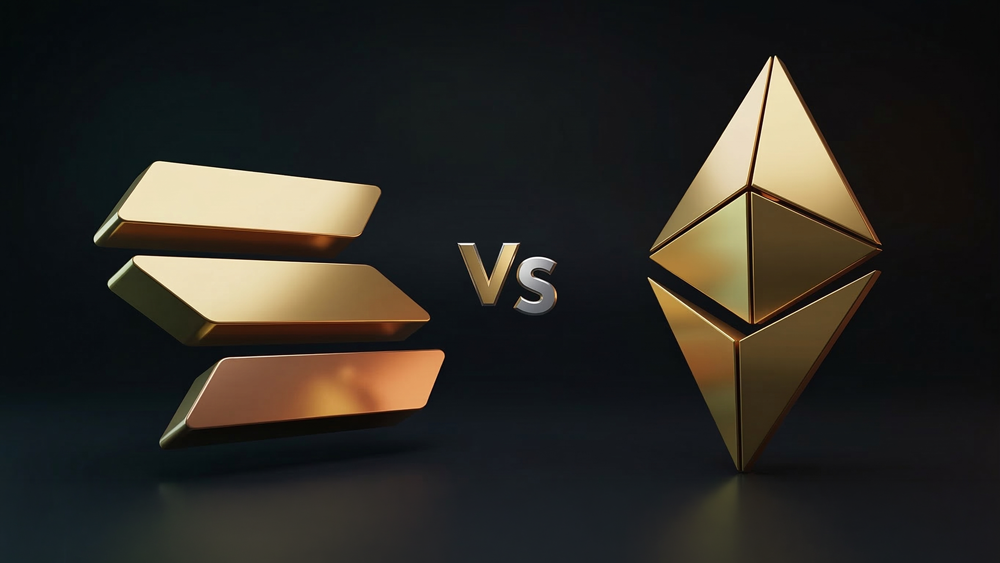
Ethereum (ETH) is still generating more fee revenue than Solana (SOL) on a headline basis, but the more consequential story for 2026 is shifting beneath the surface: on-chain profitability is increasingly determined not by where fees are paid, but by which network structure is able to ‘absorb’ and retain them.
As of March 24 (UTC), Ethereum recorded $9.66 million in 24-hour fees, down 7.08% from the prior day, while Solana logged $4.38 million, up 4.98%. Ethereum’s total remains roughly 2.2 times larger, yet analysts say the ‘quality of revenue’—how sustainably it is captured and by whom—is being rapidly re-mapped as Layer 2 (L2) adoption accelerates and stablecoin and real-world asset (RWA) flows reorganize liquidity across chains.
The most visible inflection point is Ethereum’s rollup-driven scaling model. Even as activity across the broader Ethereum ecosystem rises, a growing share of transactions are migrating off the base chain and onto L2 networks such as Arbitrum and Optimism. That shift doesn’t necessarily signal weakening demand; instead, it reflects a structural relocation of execution to cheaper environments, compressing the amount of fees recognized at the ‘base layer’ itself.
Ethereum’s average transaction fee hovering around $0.21 illustrates the dynamic. The network continues to serve as the settlement and security anchor for a large portion of decentralized finance (DeFi) and tokenized asset issuance, but the fee stream is increasingly distributed across modular components—execution on rollups, data availability and settlement on L1, and value capture split among sequencers, bridges, and application layers. Market observers often describe this as revenue ‘leakage’: value creation persists, while fee recognition becomes fragmented.
Solana, by contrast, is pursuing the opposite route, keeping more activity within a single, high-throughput environment. Its core pitch—fast execution and low costs on one layer—has been translating into a fee trajectory that can rise alongside usage, rather than being structurally offloaded to auxiliary networks. The recent increase in daily fee totals, even from a lower base than Ethereum’s, is being read by some traders as evidence that Solana is consolidating fee capture as it scales.
The competition is increasingly being shaped by stablecoin settlement and RWA-related activity—two areas that can generate persistent transaction flow and anchor liquidity. Market participants are watching how USD Coin (USDC) circulation, exchange liquidity, and tokenized asset issuance migrate between ecosystems, because those flows can effectively determine which chains and applications become ‘default rails’ for recurring transfers.
In that context, the fee contest is less about raw totals on any single day and more about the durability of each network’s revenue architecture. Ethereum’s modular approach may optimize user costs and throughput across L2s, but it forces the ecosystem to continuously balance scalability with cohesive value capture at the base layer. Solana’s integrated approach may concentrate fee revenue more directly, but it also ties scaling performance and fee capture to a single environment’s ability to sustain growth.
For the broader market, the emerging takeaway is that 2026’s on-chain winners may not be decided purely by transaction counts or headline fees, but by the networks that best convert structural demand—RWA settlement, stablecoin transfers, and application-layer usage—into predictable, retained fee streams. That shift is likely to influence how investors evaluate ‘cash-flow-like’ fundamentals in crypto networks, particularly as institutional attention gravitates toward measurable, recurring on-chain activity.
🔎 Market Interpretation
- Headline fees still favor Ethereum, but the competitive battleground is shifting: Ethereum posted $9.66M in 24h fees vs Solana’s $4.38M (ETH ~2.2× SOL). However, analysts increasingly focus on revenue retention—who ultimately captures fees as usage scales—rather than raw totals.
- Ethereum’s “modular” scaling changes where fees show up: As activity migrates to L2s (e.g., Arbitrum, Optimism), Ethereum L1 remains a settlement/security hub, but L1 fee recognition is compressed even if ecosystem activity grows.
- Revenue fragmentation becomes a core metric for ETH: With average transaction fees around $0.21, value capture is increasingly split across rollup execution, L1 settlement/data availability, sequencers, bridges, and apps—often described as fee “leakage” from the base layer.
- Solana’s “integrated” model supports consolidated fee capture: By keeping execution on one high-throughput layer, Solana can see fees rise more directly with usage, which some traders interpret as improving monetization as activity scales.
- Stablecoins and RWAs are emerging as decisive demand sources: Market attention is moving toward which chain becomes the default rail for recurring flows like USDC settlement and tokenized asset issuance, because these can drive persistent transactions and defensible liquidity.
- 2026 valuation lens: “cash-flow-like” on-chain fundamentals: Investors may increasingly rank networks by their ability to convert structural demand (stablecoins, RWAs, app usage) into predictable, retained fee streams, especially as institutional evaluation emphasizes measurable recurring activity.
💡 Strategic Points
- For investors analyzing ETH vs SOL: Track not only fee totals, but fee capture path—what share accrues to L1 validators/burn vs L2 sequencers vs application-level rent extraction.
- Ethereum monitoring checklist:
- L2 share of transactions vs L1 (signals continued execution offload).
- Rollup economics: sequencer revenue, proof costs, and how upgrades affect fee distribution.
- Data availability & settlement demand on L1 (whether L2 growth still translates into L1 demand).
- Bridge and interoperability costs (friction can influence where liquidity and users remain).
- Solana monitoring checklist:
- Fee growth vs usage growth (tests whether monetization scales without harming UX).
- Network performance resilience under load (integrated model concentrates execution risk).
- Stablecoin liquidity depth and market-maker participation (helps determine “default rail” status).
- Stablecoin/RWA “rail competition” implication: Chains that win recurring settlement flows may gain a more durable revenue base than chains optimized primarily for episodic speculative activity.
- Portfolio/risk framing: Ethereum’s model can improve user costs and throughput but may dilute base-layer monetization; Solana’s model can concentrate monetization but increases dependence on a single execution environment’s sustained performance.
- What could change the thesis: Major shifts in L2 fee-sharing mechanisms, L1 pricing dynamics for data availability, or large-scale institutional RWA issuance choosing one ecosystem as primary settlement.
📘 Glossary
- L1 (Layer 1): The base blockchain (e.g., Ethereum mainnet, Solana) that provides core security and final settlement.
- L2 (Layer 2): Scaling networks that execute transactions off the L1 and post proofs/data back to it (e.g., optimistic and zk rollups).
- Rollup: An L2 design that batches many transactions and settles them on L1, typically reducing user fees.
- Sequencer: The entity that orders and submits L2 transactions/batches; often a primary collector of L2 fees.
- Settlement: Final confirmation of transactions, typically anchored on L1 for security assurances.
- Data Availability (DA): Ensuring transaction data is accessible so the network can verify and reconstruct state; DA costs can drive L1 demand even when execution moves to L2.
- Fee “Leakage” (fragmentation): When economic value generated in an ecosystem is captured by multiple layers (L2s, bridges, apps) rather than accruing mainly to the base chain.
- Stablecoin settlement: Repeated transfers/clearing of stablecoins (e.g., USDC) that can create consistent on-chain transaction flow.
- RWA (Real-World Assets): Tokenized representations of off-chain assets (e.g., bonds, funds, invoices) that can drive recurring issuance/redemption and settlement activity.
- “Cash-flow-like” fundamentals: Using recurring fees/revenues as a proxy for sustainable economic value, analogous to cash flows in traditional markets.













Comment 0