

 News
News  Coin Information
  About us
  Customer Service


 Add as a preferred source on Google
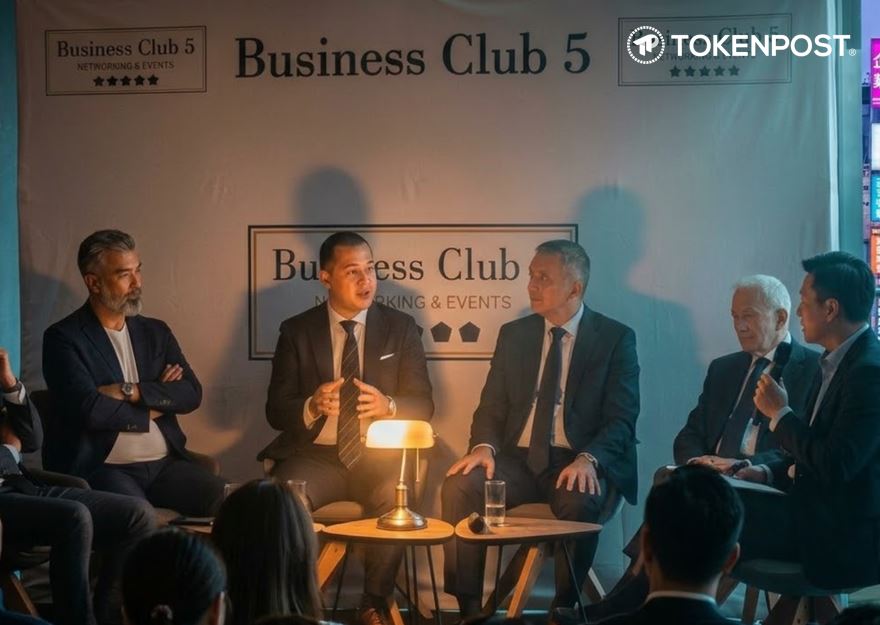
A growing theme in global crypto circles is the notion of a ‘Cabal’—not as a conspiracy, but as a dense web of investors, founders, exchanges, and influential voices that quietly increases a project’s odds of success.
In industry usage, the term describes how capital, distribution, and narrative often move through trusted relationships: a top-tier venture fund seeds a project, another blue-chip fund follows, a major exchange accelerates visibility through listing support, and prominent influencers and communities amplify the story until it becomes market consensus.
To outsiders, these steps can look like independent decisions made in parallel. But market participants say the more realistic picture is a coordinated outcome produced by long-standing credibility and repeated collaboration—an ‘ecosystem of probability’ where access itself becomes a competitive advantage.
For many Korean crypto startups, the challenge is that an equivalent global-facing network remains thin. Korea has influential domestic hubs—large internet platforms, major exchange-linked firms, and prominent local venture investors—but those connections tend to operate primarily inside the Korean market rather than as integrated bridges into global funds, exchanges, and English-language communities.
This asymmetry matters because crypto is an unusually network-driven industry: distribution is global by default, liquidity is portable, and reputation can compound faster than product adoption. When Korean teams start outside the dominant relationship graph, they often have to secure funding, talent, partnerships, and community traction from scratch—at the same time.
One obstacle is the lack of widely recognized global success precedents from Korea’s crypto sector. Venture capital is pattern-based by design; when a particular founder background or ecosystem produces breakout outcomes, investors tend to fund the next wave that resembles it. Without several high-profile examples, early checks can be harder to win, and late-stage momentum is slower to materialize.
A second constraint is geographic and institutional distance from the industry’s traditional centers of gravity. Silicon Valley networks—and adjacent U.S. university and developer communities—create fast lanes where co-founders recruit from prior colleagues, investors warm-intro one another, and early users become the first evangelists. Korean founders frequently begin outside those loops, which raises the cost of every connection.
Third, the ‘market conversation’ still largely happens in English-speaking channels. In crypto, technical quality is necessary but rarely sufficient; projects also need a recognizable narrative, a community that can sustain attention, and credible voices who translate milestones into trust. Korean teams are often praised for execution and engineering, yet they can be at a disadvantage in global community-building and narrative distribution.
Regulatory and structural frictions add a fourth headwind. Foreign investors evaluating Korean entities may face extra reporting obligations, complex tax considerations, and uncertainty around evolving digital-asset rules—factors that introduce time and legal cost without necessarily improving risk-return outcomes.
As a result, global capital frequently asks a blunt question: why invest through a Korean corporate structure if a comparable team can set up in Singapore or the Cayman Islands with cleaner cross-border mechanics? The market consequence is familiar—founders move holding companies overseas to attract funding, and domestic ecosystems lose the chance to compound talent, mentors, and repeat founders over time.
Industry observers argue the answer is not to build a closed clique, but to develop a durable, transparent network that reliably connects Korean builders to global liquidity, distribution, and credibility.
One path is strengthening founder-to-founder support so that successful entrepreneurs systematically help the next cohort—sharing introductions, operational playbooks, and early customer access—turning isolated wins into a repeatable pipeline rather than one-off stories.
Another is expanding co-investment and syndication with global crypto-native funds. Joint deals can provide more than capital: they connect projects to exchange relationships, auditor and market-maker networks, and the informal reputational underwriting that often determines whether a token launch is ignored or embraced.
A third priority is engineering a small number of unmistakable global success cases. Market participants note that even one or two breakout outcomes can reprice an entire country’s perceived capability—pulling in more funding, attracting returning talent, and prompting global platforms to pay closer attention to subsequent launches.
To get there, proponents suggest more structured support for early-stage teams that bundles global launch planning, English-language community development, and investor access—potentially through public-private collaboration designed to reduce friction without distorting competition.
Ultimately, the ‘Cabal’ frame is best understood as accumulated trust, not secrecy. In technology hubs that consistently produce world-class companies, network density is a feature, not an accident—and in crypto, where adoption and liquidity can move at internet speed, Korea’s next phase may depend as much on relationships and credibility pathways as on technical excellence.
Article Summary by TokenPost.ai
🔎 Market Interpretation
- “Cabal” as market plumbing: Describes a practical reality in crypto—capital, listings, liquidity, and narrative often flow through repeated relationships among top funds, exchanges, founders, and influential communities.
- Coordination via trust, not conspiracy: What appears like parallel independent validation is frequently an outcome shaped by credibility loops (“ecosystem of probability”) built from prior collaboration.
- Korea’s network gap is structural: Korea has strong domestic hubs, but they don’t consistently bridge into global funds, major exchanges, and English-speaking distribution channels.
- Crypto rewards distribution faster than product: Global liquidity portability and reputation compounding mean teams outside the dominant relationship graph must build funding, partnerships, talent, and community simultaneously.
- Capital prefers clean jurisdictional rails: Regulatory/tax/reporting friction makes global investors ask why not invest through simpler structures (e.g., Singapore/Cayman), encouraging Korean founders to set up overseas and weakening domestic compounding.
💡 Strategic Points
- Build an open, durable bridge-network: The proposed solution isn’t a closed clique, but a transparent pipeline that reliably connects Korean builders to global liquidity, distribution, and third-party credibility.
- Founder-to-founder compounding: Systematize mentorship and warm introductions from successful founders—playbooks, early customers, hiring pipelines—so wins become repeatable, not isolated.
- Co-investment as distribution access: Syndicating with global crypto-native funds can deliver more than money: exchange pathways, auditors, market makers, and reputational underwriting that affects token launch outcomes.
- Create 1–2 breakout global case studies: A small number of unmistakable successes can “reprice” perceptions of an ecosystem, attracting capital, talent return, and platform attention for the next wave.
- Bundle early-stage global go-to-market support: Provide structured help on global launch planning, English community building, and investor access—potentially via public-private collaboration focused on reducing friction without distorting competition.
- Narrative is a core product surface: Treat English-language communication, community operations, and milestone translation into trust as first-class execution, not marketing afterthoughts.
📘 Glossary
- Cabal (industry usage): A dense network of investors, founders, exchanges, and voices whose repeated collaboration increases the probability a project gains funding, listings, and mindshare.
- Distribution: The channels that deliver users, liquidity, and attention (exchanges, wallets, communities, influencers, partner protocols).
- Narrative: The widely repeated framing that explains why a project matters; often decisive for attention and valuation in crypto markets.
- Reputational underwriting: Informal credibility transfer when trusted funds/partners back a project, making others more willing to support it.
- Syndication / Co-investment: Multiple funds investing together to share risk and combine networks, often accelerating downstream partnerships.
- Centers of gravity: Ecosystems (e.g., Silicon Valley and adjacent university/developer networks) where talent, capital, and early adopters are tightly connected.
- Liquidity portability: Capital can move quickly across borders and venues, intensifying competition between jurisdictions and projects.
- Corporate structure (jurisdictional choice): Where the holding company is incorporated; affects investor compliance burden, taxes, and legal complexity.










Comment 0