

 News
News  Coin Information
  About us
  Customer Service


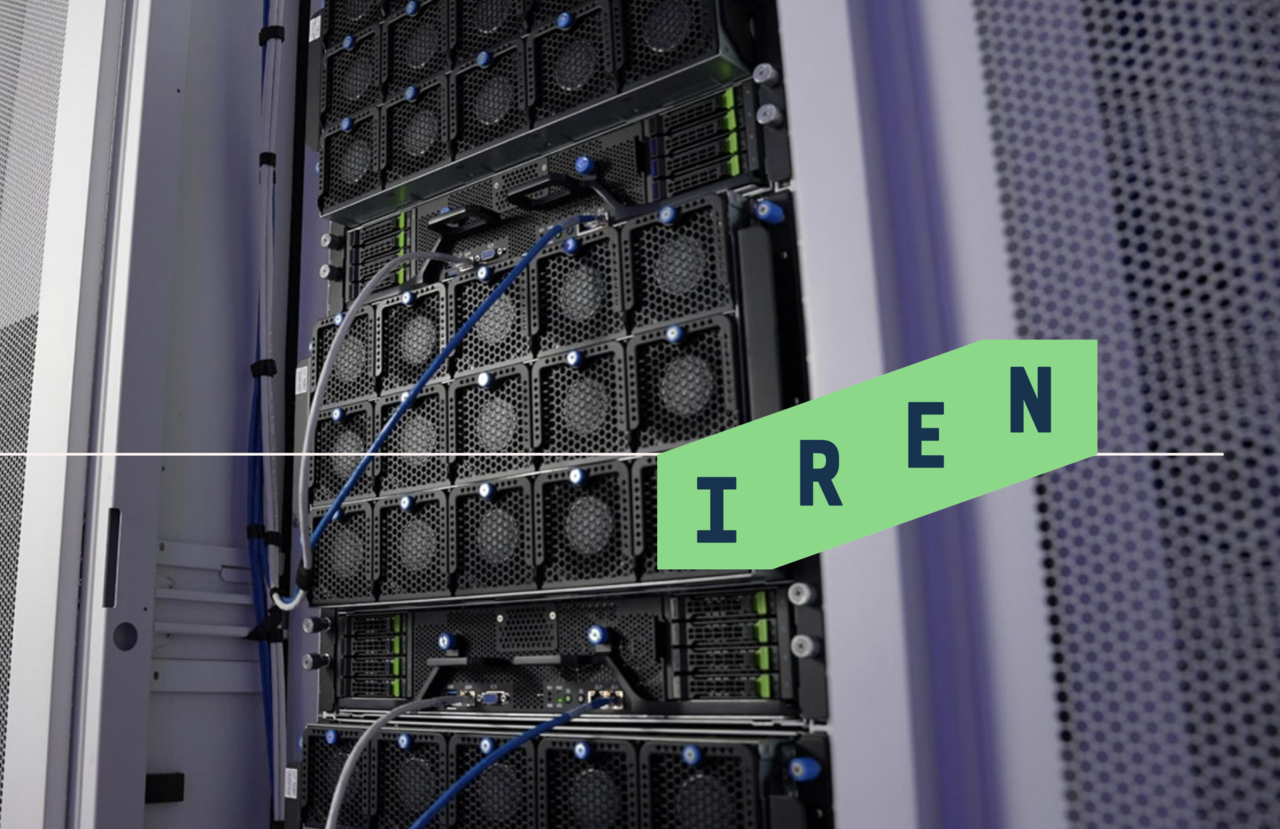
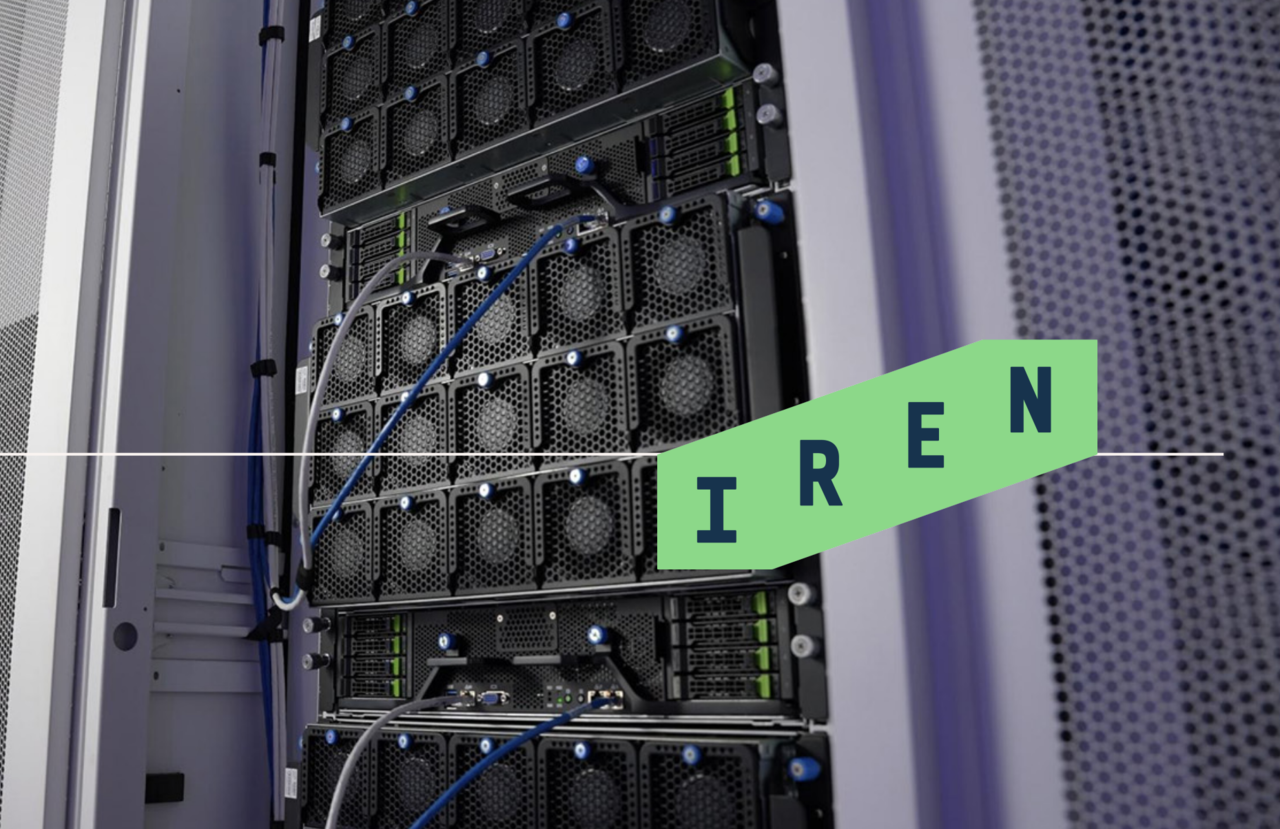
Shares of IREN ($IREN) rose about 3.2% after the company said it has completed the acquisition of Spain-based Nostrum Group (Ingenostrum), a deal that significantly expands IREN’s footprint in Europe’s fast-growing AI data center market. The move adds roughly 490 megawatts (MW) of power capacity tied to European AI data center development—an increasingly scarce asset as hyperscalers and model developers scramble for power-secured sites.
The stock closed at $59.96, after touching an intraday high of $61.51. IREN remains sharply higher over the past year, up roughly 472% from its 52-week low of $9.83, reflecting the market’s re-rating of the company from a cyclical crypto miner to an emerging AI infrastructure operator. In after-hours trading, shares held around $60.03, suggesting demand remained intact following the news.
By bringing Nostrum into the fold, IREN strengthens its message that the company’s future is no longer defined primarily by Bitcoin (BTC) mining. Analysts increasingly describe IREN as pursuing a vertically integrated AI infrastructure platform—combining power procurement, GPU-focused data center operations, and direct sales to hyperscaler-type customers—at a time when AI compute bottlenecks are often constrained more by electricity and grid access than by chips alone.
The newly secured 490MW is also being framed by investors as a meaningful piece of IREN’s broader global power ambition. The company has pointed to a long-term target of a 6-gigawatt (GW) power portfolio, positioning grid-connected capacity as a core strategic advantage in negotiations with large technology customers seeking long-duration compute availability. With operating bases in Australia and Canada, the European expansion gives IREN a presence across three continents—an attribute that can appeal to customers looking to diversify latency, regulation, and energy-price exposure across regions.
Jefferies recently initiated coverage on IREN, describing it less as a pure-play crypto mining stock and more as an 'AI infrastructure growth' name. The bank, however, also highlighted the balance of opportunity and risk typical for data center buildouts: large upfront capital requirements, execution complexity, and uncertainty around the timing of cash flow as facilities come online and customer capacity 'ramps up' over time.
Longer-term forecasts circulating in the market remain optimistic. Some projections estimate IREN could generate around $5.6 billion in revenue and $183.6 million in net income by 2029, contingent on successful conversion of its power and facilities roadmap into contracted AI infrastructure services. For equity investors, those numbers underscore why the market has rewarded firms perceived to be moving into AI compute supply—while also raising the stakes for delivery against construction timelines and utilization assumptions.
IREN has also emphasized its power infrastructure advantages in South Australia, where it holds multiple 330kV transmission connection points—an important factor for high-density AI workloads that require stable, scalable electricity supply. Adding European capacity may give the company more flexibility to pursue load-balancing across regions, potentially smoothing operational constraints tied to local grid conditions or energy market volatility.
In the near term, traders appear focused on two catalysts: when European sites will begin meaningful operations and how quickly contracted AI capacity can scale. Investors also see potential upside in pairing AI data center operations with relatively efficient European grids, which could support lower operating costs and reduced carbon intensity compared with less efficient power mixes elsewhere—an increasingly relevant consideration for enterprise customers and regulators.
Trading activity reflected the heightened attention. Volume reached about 37.96 million shares, well above typical levels. The stock opened near $61.29, briefly climbed to $61.51, then pulled back toward $58 amid profit-taking before recovering into the close. From a technical perspective, IREN is still roughly 22% below its 52-week high of $76.87, leaving room for further upside in bullish scenarios, though some market participants continue to flag near-term overheating risk and uncertainty around the payback period for rapid AI infrastructure expansion.
More broadly, IREN’s repositioning mirrors a wider shift across the crypto mining sector. As post-halving dynamics, rising network difficulty, and competitive pressures compress mining economics, several operators are attempting to repurpose power access and industrial-scale facilities toward AI data centers. For the market, the Nostrum acquisition is being interpreted as a concrete step in that transition—one that could set the stage for additional M&A or partnership announcements as IREN competes for a larger role in the global AI compute supply chain.
🔎 Market Interpretation
- Deal-driven re-rating continues: IREN shares rose ~3.2% after closing the acquisition of Spain-based Nostrum Group (Ingenostrum), reinforcing the market’s view that IREN is transitioning from a cyclical Bitcoin miner into an AI data center infrastructure operator.
- Power-secured capacity is the scarce asset: The acquisition adds ~490MW of European power capacity tied to AI data center development—valuable as hyperscalers and AI model developers compete for grid-accessible sites.
- Multi-continent positioning improves enterprise appeal: With operations in Australia and Canada plus new European presence, IREN can pitch geographic diversification (latency, regulation, energy pricing) to large customers.
- Momentum, but risk remains: High volume (~37.96M shares) shows elevated interest, yet investors are watching execution risk (capex, buildout timing, ramp to contracted utilization) and potential near-term overheating after a ~472% rise from the 52-week low.
💡 Strategic Points
- Strategic rationale of Nostrum acquisition: Expands European footprint and secures ~490MW backlog/optionality for AI data center development, strengthening IREN’s negotiating position with hyperscaler-type customers seeking long-duration compute availability.
- Power portfolio ambition: Management’s referenced long-term target of a 6GW power portfolio frames grid-connected capacity as the company’s core edge—often a bigger bottleneck than GPUs in AI deployments.
- Business model shift: IREN is being positioned as a vertically integrated AI infrastructure platform (power procurement + GPU-focused data centers + customer contracting), reducing reliance on BTC mining economics post-halving.
- Key near-term catalysts to monitor:
- European go-live timelines: When the acquired development pipeline translates into operational sites.
- Contracting velocity: How quickly IREN can convert power/facilities into signed AI capacity and then ramp utilization.
- Unit economics: Whether European grid efficiency lowers operating costs and carbon intensity—important for enterprise procurement and regulatory scrutiny.
- Capital and execution considerations: Jefferies frames IREN as “AI infrastructure growth” but highlights typical data center risks—large upfront capex, construction complexity, and uncertain timing of cash flows.
- Valuation sensitivity: Bullish longer-term projections (e.g., ~$5.6B revenue and ~$183.6M net income by 2029) are highly contingent on delivering buildouts on schedule and achieving contracted utilization.
- Technical/positioning note: Despite strong gains, IREN remains ~22% below the 52-week high, leaving upside if execution hits milestones—while raising the probability of drawdowns if timelines slip.
- Sector context: The move reflects a broader trend of crypto miners repurposing power access and industrial sites into AI data centers as mining margins compress (post-halving, difficulty, competition), potentially leading to further M&A/partnerships.
📘 Glossary
- MW (Megawatt): A unit of power capacity. In data centers, more MW generally enables more compute infrastructure (servers/GPUs), subject to cooling and grid constraints.
- GW (Gigawatt): 1,000 MW. A 6GW portfolio target implies very large-scale, multi-site power access suitable for hyperscale data center development.
- Hyperscalers: Large cloud/technology companies (and similar-scale AI players) that deploy massive compute and require long-term, power-secured data center capacity.
- Vertically integrated (AI infrastructure): Controlling multiple layers of the stack—power procurement, site development, data center operations, and customer contracting—rather than relying on third parties.
- GPU-focused data center: A facility optimized for high-density GPU clusters used for AI training/inference, requiring high power delivery, cooling, and robust grid connectivity.
- Capacity ramp: The gradual increase of contracted/installed compute and utilization over time as facilities are built, commissioned, and customers migrate workloads.
- 330kV transmission connection: High-voltage grid interconnection that can support large, stable power delivery—critical for scaling high-density AI workloads.
- Post-halving dynamics: After Bitcoin halving events, mining rewards drop, often pressuring miner profitability and accelerating diversification into alternative revenue streams.
- Carbon intensity: Emissions per unit of electricity used; increasingly important for enterprise procurement standards and regulatory compliance.













Comment 0