

 News
News  Coin Information
  About us
  Customer Service


 Add as a preferred source on Google
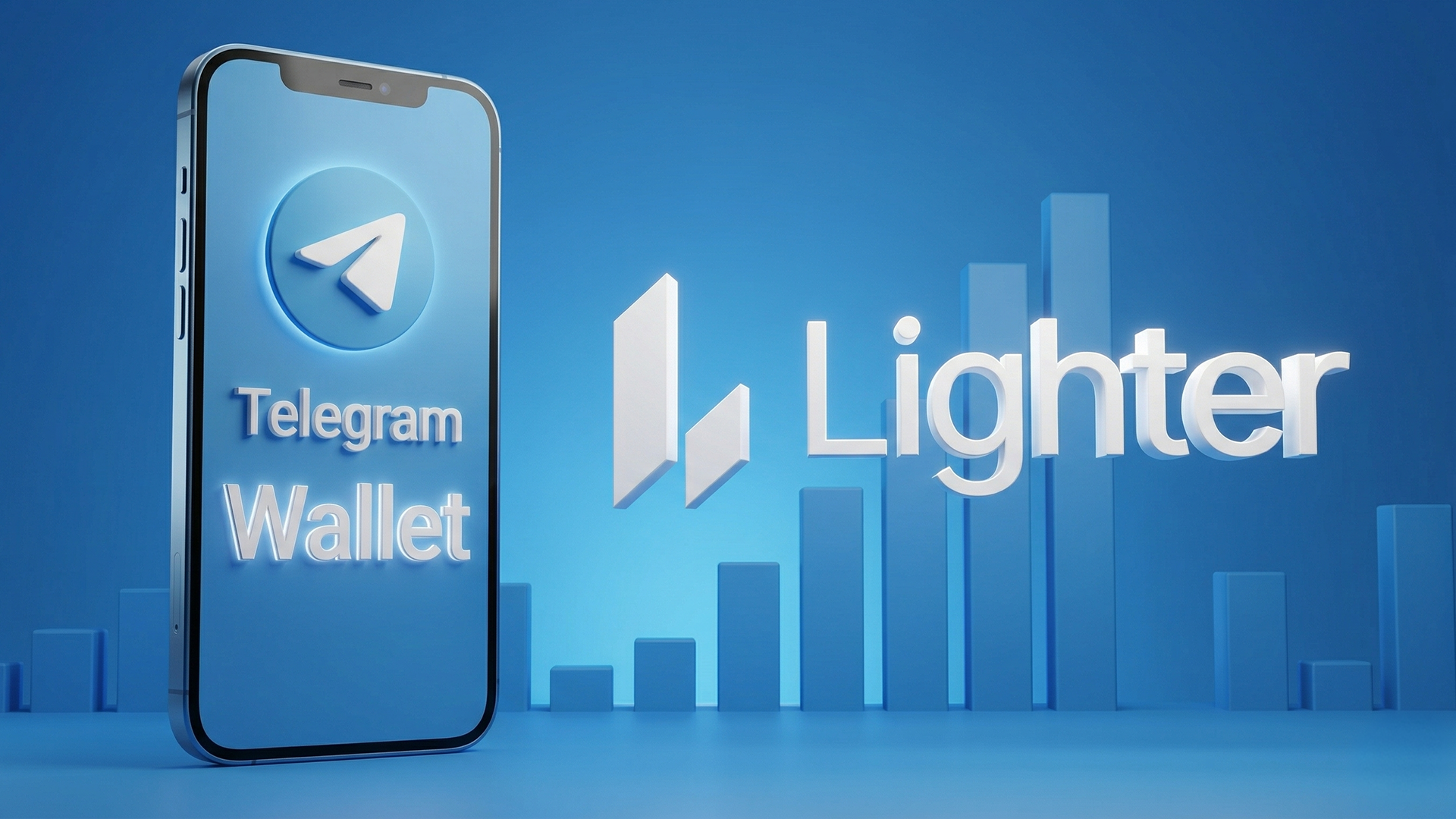
Telegram users can now place up to 50x leveraged bets on crypto perpetual futures without leaving the messaging app, marking a notable escalation in how quickly high-risk trading tools are moving into mainstream consumer platforms.
Wallet in Telegram announced on April 2 (UTC) that it has officially launched a built-in perpetual futures trading feature. The update allows users to execute leveraged trades directly inside Telegram without installing a separate trading app or connecting an external wallet—reducing the usual friction associated with derivatives onboarding.
The product is powered by Lighter, an Ethereum-based perpetual decentralized exchange (DEX) that supplies the underlying trading infrastructure. Lighter drew attention last year after raising $68 million at an approximately $1.5 billion valuation, in a funding round reportedly co-led by Founders Fund and Ribbit Capital, with participation from Haun Ventures and Robinhood.
The new feature supports more than 50 markets spanning cryptocurrencies as well as traditional-asset references such as metals, stocks, crude oil, and ETFs. Maximum leverage is set at 50x, while the minimum trade size is roughly $1, positioning the product to be accessible to smaller retail accounts as well as more active traders seeking higher exposure.
Accessibility is central to the rollout. Wallet in Telegram is said to have a user base exceeding 150 million, and the ability to trade without opening an exchange account or bridging to a separate wallet could materially widen retail participation in perpetuals. Andrew Rogozov, founder of The Open Platform (TOP), said the aim is to make leveraged trading “simpler and more accessible” in an environment where users already communicate and hold assets.
The timing also aligns with the broader growth trajectory of the perpetual futures market. Total crypto futures trading volume reached an estimated $61.8 trillion in 2025, up 29% year over year and a record high—underscoring continued demand for derivatives as traders look to hedge, speculate, and express directional views more efficiently than in spot markets.
Lighter itself has been scaling alongside that trend. As of March 2026, its monthly trading volume was reported at around $65 billion, placing it among the larger venues within the perpetual DEX segment—a category that has expanded as users seek on-chain alternatives to centralized derivatives platforms.
Still, the push to embed perpetuals into a messenger app raises fresh questions about risk exposure and oversight. Perpetual futures are inherently high-volatility instruments, and leverage amplifies liquidation risk, particularly for inexperienced users attracted by low minimum sizes and one-click access. As derivatives migrate into everyday consumer platforms, investor protection practices and the evolving regulatory backdrop are likely to become pivotal variables for the sector.
The launch extends Telegram’s wallet ambitions beyond basic custody. Wallet in Telegram recently added DeFi yield products based on Bitcoin (BTC), Ethereum (ETH), and Tether (USDT), and the addition of perpetuals signals a faster shift toward an integrated, app-native financial stack—blending payments, trading, yield, and derivatives under a single interface.
🔎 Market Interpretation
- Derivatives go mainstream: Telegram now enables in-app crypto perpetual futures trading (up to 50x leverage), showing how high-risk derivatives are being distributed through everyday consumer platforms rather than dedicated exchanges.
- Frictionless onboarding as a growth lever: Trading without installing a separate app, opening an exchange account, or connecting an external wallet lowers barriers—potentially expanding retail participation given Wallet in Telegram’s reported 150M+ user base.
- On-chain infrastructure under the hood: The feature is powered by Lighter, an Ethereum-based perpetual DEX, reflecting the broader shift toward on-chain venues for derivatives.
- Market context supports the rollout: Crypto futures volume is cited at $61.8T in 2025 (+29% YoY), indicating strong demand for hedging/speculation tools that perpetuals provide.
- Risk and oversight become central: Embedding leverage inside a messenger app intensifies concerns around user protection, suitability, liquidations, and the regulatory posture toward mass-market derivatives access.
💡 Strategic Points
- Product positioning: Low minimum size (~$1) plus high leverage (50x) targets both small retail users and active traders seeking capital-efficient exposure.
- Multi-asset reach: Supports 50+ markets, including crypto and trad-asset references (metals, stocks, crude oil, ETFs), broadening use cases beyond pure crypto directional bets.
- Platform moat via distribution: Telegram gains a distribution advantage by placing derivatives where users already chat and hold assets—reducing the need to “leave the app” and increasing engagement time.
- Lighter credibility signals: Lighter’s prior funding is noted as $68M at ~$1.5B valuation (reportedly involving Founders Fund, Ribbit, Haun Ventures, Robinhood), and reported $65B monthly volume (Mar 2026) suggests capacity and market relevance.
- Risk management implications: Instant access and leverage heighten liquidation frequency risk; investor education, in-app risk warnings, position limits, and default settings (e.g., lower leverage) become pivotal design choices.
- Toward an app-native financial stack: Following BTC/ETH/USDT DeFi yield additions, perpetuals indicate Telegram Wallet’s move toward an integrated suite combining payments, yield, spot-like custody, and derivatives.
📘 Glossary
- Perpetual futures (perps): Futures contracts without an expiry date; traders maintain positions as long as margin requirements are met.
- Leverage (e.g., 50x): Borrowed exposure that amplifies gains and losses; small price moves can trigger large P&L swings.
- Liquidation: Forced closure of a leveraged position when collateral (margin) can’t cover losses.
- DEX (Decentralized Exchange): Trading venue typically using smart contracts and on-chain settlement rather than a centralized order book operator.
- Onboarding friction: Steps that slow adoption (app installs, KYC/exchange accounts, wallet connections, bridging funds); reducing friction generally increases conversion.
- Funding rate: Periodic payment between longs and shorts in perps used to anchor contract price near spot (common mechanism in perpetual markets).
- Notional exposure: The total value controlled by a position (collateral × leverage), not the amount of capital posted.













Comment 0