
BlackRock, Citadel, Apollo Accumulate DeFi Tokens as RWA Tokenization Grows
BlackRock, Citadel, and Apollo quietly accumulated beaten-down DeFi tokens like UNI and MORPHO as they position for growth in tokenized real-world asset infrastructure.



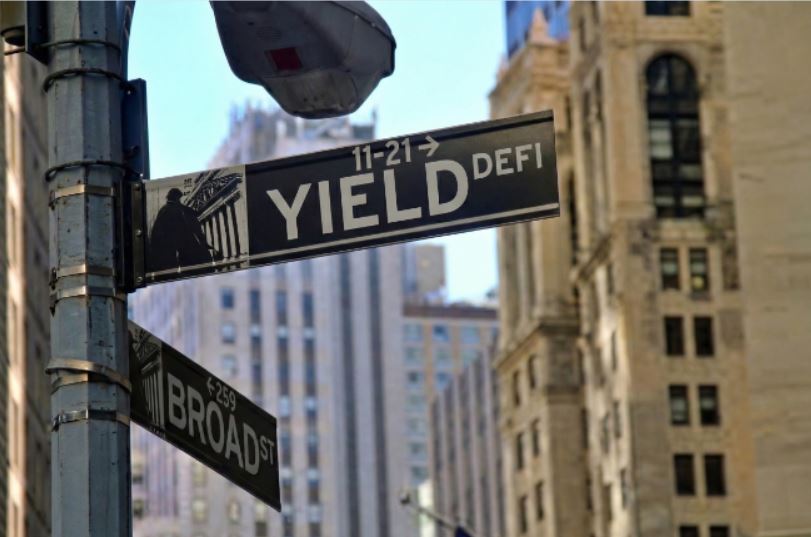
Some of Wall Street’s most powerful firms began quietly building positions in battered DeFi ‘governance tokens’ in Q1 2026—a move that looks less like a momentum trade and more like an attempt to lock in early exposure to onchain financial infrastructure.
According to industry tracking and market participants familiar with the flows, BlackRock accumulated Uniswap (UNI), Citadel took exposure to LayerZero (ZRO), and Apollo built a sizable stake in Morpho (MORPHO), all after the tokens had fallen roughly 68% to 85% from prior highs—an unusual divergence as many crypto-native traders continued to rotate out of the category.
The disconnect is rooted in a long-running criticism: ‘governance tokens’ often provide neither legal ownership nor direct cash-flow rights, and voting power can be heavily concentrated among large holders, leaving smaller voters with limited practical influence.
Those concerns surfaced painfully in early 2026 at Aave, one of DeFi’s largest lending protocols, when Aave Labs—its founding development organization—submitted an “Aave Will Win” proposal seeking roughly $51 million from the DAO treasury for new version development, prompting backlash over the lack of a clear repayment framework or enforceable guarantees.
In the aftermath, two independent contributor organizations, BGD Labs and the Aave Chan Initiative, stepped back from their roles, turning what might have been a routine funding dispute into a broader public stress test of DAO coordination at scale for a protocol with roughly $26 billion in total value locked (TVL) and about 99,000 monthly active users.
The episode helped cement a narrative across onchain communities that some governance tokens are ‘performative’—a reputational overhang that has weighed on valuations even as institutions appear to be interpreting these assets through a different lens.
Morpho has been positioned by supporters as a counterexample, not because it eliminates governance, but because it reduces the need for centralized coordination by pushing key decisions into protocol design and market incentives rather than recurring political battles in a single DAO forum.
Instead of relying primarily on governance votes for asset listings, risk parameter changes, and upgrades, Morpho allows permissionless creation of lending markets with customized risk parameters, with independent vault curators competing to attract capital—an architecture intended to make the system more modular and less dependent on high-friction, winner-take-all governance outcomes.
Morpho founder Paul Frambot has summarized the ambition succinctly: “Aave is trying to become the JPMorgan of the world, and Morpho is trying to become infrastructure for JPMorgan.”
Growth metrics have fueled that narrative. Over roughly two years, Morpho’s TVL expanded from around $1 billion to about $8 billion, and the protocol now operates more than 650 markets across 18+ networks, with Coinbase using Morpho-based infrastructure to provide over $300 million in bitcoin-collateralized lending, according to figures cited in the Korean report.
Institutional buyers, however, appear to be less focused on the philosophical debate over tokenholder rights and more focused on what these protocols represent as capital markets move onchain: liquidity venues, distribution rails, and interoperability layers that can route tokenized assets through global settlement pathways.
In that framing, governance tokens resemble long-dated positioning for ‘vendor alignment’—a way to embed economic exposure to infrastructure a firm expects to depend on as tokenization and onchain capital formation expand.
BlackRock’s reported UNI accumulation coincided with its push to connect its tokenized money-market-style Treasury product BUIDL to DeFi liquidity via UniswapX, tightening the link between tokenized U.S. Treasury exposure and onchain trading rails.
Separately, BlackRock CFO Martin Small has publicly indicated the firm is targeting a 3-to-12-month window to tokenize iShares ETFs, a timeline that—if executed—would increase the strategic value of deep, compliant liquidity infrastructure rather than short-term governance theatrics.
Citadel’s interest in ZRO is being read by some analysts as a bet that crosschain messaging will become core plumbing as tokenized assets and liquidity increasingly move across networks, with LayerZero’s ecosystem positioned as one contender in that interoperability race.
Apollo’s approach has been the most explicit: the firm reached an agreement with the Morpho Association to acquire up to 90 million MORPHO tokens—about 9% of total supply—over four years using a mix of market purchases and OTC transactions, while also committing to jointly develop lending markets built on Morpho.
The deal also intersects with a broader trend: Apollo-linked credit exposure is already being packaged onchain by third parties, including Securitize’s ACRED and Anemoy’s ACRDX, both designed to give blockchain investors access to Apollo-associated credit strategies through tokenized wrappers.
Behind these moves is a rapidly expanding real-world asset (RWA) tokenization market, which the report places at $29.4 billion as of March 15, 2026—roughly quadrupling over the past 12 months as tokenized Treasuries, private credit, real estate, commodities, and even equities gain traction.
For markets, the key question is whether the sector can surpass $100 billion by the end of 2026; if it does, the tokens now being accumulated at depressed prices may be repriced less as speculative chips and more as early exposure to the settlement and liquidity backbone of an increasingly tokenized capital market.
In that scenario, the growing divide between crypto-native skepticism and institutional accumulation may prove to be an early signal of where the next phase of market structure is headed—away from narrative-driven token rallies and toward ownership-like positioning in the rails that move money onchain.
Article Summary by TokenPost.ai
🔎 Market Interpretation
Institutional accumulation at drawdowns: Major Wall Street firms reportedly bought DeFi governance tokens in Q1 2026 after steep declines (~68%–85%), suggesting strategic positioning rather than a short-term momentum trade.
Two lenses on governance tokens: Crypto-native traders remain skeptical due to weak tokenholder rights and concentrated voting power, while institutions appear to view these tokens as proxy exposure to future onchain market infrastructure.
Aave governance shock as a catalyst: The “Aave Will Win” funding proposal (~$51M) and subsequent contributor retreat (BGD Labs, Aave Chan Initiative) reinforced the narrative that some governance is performative, pressuring valuations.
Infrastructure thesis: Institutions increasingly frame DeFi protocols as liquidity venues, distribution rails, and interoperability layers needed for tokenized assets to settle and trade across networks.
RWA tokenization tailwind: With RWA tokenization estimated at $29.4B (Mar 15, 2026) and potentially heading toward $100B+ by end-2026, governance tokens could be repriced as “backbone exposure” rather than speculative instruments.
💡 Strategic Points
BlackRock → Uniswap (UNI): Reported UNI buying aligns with BlackRock’s effort to connect its tokenized Treasury-like product BUIDL to DeFi liquidity via UniswapX, implying UNI is viewed as exposure to onchain liquidity routing and execution rather than governance influence.
BlackRock’s ETF tokenization timeline: A stated 3–12 month window to tokenize iShares ETFs raises the premium on deep, compliant liquidity rails—supporting the idea that liquidity infrastructure tokens could benefit from real asset flows.
Citadel → LayerZero (ZRO): Interpreted as a bet on crosschain messaging as essential “plumbing” for tokenized assets moving across networks; value may accrue to interoperability layers if multichain settlement becomes standard.
Apollo → Morpho (MORPHO): Agreement to acquire up to 90M MORPHO (~9% supply) over four years (market + OTC) plus joint development of Morpho-based lending markets signals a deeper vendor-alignment strategy (capital + product integration).
Morpho’s design as governance minimization: Morpho emphasizes permissionless market creation and competing vault curators with customized risk parameters—shifting “decision-making” from forum politics to protocol architecture and incentives.
Onchain credit packaging: Apollo-linked strategies already appear in tokenized wrappers (e.g., Securitize ACRED, Anemoy ACRDX), implying a pathway where TradFi credit distribution increasingly uses DeFi rails.
Key monitoring signals (implied): (1) growth of tokenized Treasuries/credit, (2) sustained TVL and active-user retention in core protocols, (3) institutional integrations that create recurring onchain volume, (4) reductions in governance friction via modular designs.
📘 Glossary
DeFi (Decentralized Finance): Financial services (trading, lending, derivatives) run via smart contracts on public blockchains.
Governance Token: A token typically granting voting rights in a protocol/DAO; often lacks equity ownership or direct cash-flow claims.
DAO (Decentralized Autonomous Organization): A community governance structure using tokens and onchain/offchain voting to manage protocol parameters and treasury decisions.
TVL (Total Value Locked): The value of assets deposited in a DeFi protocol (commonly used as a scale/liquidity indicator).
Uniswap / UNI: A leading decentralized exchange; UNI is its governance token. UniswapX is an execution/aggregation routing design to improve trade execution.
LayerZero / ZRO: A crosschain messaging/interoperability protocol; ZRO is its token used within the ecosystem’s economics/governance.
Morpho / MORPHO: A lending infrastructure/protocol supporting permissionless market creation with customizable risk; MORPHO is its network token.
RWA (Real-World Assets) Tokenization: Issuing blockchain tokens that represent claims on traditional assets (e.g., Treasuries, credit, real estate, commodities, equities).
OTC (Over-the-Counter): Off-exchange negotiated transactions, often used for large purchases to reduce market impact.
Vendor alignment (as used here): Building economic exposure to infrastructure providers a firm expects to rely on, akin to owning strategic stakes in core market “rails.”