

 News
News  Coin Information
  About us
  Customer Service



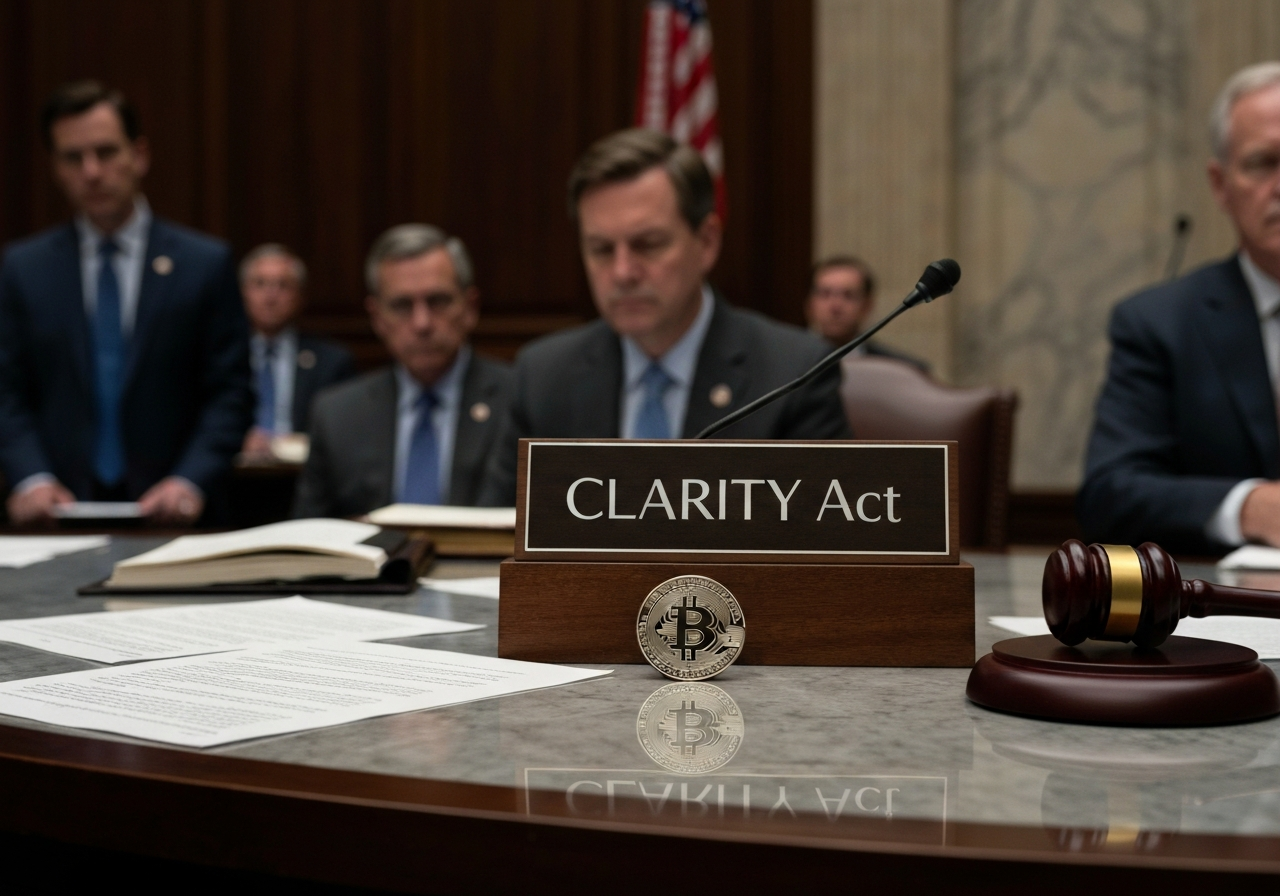
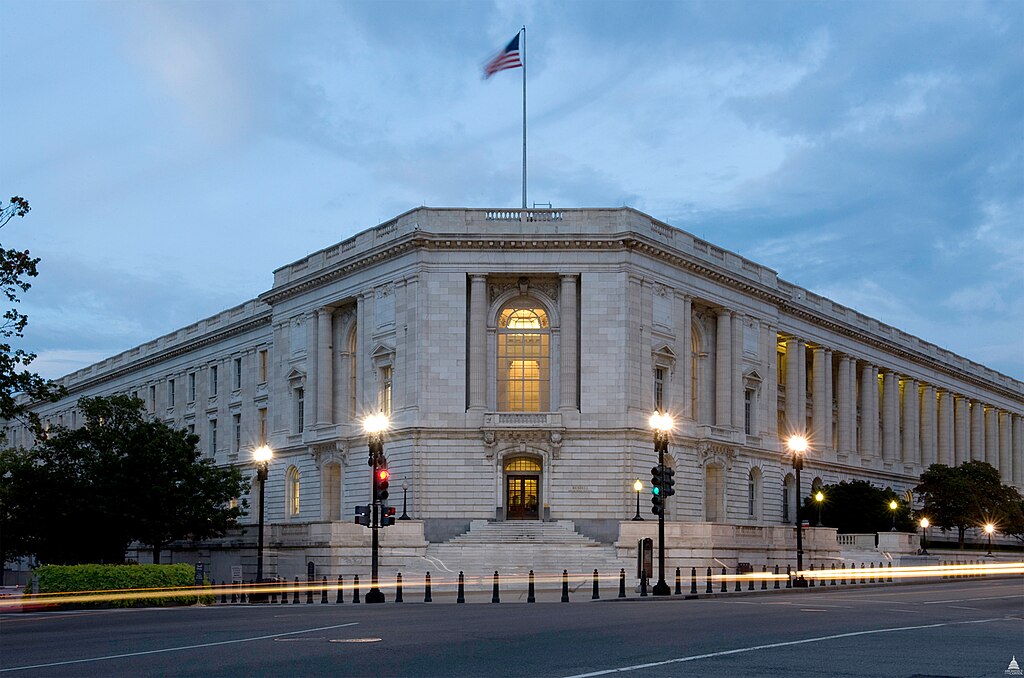
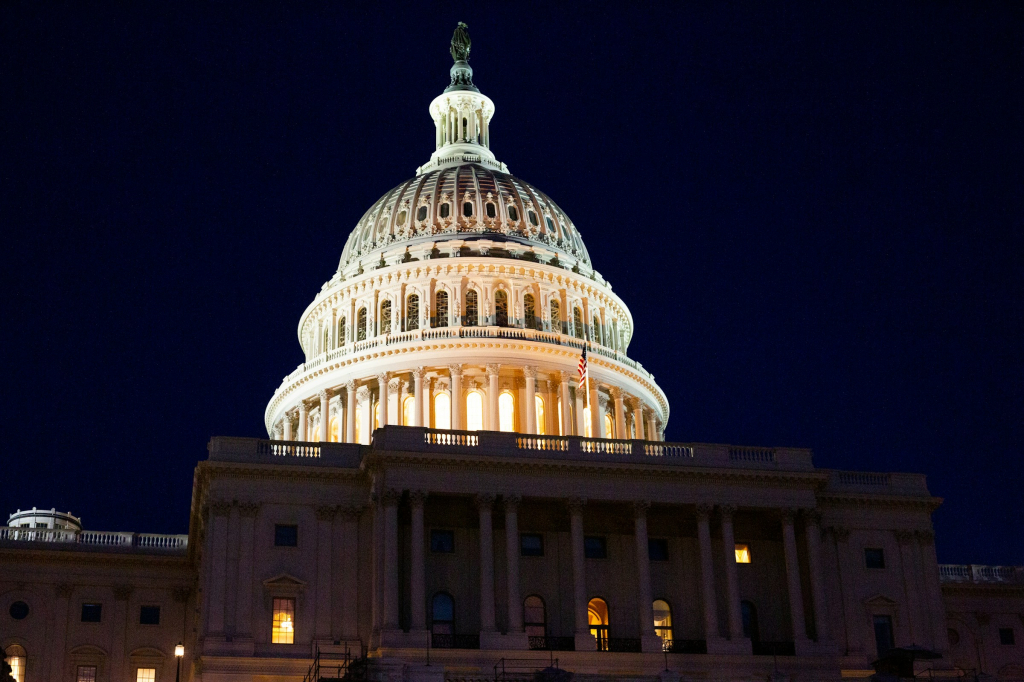
The U.S. Senate Banking Committee has advanced the sweeping crypto market structure proposal known as the 'Clarity Act,' a procedural win that signals growing momentum in Washington—even as analysts warn the bill still faces meaningful hurdles before it can become law.
In a vote reported Thursday U.S. Eastern Time (ET), the committee moved the legislation forward 15–9. The bill aims to create a comprehensive federal framework for regulating digital assets, clarifying oversight responsibilities across agencies and setting guardrails for industry participants that have long operated under a patchwork of enforcement actions and state-level rules.
Notably, Democratic senators Ruben Gallego and Angela Alsobrooks supported the measure, underscoring the degree to which crypto policy has shifted from a purely partisan fight toward a negotiated market-structure debate. Still, Wall Street remains cautious: TD Cowen raised its estimated odds of passage to roughly 33%–40% while emphasizing that substantive disputes remain unresolved. Benchmark analysts likewise said current support levels do not guarantee the bill can clear the full Senate.
The Clarity Act’s progress follows earlier delays tied to contentious issues including stablecoin revenue-sharing, potential conflicts of interest, and ethics provisions—fault lines that have repeatedly complicated efforts to build durable bipartisan coalitions on crypto regulation. With the Commodity Futures Trading Commission (CFTC) positioned as a central regulator under various market-structure proposals, lawmakers have also been pressing to stabilize the agency’s leadership.
Separately, senior members of the U.S. House of Representatives urged President Trump to nominate a full slate of CFTC commissioners, according to CoinDesk. House Agriculture Committee Chair Glenn “GT” Thompson and Rep. Angie Craig called for four new nominees—two Republicans and two Democrats—arguing a fully staffed five-member commission would better serve the public interest. The push comes as the CFTC is increasingly viewed as a pivotal authority in drafting and enforcing rules that could shape spot and derivatives crypto markets.
Regulatory developments coincided with continued institutional activity in crypto-linked markets. U.S.-listed spot XRP exchange-traded funds recorded net inflows of $10.87 million on Thursday ET, citing SoSoValue data. Bitwise’s XRP ETF led the day with $6.90 million in inflows, bringing its cumulative net inflows to $460 million. Grayscale’s XRP Trust ETF added $1.67 million, lifting cumulative inflows to $129 million. Total net assets across U.S. spot XRP ETFs stood at about $1.184 billion, with the products representing roughly 1.33% of XRP’s market capitalization, the report said.
ETF issuers also continued to iterate on filings as the Securities and Exchange Commission (SEC) reviews a widening pipeline of crypto products. Bloomberg ETF analyst James Seyffart said Grayscale submitted a second amended S-1 for a spot BNB ETF, while VanEck filed a fifth amended prospectus for its own BNB ETF. Canary Capital reportedly filed a first amendment related to a staking TRX/Tron ETF, and T. Rowe Price submitted a fourth amended filing tied to an actively managed crypto ETF—moves typically interpreted as responses to SEC feedback.
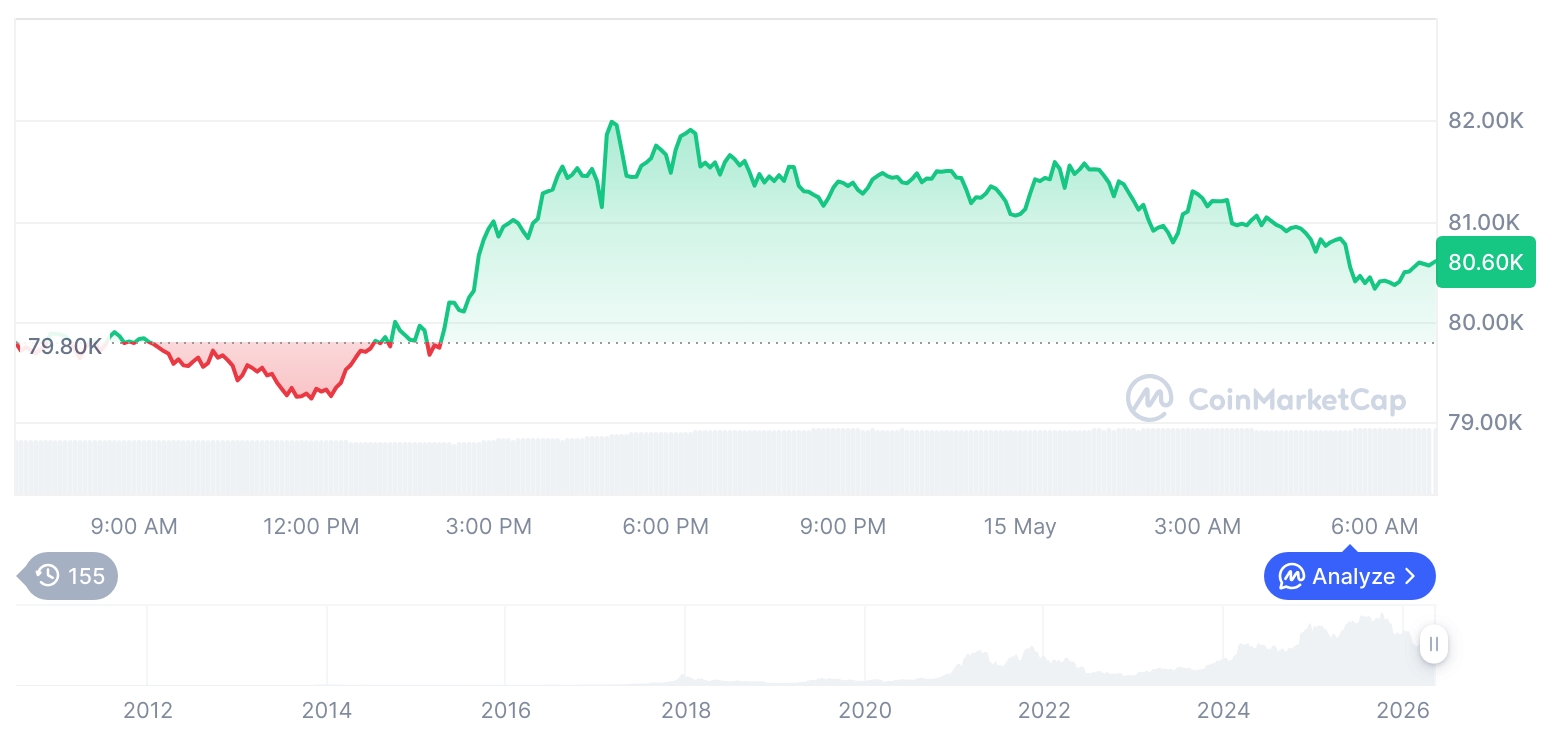
On-chain data added to the market narrative of large-holder positioning. Onchain Lens data cited by Odaily indicated BlackRock withdrew 1,768 Bitcoin (BTC)—worth roughly $143 million at the time—from Coinbase, a type of transfer often associated with custody operations or fund-related wallet management. In a separate alert, four wallets withdrew 89,026 Ether (ETH), worth about $198 million, from FalconX and Kraken; while exchange outflows can suggest reduced near-term sell pressure, the entities and intent behind the transfers were not confirmed.
In DeFi infrastructure, protocol Lombard said it is phasing out LayerZero and migrating more than $1 billion in Bitcoin-backed assets to Chainlink’s cross-chain interoperability protocol, 'CCIP.' The affected assets include Lombard-issued Bitcoin-related tokens such as LBTC and BTC.b, with initial migrations spanning Solana, Etherlink, Berachain, Con, and TAC. The shift comes as cross-chain security has faced renewed scrutiny following a reported $292 million exploit involving a LayerZero bridge connected to Kelp DAO, accelerating broader industry moves away from certain bridging routes.
Institutional interest in spot Bitcoin exposure also remained in focus. Abu Dhabi sovereign wealth fund Mubadala reportedly increased its holdings of BlackRock’s spot Bitcoin ETF, pushing its position beyond $565 million—another data point reinforcing the gradual normalization of Bitcoin ETF allocation among large global asset owners.
Meanwhile, traditional market incumbents signaled concerns about emerging on-chain derivatives venues. CME Group and the New York Stock Exchange called for stronger oversight of Hyperliquid, citing worries over potential market manipulation and sanctions evasion, according to Odaily. Hyperliquid’s policy arm responded that on-chain perpetual futures markets can be more transparent and efficient and should be addressed within a regulatory framework rather than outside it.
Geopolitical risk lingered in the background. An Israeli senior official said Thursday local time that Israel was preparing to resume military operations against Iran, potentially lasting days to weeks, and that the country was awaiting President Trump’s final decision, Odaily reported—an escalation risk that could feed into broader macro volatility affecting crypto as a risk-sensitive asset class.
For now, the Senate committee vote provides the crypto industry its clearest legislative signal in months: Washington is edging toward rules-based oversight. Whether the Clarity Act can bridge remaining policy divides—and whether regulators like the CFTC can be fully staffed in time to execute any new mandate—will likely determine how quickly the U.S. market shifts from enforcement-led ambiguity to a standardized federal regime.



















Comment 0