

 News
News  Coin Information
  About us
  Customer Service




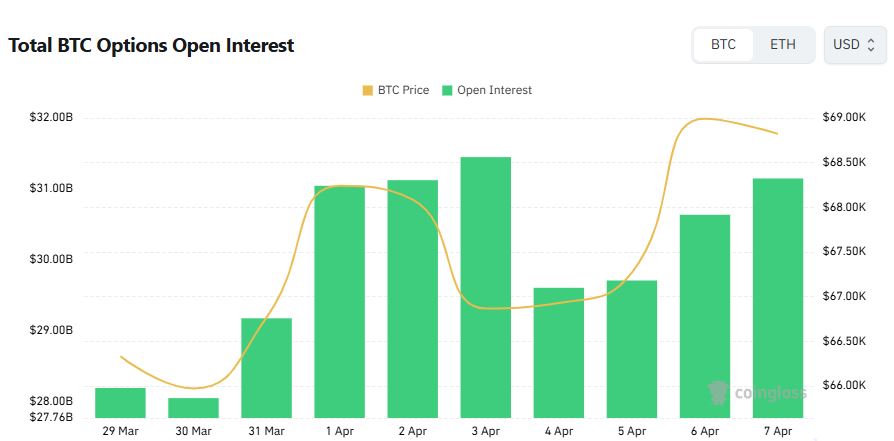
Bitcoin and Ethereum are experiencing notable price corrections as a combination of macroeconomic shifts and escalating geopolitical tensions weighs heavily on crypto markets. Bitcoin is currently consolidating around the $68,000 support level, while Ethereum trades just above the critical $2,000 mark.
Citigroup recently revised its Federal Reserve rate cut forecast, pushing the expected timeline from June to September. The adjustment follows stronger-than-anticipated U.S. employment data for March and persistent inflation concerns. The bank now projects rate reductions occurring in September, October, and December. This delay has dampened investor appetite for high-risk assets, with Bitcoin and Ethereum feeling the most immediate impact across financial markets.
Adding to the bearish sentiment, rising geopolitical tensions in the Middle East are fueling a broader risk-off environment. President Donald Trump's rejection of Iran's temporary ceasefire proposal, combined with ongoing U.S.-Israeli military operations near Iran's Kharg Island and the Strait of Hormuz, has prompted traders to reduce exposure to volatile assets like cryptocurrencies.
Despite the short-term selling pressure, institutional demand remains surprisingly resilient. On April 6th, Bitcoin spot ETFs recorded net inflows of $471 million, while Ethereum spot ETFs attracted $120 million — with zero outflows reported across all ten tracked funds. This signals that long-term investor confidence in digital assets has not been significantly shaken.
Looking ahead, Bitcoin must hold above $67,300 to maintain recovery momentum toward the $70,000–$72,000 range. A breakdown below $65,000, however, could accelerate further losses. For Ethereum, defending the $2,000 psychological level is critical. A sustained hold could trigger a rebound toward $2,200, while a breach may push prices down to $1,900.
Traders should closely monitor Fed policy developments and geopolitical headlines for near-term directional cues.

















Comment 0