

 News
News  Coin Information
  About us
  Customer Service



Geopolitical risk and a fast-moving sector rotation collided this week, hitting AI semiconductor stocks just as the rally was showing signs of fatigue. The selloff has revived a familiar debate across global markets: is the AI buildout losing steam, or are investors simply repricing a trade that had become too crowded and too leveraged?
The immediate catalyst was an escalation in U.S.-Iran tensions. As Washington expanded large-scale airstrikes and Tehran threatened neighboring states and key energy corridors, ceasefire expectations that had lingered for weeks unraveled. Markets were reminded that a temporary pause in fighting is not the same as a durable end to conflict. Crude prices jumped on fears of supply disruptions through the Middle East, adding an inflationary impulse at a time when risk assets were already vulnerable.
That shock landed directly on the semiconductor complex. The Philadelphia Semiconductor Index fell more than 20% from its June peak, sliding into bear-market territory. Major AI-linked names such as NVIDIA ($NVDA) and Micron Technology ($MU) dropped sharply, and the downdraft spread across Asian chip exporters in South Korea, Taiwan, and Japan. But the war headlines alone do not explain the violence of the move. Beneath the surface, a broad ‘rotation’ was already underway.
After a year in which AI hardware absorbed disproportionate inflows, capital shifted toward financials, energy, healthcare, and other sectors that had lagged the megacap-led run. The question for investors is not whether AI as an industry is “over,” but whether AI-related equities had priced in near-perfect execution—and therefore became vulnerable to any shock that could puncture sentiment.
Another “DeepSeek moment” for hardware?
Adding fuel to the pullback was the release of a new open-source model, GLM-5.2, by China-based Z.ai. The model is reported to handle up to 1 million tokens of context and to be optimized to reduce inference costs. Almost immediately, investors revisited a worry that surfaced during last year’s ‘DeepSeek moment’: if software becomes dramatically more efficient, will the world need fewer GPUs, less high-bandwidth memory (HBM), and fewer data centers?
On its face, the logic is coherent. If Big Tech’s data center and semiconductor investment plans overshoot true demand, cheaper and more efficient models would pressure the hardware supply chain—GPU vendors, memory producers, server makers, and even power and networking infrastructure.
Yet GLM-5.2 does not, by itself, prove that compute is becoming optional. A model capable of processing extremely long context windows is arguably evidence of more powerful AI becoming available at a lower unit cost, rather than evidence that compute demand is disappearing. That distinction matters because of ‘Jevons paradox’—the idea that efficiency gains can increase total consumption by lowering costs and expanding use cases. Better fuel economy did not reduce driving; cheaper internet did not reduce data usage. AI may follow the same pattern: lower per-task costs can unlock far more tasks.
If inference costs fall meaningfully, some enterprises might cut budgets. But many are more likely to expand AI into customer support, software development, marketing, research, and finance—potentially running hundreds of AI agents where they previously used one chatbot. The last time investors declared the AI infrastructure cycle over, global data center investment ultimately grew. Declaring the cycle finished simply because a new low-cost model emerged is premature.
Why South Korea’s market swung harder
South Korea’s equity market suffered an outsized shock due to a combination of concentration and leverage. Samsung Electronics and SK hynix dominate the KOSPI’s index weighting, amplifying both rallies and drawdowns. At the same time, retail participation through margin financing and single-stock leveraged products had built up significantly.
During the selloff, overseas market estimates suggested roughly 1.2 million domestic leveraged accounts faced margin calls, with around 350,000 forced liquidations. Accounts are not the same as individual investors, but the figures underscore how much of the market’s upside had been powered by debt.
In highly leveraged markets, declines rarely remain orderly. When prices fall, investors must post additional collateral or sell. If they cannot, brokerages liquidate positions regardless of fundamentals. A margin call does not wait for next quarter’s HBM guidance—it sells today. Forced selling can then trigger fresh margin calls, setting off a reflexive cycle. Pressure originating in Korea can spill into chip stocks in Japan and Taiwan, and even into U.S. AI hardware names, as “good companies” get sold alongside the rest.
Charts broke, but demand signals haven’t vanished
Technically, semiconductor price action has clearly deteriorated: leaders broke key support levels and the sector entered a downtrend. In that environment, it is risky to assume that “good earnings” will automatically trigger a rebound, because sentiment and positioning can take time to reset.
Still, the selloff should not be confused with a collapse in underlying orders. Taiwan Semiconductor Manufacturing Company (TSMC) reported record second-quarter profit and raised its full-year revenue outlook, while outlining plans to invest an additional $100 billion in U.S. production capacity to meet AI chip demand. ASML Holding ($ASML) also increased its revenue guidance, citing ongoing demand for advanced AI semiconductors, and pointed to extreme ultraviolet (EUV) lithography tool orders extending into 2028 as it plans capacity expansion.
Ironically, markets sold despite those strong signals. The explanation is less about deteriorating business conditions and more about elevated expectations. When a stock has already priced in flawless growth, merely ‘good results’ do not provide enough incremental surprise. Strong demand can be real without guaranteeing an immediate stock rebound—business momentum and share price performance are not synonymous.
The trap of “cheap” P/E ratios
As chip stocks sank, some investors argued the sector looked attractive because price-to-earnings (P/E) multiples had compressed—particularly in memory. But for cyclical industries, a low P/E is not automatically a bargain signal. When memory prices rise and profits surge, the denominator (earnings) expands, making valuations appear low even after significant price gains. If earnings are near a cycle peak, the P/E can snap higher later as profits normalize.
At cycle tops, semiconductors can look “cheapest”; at cycle bottoms, they can look “most expensive.” The key is not today’s P/E number, but whether earnings are peaking or whether AI and HBM demand can extend the upcycle. This time, there are structural differences: AI accelerators require rapidly increasing memory capacity, and advanced HBM production is more capacity- and process-intensive than conventional memory. Big Tech companies have also expanded long-term contracts to secure supply. If those dynamics persist, the cycle could last longer than in prior eras. If data center capex slows or Chinese suppliers ramp faster than expected, the profit outlook could roll over earlier.
Does better AI mean less hardware—or more?
The efficiency debate often misses a crucial nuance: AI getting cheaper and AI becoming more valuable can happen simultaneously. Models have progressed from writing simple emails to performing complex coding, document analysis, and workflow automation. If tasks that once took a human 10 hours can be finished in one hour with AI assistance, enterprises may not stop at cost savings—they may expand usage, upgrade plans, and onboard more employees as users.
Per-token costs may decline, but if usage and workload expand faster, total compute demand can keep rising. Markets are now swinging between two competing narratives: ‘efficiency reveals overinvestment’ versus ‘efficiency explodes adoption, requiring more infrastructure.’ The future balance is still unclear, but a single model release is not enough evidence to declare that trillions of dollars in AI infrastructure spending has suddenly become unnecessary.
Money isn’t leaving AI—it’s moving sideways
The week’s price action looks less like the end of AI and more like a rotation away from the most crowded, highest-multiple trades. Some flows have moved from AI semiconductors and richly valued tech into financials, energy, transportation, and healthcare.
Healthcare, in particular, has attracted fresh thematic interest. Eli Lilly ($LLY) agreed to acquire atai Becverley in a deal featuring $2.8 billion upfront and up to $3.8 billion in total contingent consideration, signaling that major pharmaceutical companies are moving more aggressively into psychedelic-based mental health treatments. The point is not that capital has disappeared—rather, it is being reallocated from areas that had become one-way trades into sectors with either steadier earnings or less valuation strain.
Even within technology, leadership can rotate from hardware toward software, payments, or platforms. AI may still be expanding, but the market’s prior formula—‘anything semiconductor wins’—is being challenged.
Three checkpoints for Korean investors
For investors in Korea, three distinctions matter. First, separate the industry trajectory from stock price behavior. Continued AI data center investment does not guarantee an immediate rebound in Samsung Electronics or SK hynix, just as a sharp drawdown does not prove that AI demand has vanished. Second, focus on the direction of earnings expectations rather than headline P/E levels—HBM pricing, order visibility, customer capex plans, inventories, and capacity expansions are more informative than “low multiple” arguments. Third, do not fight deleveraging. When forced liquidations are still active, even fundamentally strong names can fall further than expected because flows, not valuation, set the marginal price.
Crypto markets are not immune
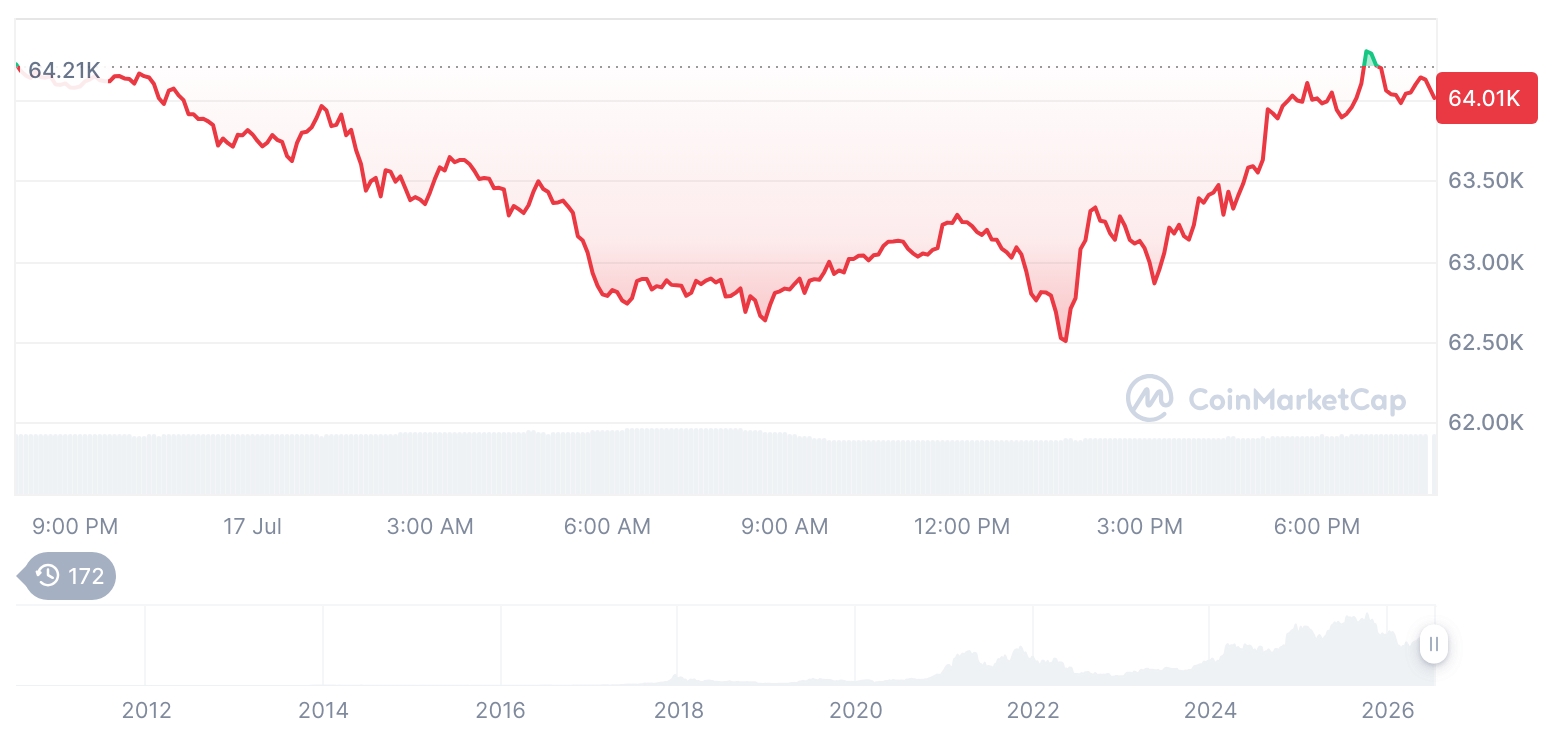
The dynamics on display also resonate with digital asset traders. In leveraged markets, small shocks can spark liquidations, and liquidations can accelerate declines. Investors holding stocks, futures, and crypto may sell one asset class to cover losses or meet margin requirements in another. If war-driven oil spikes lift inflation fears, expectations for rate cuts can fade, pressuring risk assets broadly. AI equities and Bitcoin (BTC) may appear uncorrelated day to day, but when global ‘liquidity’ tightens, they can be sold in tandem.
This week did not prove that AI has failed. It showed that when war risk, high expectations, leverage, and rotation converge, even strong companies can be repriced abruptly. AI infrastructure investment continues, but the belief that AI-related stocks will rise without interruption has been broken. The market is now forced to hold two ideas at once: AI can keep growing, and AI stocks can still fall.

















Comment 0