

 News
News  Coin Information
  About us
  Customer Service


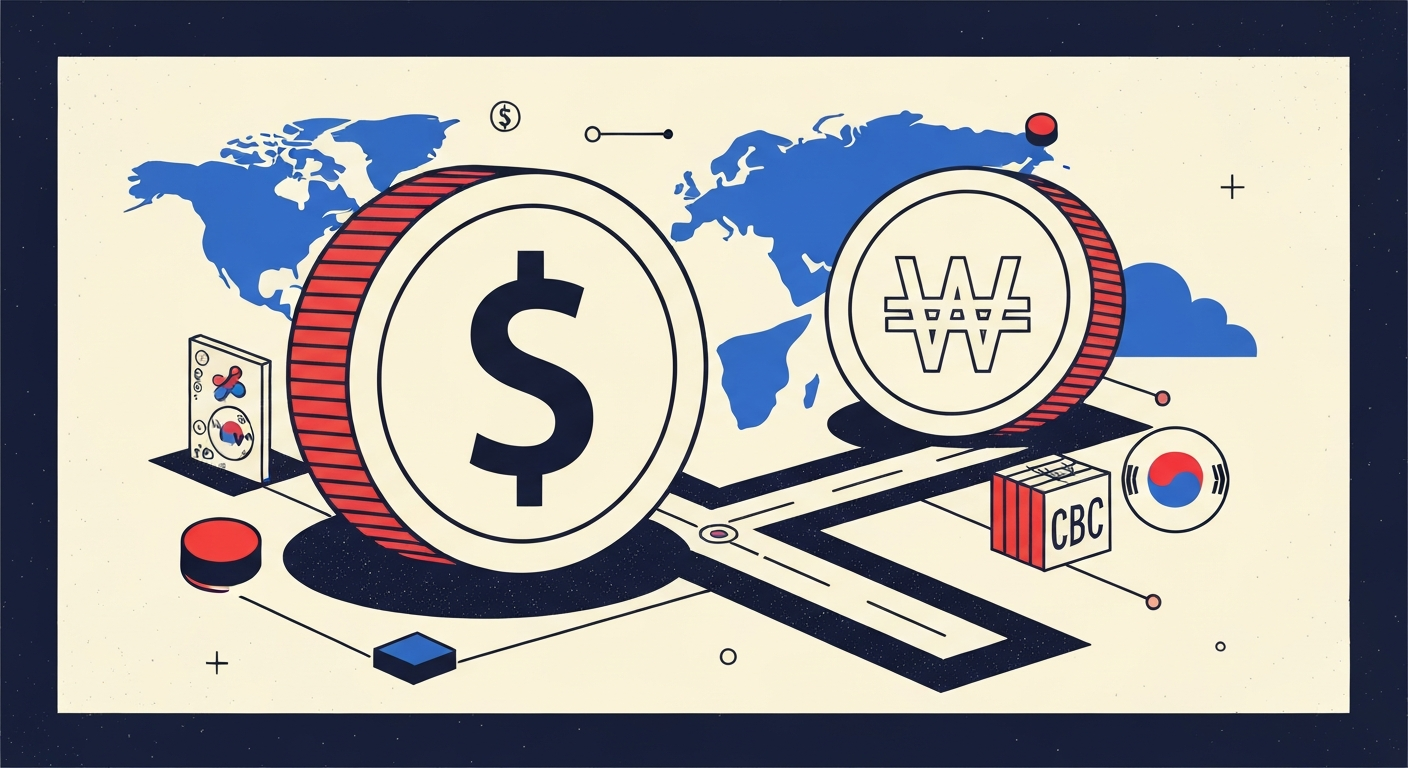
While stablecoins continue to dominate headlines and regulatory agendas, a far larger shift is unfolding quietly inside the global banking system: trillions of dollars are already moving via tokenized bank deposits, laying the groundwork for a new, ‘three-layer’ onchain money architecture that could reshape how value moves and settles worldwide.
That is the central takeaway from a McKinsey & Company report published on May 21 (UTC), titled Beyond stablecoins: The new architecture of onchain money. The report argues that the market’s fixation on stablecoins—often amplified by ‘FOMO’—obscures where the most systemically significant adoption is happening: within the balance sheets and payment rails of global systemically important banks (G-SIBs).
McKinsey estimates that, as of early 2026, total stablecoin supply sits just above $300 billion, with roughly 99% denominated in U.S. dollars and about 85% issued by Circle and Tether. More telling, the report notes that stablecoin supply has been broadly flat over the past six months, even as tokenized non-cash assets—such as onchain Treasury funds and private credit—grew by more than 30% in value over the same period.
The mismatch challenges a common assumption in crypto markets: that stablecoins will become the default ‘base settlement asset’ and that tokenized assets will expand in lockstep behind them. Instead, McKinsey’s reading of Artemis Analytics data suggests stablecoins remain relatively small in real-economy payments. In 2025, stablecoins facilitated around $400 billion in organic payment activity—material for crypto-native commerce, but tiny compared with the vast volumes that flow through global payment systems each year.
Meanwhile, large banks have been scaling tokenized deposit systems that, in aggregate, are estimated to move more than $4 trillion annually—an order of magnitude larger than stablecoin payment activity and increasingly embedded into existing institutional workflows such as treasury management, liquidity sweeps, and intragroup funding.
McKinsey highlights J.P. Morgan’s Kinexys platform as a key example, estimating it processes more than $1 trillion per year in tokenized deposit transfers—supporting activity such as internal treasury movements, payments between affiliated entities, and institutional settlement. Other major financial institutions, including Citibank and BNY, have publicly disclosed live or pilot tokenized deposit initiatives, underscoring that the banking sector is not waiting on public stablecoin rails to modernize money movement.
In McKinsey’s framework, the future is not a winner-takes-all contest between banks and stablecoin issuers, but a ‘three-layer monetary stack’ in which different forms of onchain money specialize for different functions.
At the top layer are stablecoins—described as ‘money in motion’—optimized for rapid, often cross-border transfers and automated payment processing, particularly where access to traditional banking remains limited. The second layer is tokenized bank deposits—‘money at rest’—intended for large-scale corporate balances, institutional payments, and bank-to-bank settlement within regulated banking perimeter. The third layer is tokenized central bank money—CBDCs—as ‘settlement money’, designed to remove counterparty risk across systems and provide ‘irrevocable finality’ for high-integrity settlement, including potentially across borders.
The report’s sharper critique focuses on why banks are structurally inclined to favor tokenized deposits over third-party stablecoins. The difference is not merely technical—it is balance-sheet deep. When a customer converts deposits into a third-party stablecoin, the deposit liability leaves the originating bank, and the economic value chain shifts toward the stablecoin issuer and its reserve portfolio. McKinsey argues that, in a typical conversion, only a minority—around 15%—returns to the banking system via wholesale reserves, while the remainder is invested off balance sheet in assets such as U.S. Treasuries.
For banks, the risk is not just funding outflows, but the erosion of the ‘primary customer relationship’. If payments and balances migrate to external token networks, banks can lose their position as the default service provider for transactions, compressing traditional profitability levers such as net interest margin (NIM) and adding pressure on metrics like the liquidity coverage ratio (LCR).
Tokenized deposits, by contrast, keep the full amount on the bank’s balance sheet. Rather than creating a new private currency, the bank represents an existing deposit liability on blockchain rails—preserving the legal, regulatory, and accounting framework of deposits while importing attributes typically associated with programmable money, such as atomic exchange and streamlined reconciliation.
McKinsey also observes that regulation may tilt the playing field toward bank-issued instruments. Stablecoins are increasingly governed by dedicated regimes—such as the EU’s MiCA framework and proposed U.S. legislation including the GENIUS Act—bringing clearer rules on licensing, reserves, and consumer protection, but often restricting features like yield distribution to holders. Those constraints may limit the appeal of stablecoins for yield-sensitive corporates managing large cash balances.
Tokenized deposits, on the other hand, typically fall under existing bank regulation in most jurisdictions and—so long as they remain on balance sheet—tend to be treated similarly to traditional deposits in prudential terms. That continuity, McKinsey suggests, could make tokenized deposits a more natural fit for institutional treasury use cases where interest-bearing balances and familiar regulatory treatment matter.
Still, the report cautions that tokenized deposits face a serious structural disadvantage: fragmentation. Many tokenized deposit systems operate on permissioned, bank-specific ledgers, limiting ‘fungibility’ across issuers. If a tokenized dollar issued by Bank A cannot be easily exchanged for a tokenized dollar issued by Bank B, the industry risks recreating the very walled gardens blockchains promised to overcome—just in onchain form.
To address interoperability, McKinsey outlines three approaches. The first is ‘shared mainlands’, where commercial bank money and wholesale central bank money coexist on a common ledger—an approach reflected in initiatives such as the Bank for International Settlements’ Project Agora and the UK’s tokenized sterling deposit efforts. The second is an orchestration layer that coordinates value exchange across systems without requiring a single shared ledger, citing network-led approaches such as Swift and Partior. The third is ‘bridges between islands’, using cross-chain communication and atomic settlement tooling—an area where infrastructure providers like Chainlink and networks like Canton are often positioned.
For South Korea, the report’s implications extend beyond the country’s ongoing discussion around a won-denominated stablecoin. McKinsey’s data suggests the more consequential battlefield may be deposit tokenization inside regulated banks, raising questions about whether Korean commercial banks are keeping pace with G-SIB deployments and how the Bank of Korea’s wholesale CBDC experiments should be interpreted as part of a broader, layered settlement architecture. The report also implies that digital asset firms may need to refine their positioning as banks move deeper into tokenized money—potentially opening collaboration opportunities in areas such as RWA tokenization infrastructure, cross-chain interoperability, compliance tooling, and custody technology.
McKinsey ultimately frames stablecoins as a starting point rather than the full story. The deeper transformation, it argues, is the emergence of an integrated stack where stablecoins, tokenized deposits, and CBDCs coexist—each serving distinct roles in a reassembled global monetary system. As that stack takes shape, the question for policymakers and market participants is less about whether onchain money will expand, and more about which layer will dominate which function—and who will control the rails.
🔎 Market Interpretation
- Stablecoins are not the main scale story (yet): McKinsey estimates stablecoin supply at just over $300B by early 2026, with issuance concentrated in USD (~99%) and dominated by Circle/Tether (~85%). Supply has been flat for ~6 months even as tokenized non-cash assets (Treasury funds, private credit) rose 30%+.
- Tokenized deposits already move “real” institutional volume: Large banks’ tokenized deposit systems are estimated to move $4T+ annually, far exceeding the reported ~$400B in 2025 “organic” stablecoin payment activity.
- Adoption is occurring inside G-SIB rails: The report argues the most systemically important shift is occurring within regulated bank infrastructure (treasury ops, liquidity sweeps, intragroup funding), not primarily on public stablecoin networks.
- Three-layer onchain money stack is emerging: McKinsey frames a coexistence model—stablecoins (money in motion), tokenized deposits (money at rest), and CBDCs (settlement money)—rather than a winner-take-all outcome.
- Bank incentives favor deposits over third-party stablecoins: Converting bank deposits into external stablecoins can move liabilities off a bank’s balance sheet and shift economics to stablecoin issuers; McKinsey suggests only ~15% may flow back via wholesale reserves, with the rest invested off balance sheet (e.g., Treasuries).
- Key risk is relationship and profitability erosion: If balances/payment activity migrate to external token networks, banks risk losing the primary customer relationship and pressure on NIM and LCR.
- Regulatory structure may advantage tokenized deposits for corporates: Stablecoin rules (e.g., MiCA, proposed U.S. GENIUS Act) can restrict features like yield to holders, potentially reducing appeal for yield-sensitive corporate cash management; tokenized deposits typically remain under existing bank rules when on balance sheet.
💡 Strategic Points
- Positioning by function, not ideology: Expect segmentation where stablecoins win in cross-border/automation contexts and low-banking-access corridors, while tokenized deposits dominate institutional cash, intragroup flows, and regulated settlement pipelines.
- Watch bank platforms as leading indicators: J.P. Morgan’s Kinexys is cited at $1T+/year in tokenized deposit transfers; similar efforts at Citi and BNY suggest an accelerating competitive cycle among top banks.
- Interoperability is the main bottleneck for tokenized deposits: Permissioned, bank-specific ledgers risk “onchain walled gardens” where tokenized money is not fungible across issuers—limiting network effects and scalability.
- Three interoperability paths to track:
- Shared mainlands: commercial bank money + wholesale central bank money on a common ledger (e.g., BIS Project Agora; UK tokenized sterling deposit efforts).
- Orchestration layer: coordinated exchange across systems without one shared ledger (e.g., Swift, Partior).
- Bridges between islands: cross-chain communication + atomic settlement tooling (e.g., infrastructure like Chainlink, networks like Canton).
- For digital asset firms: pivot from “stablecoin-first” to “stack-enabler”: Near-term opportunities may concentrate in RWA tokenization infrastructure, interoperability, compliance/identity tooling, custody, and institutional-grade settlement workflows.
- South Korea-specific implication: The key competitive question is whether Korean banks are matching G-SIB tokenized deposit deployments and how Bank of Korea wholesale CBDC experiments fit into a layered settlement strategy—not solely whether a KRW stablecoin launches.
- Policy focus shifts to “who controls the rails” per layer: Policymakers and market participants should evaluate governance, risk, and competition dynamics by layer (payments UX vs banking perimeter vs final settlement).
📘 Glossary
- Stablecoin: A token designed to maintain a stable value (often pegged to USD) and used for transfers and onchain payments.
- Tokenized bank deposit: A blockchain representation of a commercial bank deposit liability that remains on the issuing bank’s balance sheet under existing banking rules.
- CBDC (Central Bank Digital Currency): Digital central bank money; in this article, emphasized as wholesale settlement money to reduce counterparty risk and enable finality.
- Three-layer onchain money architecture: A model where stablecoins (motion), tokenized deposits (rest), and CBDCs (settlement) coexist with specialized roles.
- G-SIB: Global Systemically Important Bank; large banks whose stability is critical to the global financial system.
- Atomic exchange/atomic settlement: A transaction design where the payment and asset transfer occur simultaneously or not at all, reducing settlement risk.
- Fungibility (in tokenized deposits): The ability for tokenized dollars from different banks to be interchangeable at par without friction.
- Permissioned ledger: A blockchain/network where participation is restricted to approved entities (common in bank-led deposit tokenization).
- NIM (Net Interest Margin): A bank profitability measure: interest earned on assets minus interest paid on liabilities, relative to earning assets.
- LCR (Liquidity Coverage Ratio): A regulatory metric requiring banks to hold sufficient high-quality liquid assets to withstand short-term stress.
- MiCA: The EU’s Markets in Crypto-Assets framework regulating crypto assets including stablecoins.
- GENIUS Act (proposed): Referenced U.S. stablecoin legislation proposal addressing licensing, reserves, and consumer protections.


















Comment 0