

 News
News  Coin Information
  About us
  Customer Service


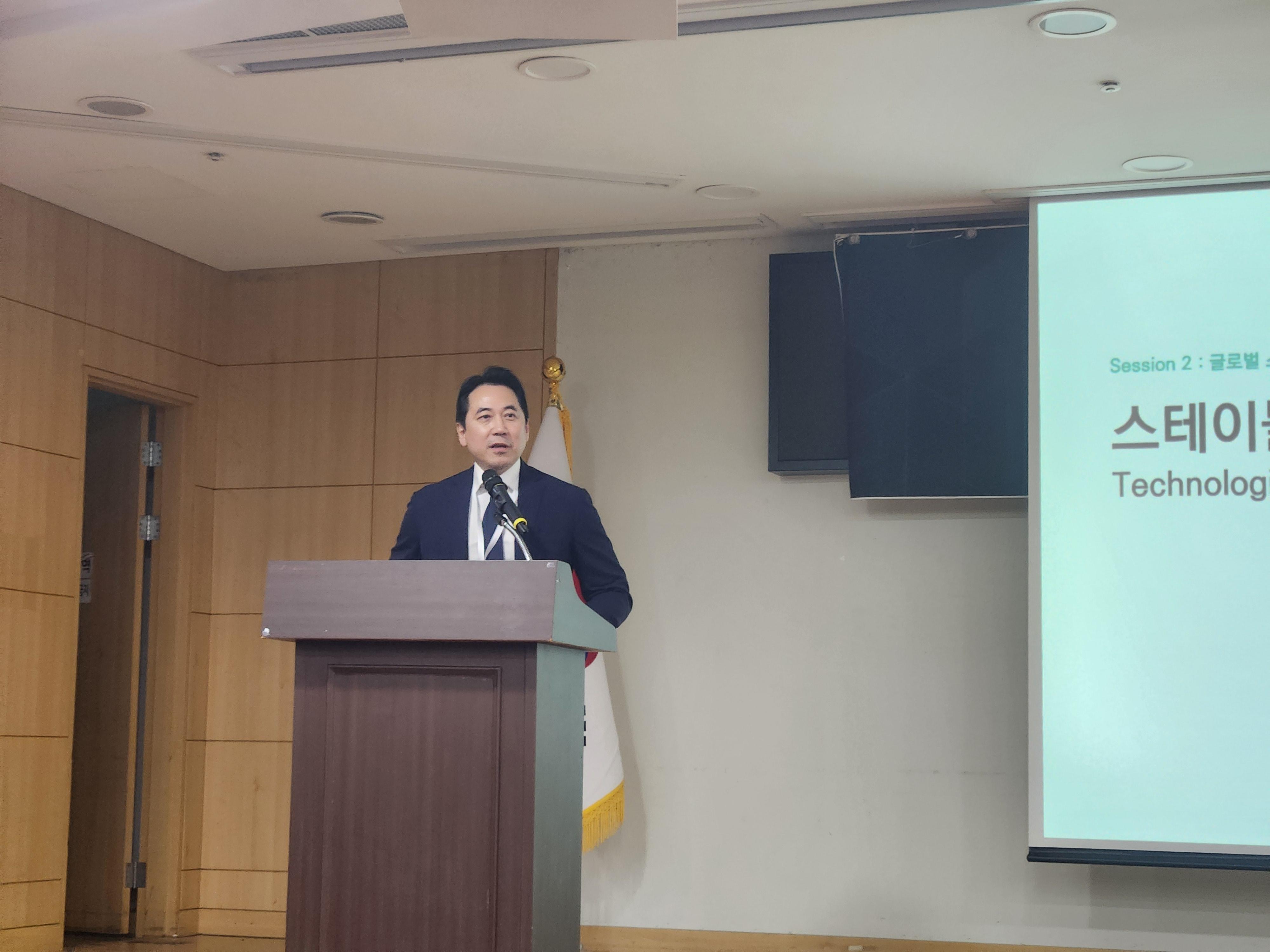
Stablecoins are emerging as the backbone of an increasingly automated payments landscape, with First Digital CEO Vincent Chok forecasting that AI-driven, agent-to-agent transactions could grow into a $3 trillion to $5 trillion market within the next five years. Speaking at a policy seminar in Seoul, Chok argued that the coming shift toward an 'agentic economy'—where software agents autonomously execute purchases, settlements, and financial decisions—will be difficult to scale without programmable, borderless digital cash.
Chok delivered the keynote on Tuesday UTC at the National Assembly Members’ Office Building in Yeouido, Seoul, during a forum titled “2026 Global Stablecoin Trends and Opportunities for Korea’s Digital Economy.” His remarks came as regulators worldwide accelerate efforts to define rules for stablecoin issuance, reserves, and consumer protection, while private-sector players push to expand tokenized cash beyond crypto trading into mainstream commerce and cross-border settlement.
“Agent-based payments are impossible without stablecoins,” Chok said, describing stablecoins as 'programmable money' designed to reduce friction in settlement and to operate across jurisdictions. He framed stablecoins’ evolution in phases—first as tools for payments and settlement, later expanding into decentralized finance—and now moving toward a new era where AI and bots become the dominant transaction counterparties.
Chok’s $3 trillion to $5 trillion projection is notable not only for its size but for what it implies about who—or what—will be transacting. “It means payments of that scale will be executed not by humans, but by AI and bots,” he said. In higher-income economies such as South Korea, Chok expects AI agents to function primarily as efficiency tools for consumers and businesses; in some emerging markets, he suggested they may become a practical means of access to basic economic services.
He also pointed to inclusion dynamics: with only a smartphone, individuals could use AI agents to participate in a range of economic activities and generate financial histories—potentially lowering barriers for lower-income or underbanked groups. If implemented responsibly, he argued, the trend could “bring the world closer together” by streamlining cross-border commerce and reducing reliance on legacy intermediaries.
Still, Chok acknowledged that an agentic economy built on stablecoins introduces new design challenges and risks. He highlighted questions around fee distribution models, 'gas fees' on public blockchains, trust between AI agents, and fraud prevention when automated systems transact at high speed. To manage these risks, he floated the need for verification frameworks such as KYA—“Know Your Agent”—an adaptation of compliance concepts that would aim to authenticate and monitor automated actors rather than only human account holders.
On currency competition, Chok said the market will require stablecoins backed by multiple fiat denominations. While he expects dollar-pegged tokens to retain dominance in the near term due to global dollar liquidity and integration with crypto markets, he urged consideration of a won-based stablecoin, arguing it could serve as a bridge connecting global investors with South Korea’s digital economy.
He emphasized that regulation and innovation must move in tandem. Predicting that stablecoin payments could expand more than tenfold over the next decade, Chok called on issuers and industry participants to prioritize consumer protection through 'self-regulation'—including transparency, governance standards, and robust operational controls. For stablecoins used as payment instruments, the secure custody of reserve assets is central, he added, because confidence can erode quickly when users question whether redemption will occur smoothly.
“The key to successfully operating a stablecoin is partnerships,” Chok said, stressing cooperation with banks and the importance of reliable redemption. Delays in cashing out can rapidly undermine trust, he warned, adding that capabilities across broker-dealers, banking networks, and asset management also matter for resilient issuance and reserve management.
The event was hosted by members of the Democratic Party’s Digital Asset Task Force, along with the Mutual Growth and Unification Forum, and co-organized by the Digital Convergence Industry Association, the Korea Web3 Blockchain Association, and the Digital Currency Governance Group. Local exchanges Bithumb, Coinone, and Korbit participated as sponsors, signaling the sector’s interest in shaping policy as South Korea debates frameworks that could influence a future Digital Asset Basic Act and a formal stablecoin rulebook.
With regulatory competition intensifying globally, the Seoul forum served as a checkpoint for how South Korea might balance institutional safeguards with industrial growth. Market participants are increasingly focused on whether the next wave of stablecoin adoption will be driven by consumer payments, enterprise settlement, or AI-native commerce—and on what governance standards will be required when software agents, not humans, become the primary users of digital money.









Comment 0