

 News
News  Coin Information
  About us
  Customer Service


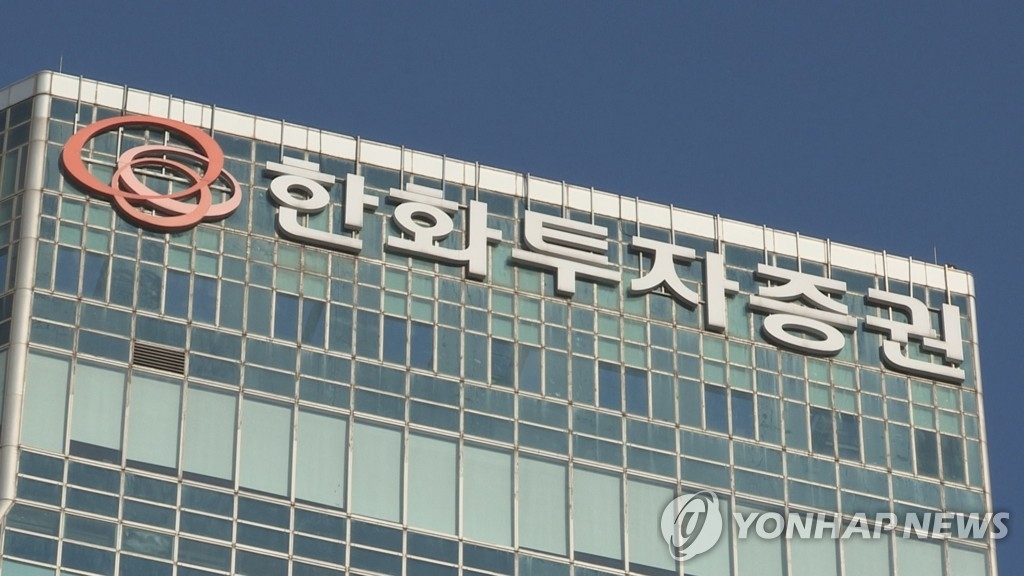
Hanwha Investment & Securities is turning to an internal AI competition to accelerate its digital transformation, aiming to move beyond experimentation and into deployable tools that can lift productivity and improve client-facing services.
The South Korea-based brokerage said Wednesday UTC that it will hold a ‘Digital Innovation AI Competition,’ designed as a hands-on program where employees build AI-driven outputs based on real problems encountered in day-to-day operations. Unlike a typical idea contest, participants are expected to produce working results and connect them to potential adoption in actual workflows, reflecting how financial firms are increasingly treating AI as a core lever for ‘operational efficiency’ and service enhancement.
A total of 30 teams will compete across four tracks: internal workflow automation, improvements to assigned tasks, enhancements to company services, and an open category. The structure leaves room for projects ranging from automating repetitive work such as internal reporting and document preparation to proposals that can deliver visible upgrades to the customer experience.
Teams will submit final deliverables by April 30 UTC, after which the company will evaluate the projects and select five winning teams. The total prize pool will be 7 million won (about $5,000), with the top award set at 3 million won.
The competition’s first phase is a bootcamp running from April 13 to 17 UTC, centered on ‘vibe coding’—a method that uses natural language prompts to generate code and quickly prototype digital products. The approach has gained traction as enterprises look for ways to shorten development cycles and lower the barrier for non-engineers to translate business ideas into functional prototypes.
During the bootcamp, teams will go through end-to-end implementation steps, including defining topics, reviewing outputs, using AI-assisted code editors, building web services, managing projects through GitHub, and developing user interfaces. The company framed the training as a practical pipeline to strengthen prototype-building capabilities rather than a purely theoretical upskilling program.
Kim Do-hyung, head of Innovation Support at Hanwha Investment & Securities, said the company expects employees to grow into leaders of digital innovation and emphasized support for producing tangible outcomes—tools built by staff that can solve frontline problems.
The initiative comes as securities firms across Asia expand the use of generative AI in areas such as research, customer support, internal controls, and automation. Industry watchers increasingly see competitive advantage shifting from simply adopting AI to demonstrating ‘time-to-value’—how quickly firms can build usable, compliant solutions that fit real operational processes while managing risks such as data leakage, model errors, and governance gaps.
For Hanwha Investment & Securities, the competition signals a push to institutionalize AI capabilities inside the organization—creating a repeatable pathway from business need to prototype and, ultimately, production-level deployment.
🔎 Market Interpretation
- From pilots to production: Hanwha Investment & Securities is shifting AI efforts from experimentation toward deployable, workflow-connected tools that measurably improve productivity and client services.
- Internal capability-building as strategy: By mobilizing employees—not only IT teams—the firm is institutionalizing AI know-how and creating a pipeline for continuous automation and service upgrades.
- Time-to-value becomes the differentiator: The program reflects an industry trend where competitive advantage hinges on how quickly firms can deliver usable, compliant AI solutions, not simply “having AI.”
- Operational risk awareness: The emphasis on real-work adoption aligns with sector concerns around governance, data leakage, and model errors—key barriers to scaling generative AI in finance.
💡 Strategic Points
- Competition format enables real adoption: Unlike idea contests, teams must submit working deliverables by April 30 and demonstrate applicability to actual workflows—raising the likelihood of post-contest deployment.
- Clear problem-to-solution tracks: 30 teams compete across internal workflow automation, assigned-task improvement, service enhancement, and open category, encouraging both efficiency gains (reporting/document prep) and customer-facing innovation.
- Bootcamp accelerates prototyping: April 13–17 training focuses on “vibe coding” and end-to-end delivery (topic definition → AI-assisted coding → web service build → GitHub project management → UI development), reducing barriers for non-engineers.
- Incentives and selection: Five winning teams share a 7 million won prize pool (top prize 3 million won), but the main incentive is organizational sponsorship for turning prototypes into production tools.
- Governance implication: To move prototypes into production, the firm will likely need standardized review gates (data handling, access control, auditability, model evaluation) to prevent AI errors from impacting compliance and customer trust.
- Best-fit near-term use cases: High-ROI targets include internal reporting automation, document drafting/standardization, knowledge search over internal policies, customer inquiry triage, and workflow assistants that reduce manual handoffs.
📘 Glossary
- Generative AI: AI models that create text, code, images, or other content based on prompts and examples.
- Vibe coding: A prompt-driven development style where users describe desired functionality in natural language and AI tools generate code to rapidly prototype applications.
- Workflow automation: Using software (in this case, AI) to reduce repetitive manual tasks such as reporting, document preparation, and routing approvals.
- Time-to-value: The speed at which an organization can turn an AI initiative into measurable business impact (usable tools, productivity gains, better service outcomes).
- Prototype: An early, functional version of a tool used to validate feasibility and usefulness before full-scale deployment.
- Production-level deployment: Releasing a tool for real operational use with reliability, security, monitoring, and support processes in place.
- Governance (AI governance): Policies and controls to manage AI risks—data privacy, security, compliance, accountability, and model performance.
- Data leakage: Unauthorized exposure of sensitive information (e.g., client data or internal documents) through tools, prompts, or integrations.




















Comment 0