

 News
News  Coin Information
  About us
  Customer Service


 Add as a preferred source on Google
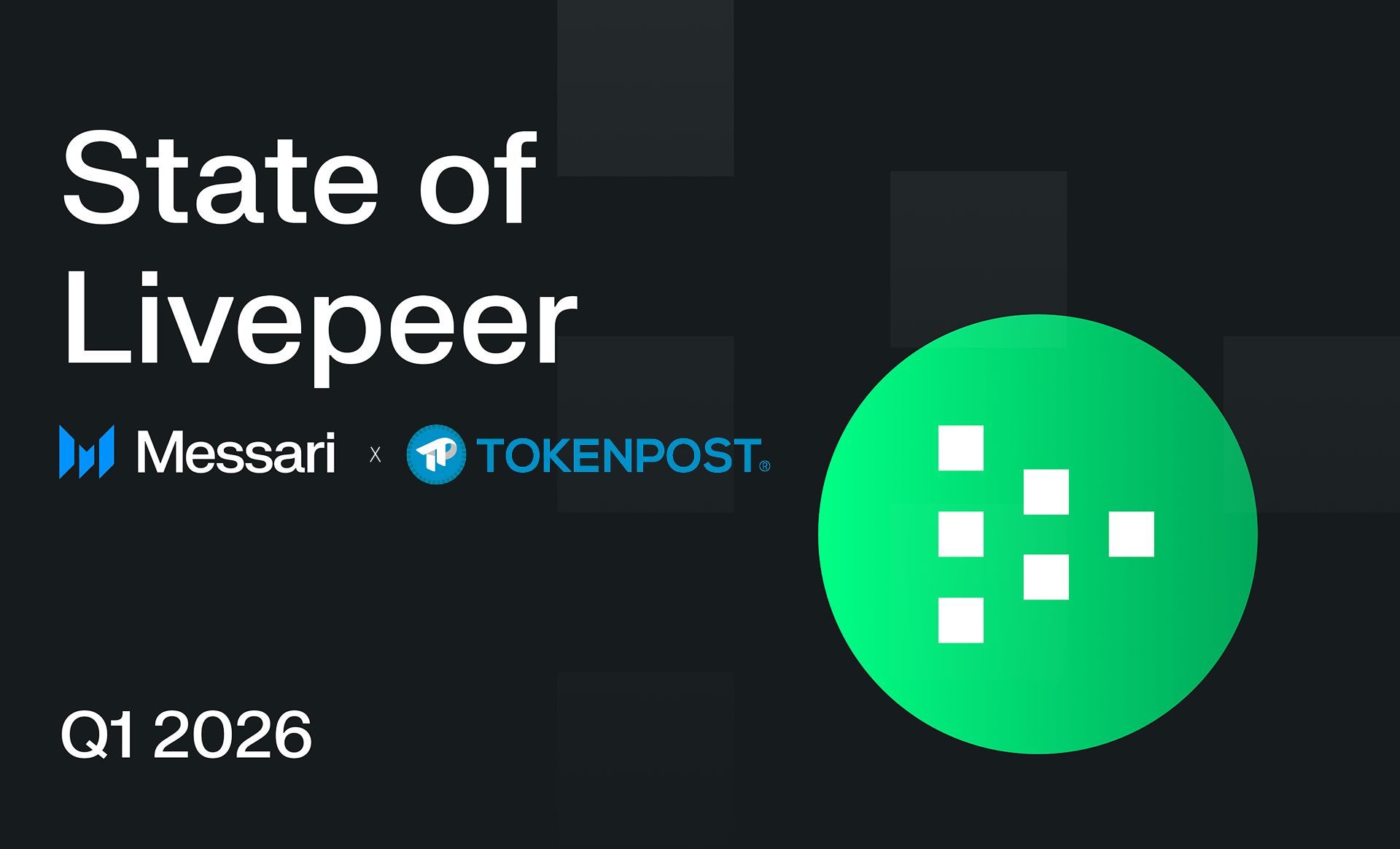
Livepeer (LPT) posted a sharp jump in network activity in the first quarter of 2026, as demand for real-time AI video workloads accelerated and pushed the decentralized GPU compute network deeper into a usage-led growth phase. A new report from Messari Research argues the quarter marked a clearer pivot away from inflation-driven incentives toward a model increasingly supported by fee-generating, production deployments.
According to Messari analyst Jake Koch-Gallup, Livepeer processed a record 134.4 million minutes in Q1 2026, up 71.9% quarter over quarter from 78.2 million minutes in Q4 2025. The report frames the surge as more than a one-off spike, pointing instead to expanding 'real usage'—with existing applications scaling in production and builders continuing to adopt the network for AI and agent-based workloads.
Livepeer operates as a decentralized marketplace for GPU resources, supporting live streaming, video transcoding, and increasingly AI video generation and inference. It aims to undercut traditional cloud providers on media workloads—targeting costs 60% to 85% lower—by pairing GPU-providing 'orchestrators' with 'delegators' who stake and assign Livepeer tokens. In recent quarters, Messari notes, the network’s center of gravity has shifted from conventional transcoding toward AI inference infrastructure.
That shift showed up in revenue composition. Messari estimates demand-side fees reached $257,300 in Q1, a 34.2% increase from the previous quarter, with AI-related fees accounting for roughly 60% of total protocol revenue—down from above 70% in the prior quarter, largely because non-AI demand also expanded. The broader takeaway, the report suggests, is not weakening AI traction but rather 'revenue diversification' as the network absorbs a wider mix of workloads.
Still, monetization per unit softened as throughput outpaced fee growth. Average revenue per 1,000 minutes fell 22% to $1.91 from $2.45 in Q4. Messari attributed the compression to a higher share of low-fee, high-volume workloads, early-stage price discovery for AI services, and efficiency improvements that reduced costs and—by extension—pricing power on certain tasks. For observers, the dynamic echoes a familiar infrastructure pattern: early demand expansion can prioritize adoption and capacity utilization, while pricing and margins mature later.
Within AI, however, the report pointed to a more constructive signal on workload quality. AI fees rose 15.5% quarter over quarter to $154,700. While the number of 'winning tickets'—Livepeer’s probabilistic payment mechanism—grew only 3% to 28,330, the average fee per ticket increased 12.2% to $5.46 from $4.87. Messari interpreted the divergence as evidence that higher-value AI workloads are entering the network even as overall minutes scale quickly.
Token-economics indicators were mixed. Staking participation averaged 52.2%, above the protocol’s 50% target, which pushed Livepeer’s dynamic inflation mechanism lower. Messari puts annualized daily inflation at 26.2%, down from 28.4% in Q4—supportive for supply discipline and security assumptions. But the economics for participants weakened as the token price fell and issuance tapered. Total staking rewards for the quarter were about $7.4 million, down 44% quarter over quarter, after LPT declined 26.8% from $2.90 to $2.12.
The tension highlights the network’s changing identity: from what Messari describes as a 'high-inflation rewards network' to a more 'fee-based' system anchored in usage. Even as activity expanded, rewards became increasingly sensitive to market price and emission levels. Delegate count slipped to 2,468 from 2,570, suggesting some participants may be reassessing yields against a weaker token backdrop.
Market capitalization reflected the same caution. Livepeer’s circulating market cap fell 24.6% to roughly $105.4 million, despite circulating supply rising about 3.1%. The implication, Messari argues, is that markets are acknowledging stronger network usage but remain hesitant to reprice the token until usage converts into sustained fee growth and clearer long-term profitability for stakeholders.
On the product side, Livepeer moved quickly to expand functionality and observability. During the quarter, the network integrated BYOC-based streaming features into node software, added multimodal outputs and data channels through a ComfyStream extension, and upgraded the ai/live remote signer stack to improve routing, payments, and orchestration for real-time AI workloads. The team also refined its Network-as-a-Product (NaaP) direction toward a more MVP-driven approach, while deploying tooling such as Grafana dashboards and API-based monitoring to improve operational visibility.
Partnership activity also aimed at practical use cases. Messari highlighted work with XMTP on messaging-based live streaming that pairs chat and identity layers, collaboration with Ar.io to develop provenance infrastructure for AI-generated video, and an integration with Spritz focused on real-time video delivery in low-bandwidth environments. Case studies involving MiniDev.fun and Embody.zone were cited as evidence that Livepeer’s infrastructure is extending into AI agents and interactive avatar experiences.
Governance changes provided additional financial and operational scaffolding. On Jan. 22, Livepeer approved LIP-101, restarting treasury rewards and restoring a 10% treasury cut—steps intended to rebuild resources for protocol security, development, and ecosystem investment. The same day, the network launched Protocol R&D SPE to formalize maintenance, upgrades, testnet operations, and vulnerability response. Messari framed the moves as an effort to strengthen technical, financial, and governance foundations as competition intensifies in AI video infrastructure.
In aggregate, Q1 2026 delivered clear progress across three fronts—usage, AI-driven demand, and fee growth—even as LPT’s price weakness and shrinking staking rewards weighed on token-holder returns. Messari’s central conclusion is that Livepeer is moving toward lower inflation and a more 'real usage'-centric business model. The open question for the coming quarters is whether accelerating AI video demand can translate into sustained fee expansion and improved token economics as decentralized GPU compute becomes a more contested—and potentially larger—market segment.


















Comment 0