

 News
News  Coin Information
  About us
  Customer Service


 Add as a preferred source on Google

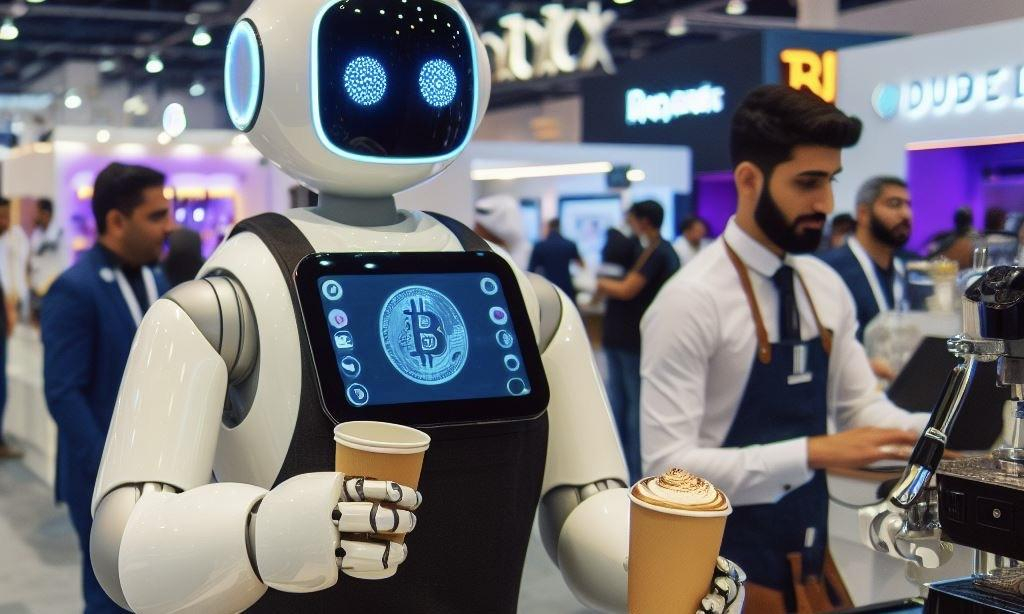
Tether has taken a significant step beyond its core stablecoin business with a major investment in Generative Bionics, joining a €70 million (US$81 million) funding round aimed at accelerating the next generation of humanoid robotics. The move places Tether alongside leading tech investors as the global race to build functional, AI-powered humanoid robots intensifies—driven by companies like Tesla, Nvidia, and Figure AI.
Generative Bionics, an Italian startup spun out of the Italian Institute of Technology in 2024, specializes in “Physical AI,” a fusion of advanced artificial intelligence and human-inspired robotics. With over 70 engineers from the institute and more than 60 prototype iterations behind them, the company is now pushing toward commercial deployment across manufacturing, logistics, healthcare, and retail. Its first fully realized humanoid robot is scheduled to debut at CES 2026 in Las Vegas.
Tether CEO Paolo Ardoino said the company is investing in technologies that strengthen global digital and physical infrastructure, describing humanoid robotics as a transformative evolution for real-world AI. The investment aligns with Tether’s ongoing expansion into hardware and infrastructure sectors—including AI, media, agriculture, and brain-computer interface technology—marking a growing shift beyond its traditional crypto operations.
The funding round was led by CDP Venture Capital’s Artificial Intelligence Fund and included AMD Ventures, Duferco, Eni Next, and RoboIT. Tether’s contribution is expected to help Generative Bionics finalize industrial testing and build its first production facility ahead of planned deployments in 2026.
The broader humanoid robotics market has gained massive traction in 2025. Figure AI raised $675 million earlier in the year, while Bedrock Robotics secured $80 million. Analysts, including Morgan Stanley, project the sector could grow into a $5 trillion market by 2050 as industries increasingly rely on robots to address labor shortages and streamline operations.
As humanoid systems become more realistic, public fascination—and discomfort—continues to grow. Recent viral videos, such as Aheadform’s lifelike Origin M1 robotic head, highlight both the rapid technological progress and the lingering “uncanny valley” concerns as robots inch closer to human appearance and behavior.
The momentum behind Physical AI and humanoid robotics suggests a rapidly emerging frontier—one attracting heavy investment, rising consumer interest, and global competition.


















Comment 0